Solar Water Treatment and UV Purification for Livestock Operations: The 2026 Guide

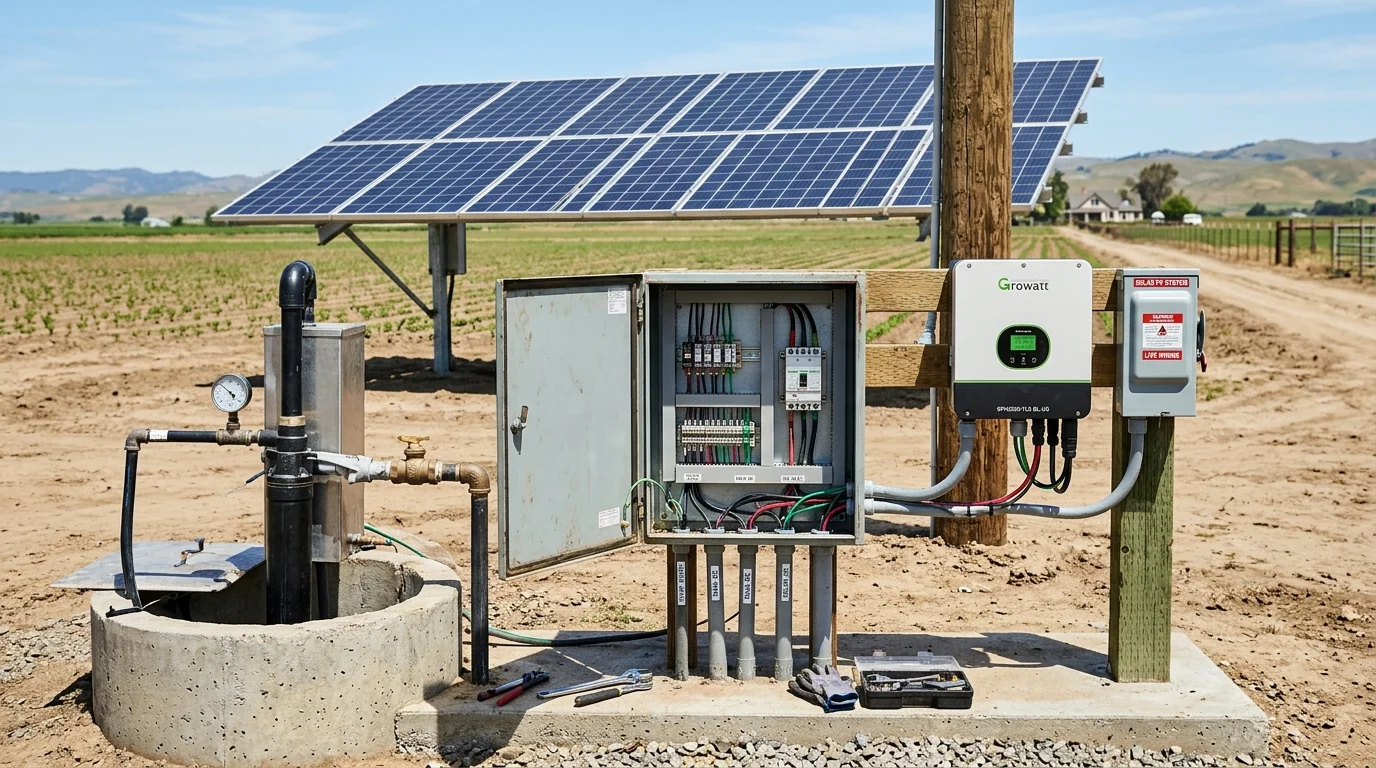
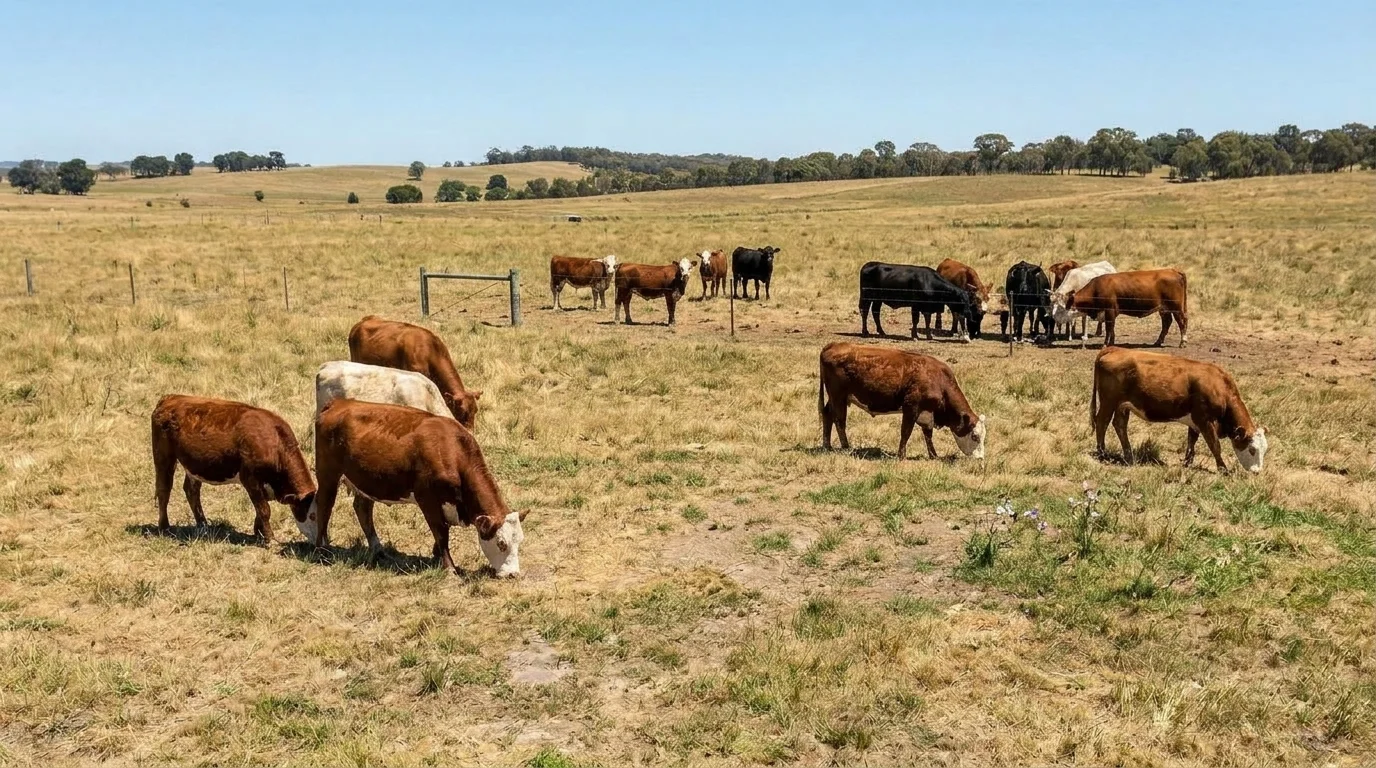
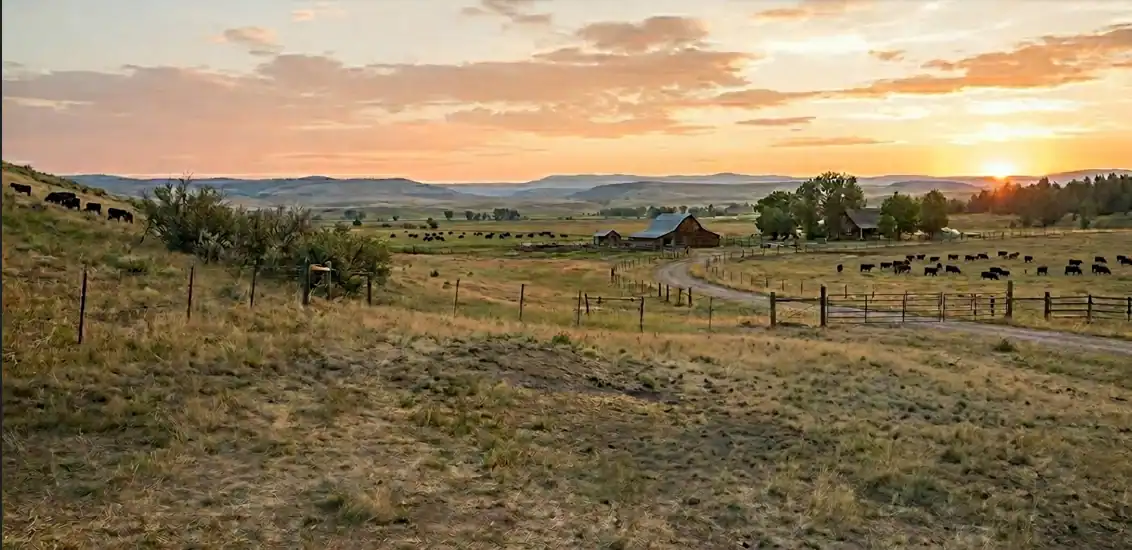
Solar-powered water treatment system at a remote pasture with UV reactor and filtration housing, and cattle drinking from a trough.

Contaminated livestock water costs more than bad feed. Reduced feed conversion, higher veterinary costs, and mortality from waterborne illness all trace back to water quality — and most farms have never tested. This guide covers the three treatment types suited to solar power (UV purification, filtration, and aeration), the specific sizing for each, and the off-grid remote pasture applications that grid power cannot reach. Includes worked sizing for 500, 2,000, and 10,000 gallon-per-day systems.

Farm Community Solar and Solar Cooperatives: Pooling Capital, Sharing Interconnection, and Negotiating as a Bloc

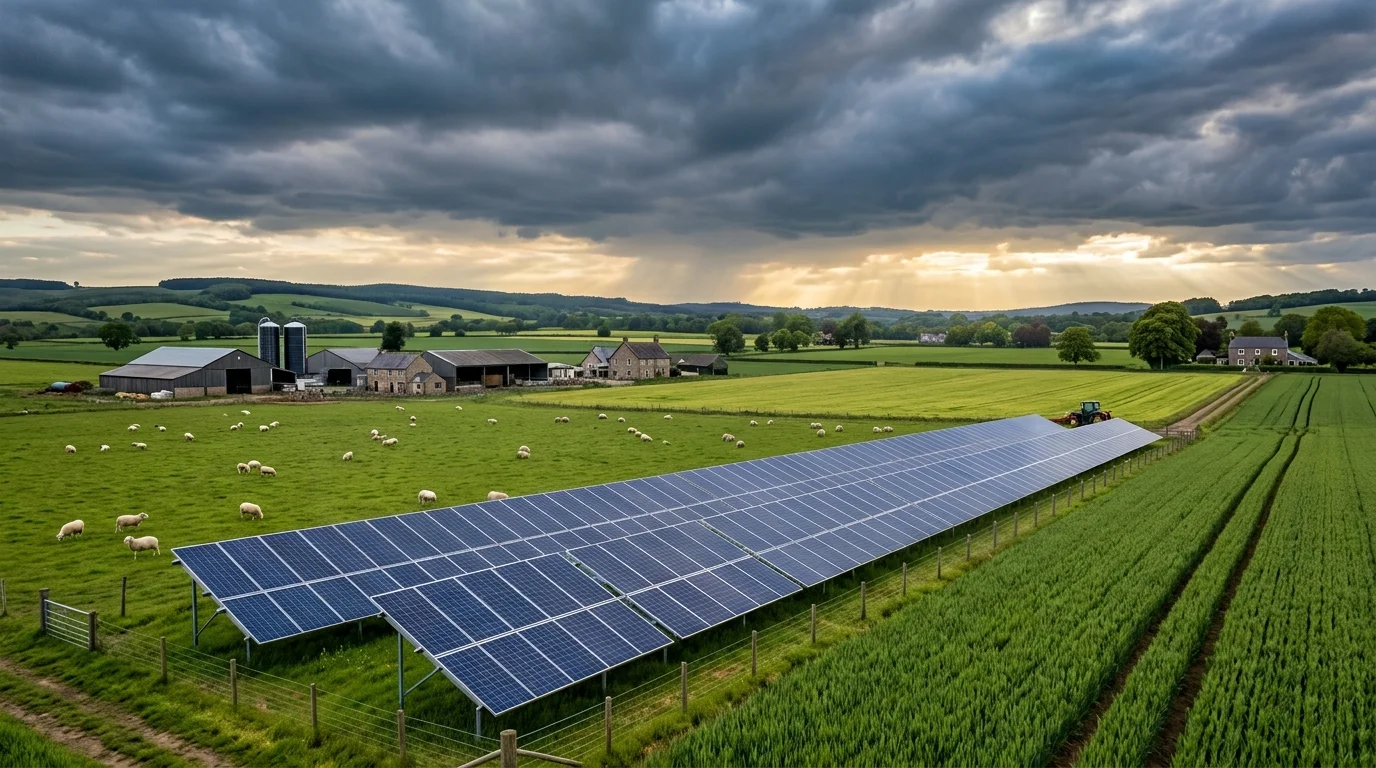
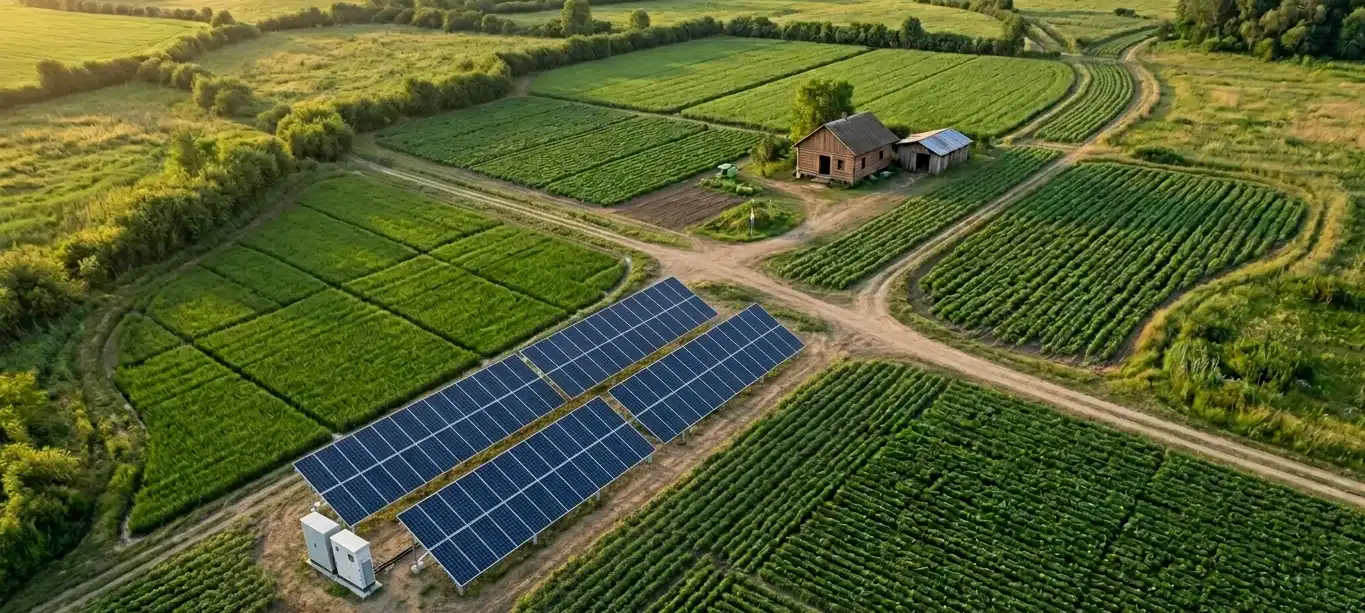
Group of five farmers standing together in front of a shared ground-mount solar array, reviewing project documents.

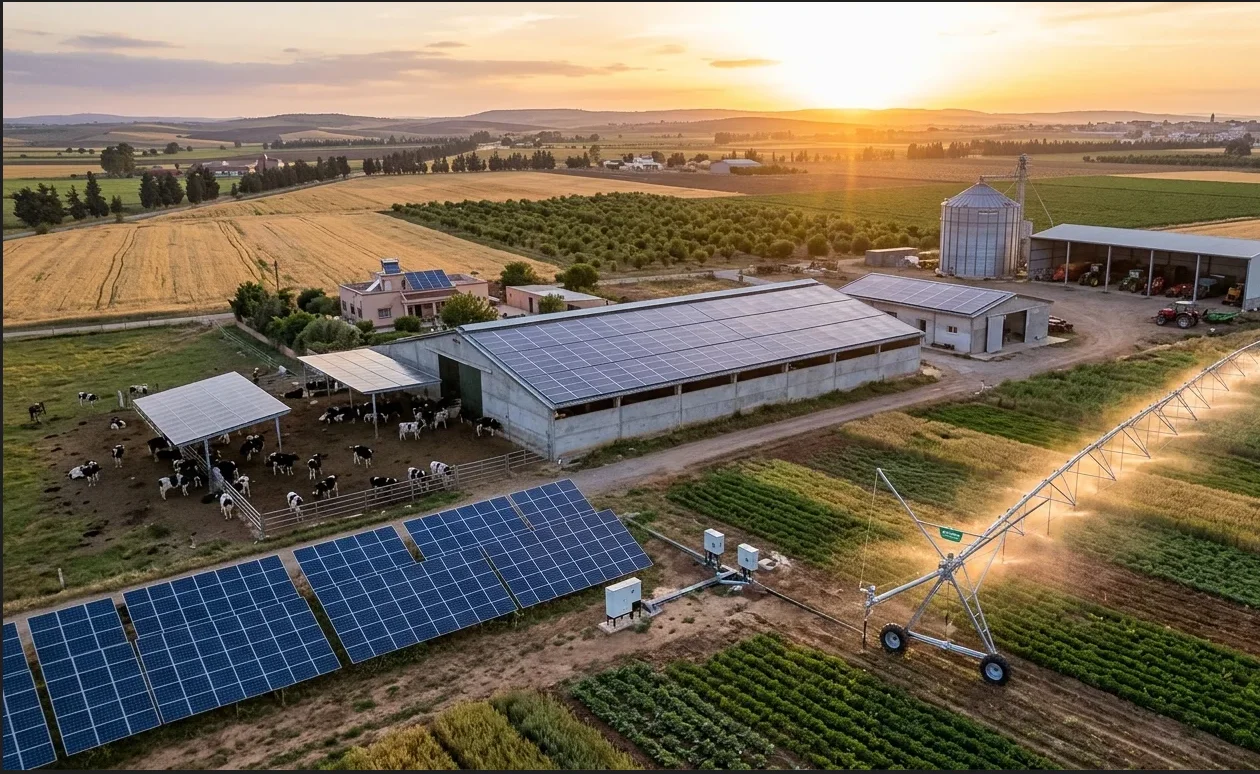
One farm installing 100 kW pays a premium. Ten farms installing 1 MW together pay 15% less, share one interconnection, and negotiate from a position of strength. Agricultural solar cooperatives are one of the fastest-growing models in 2026 — driven by constrained interconnection capacity, rising equipment costs, and the simple fact that groups have more leverage than individuals. This guide covers the three cooperative structures, the per-farm savings math on a pooled 1 MW project, and the governance provisions that keep a group together when one member wants out.

Farm Time-of-Use Rates and Irrigation Scheduling: The Hidden Solar ROI Multiplier

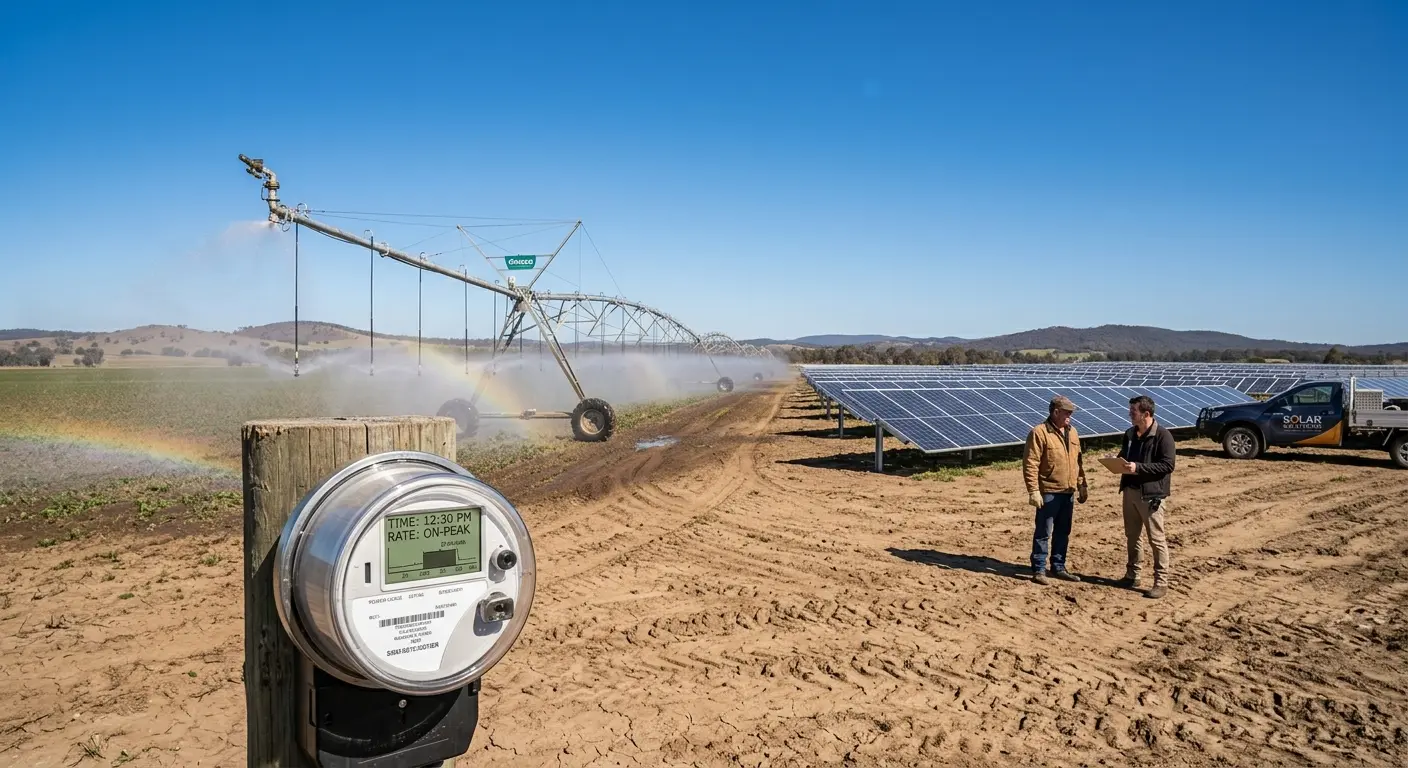
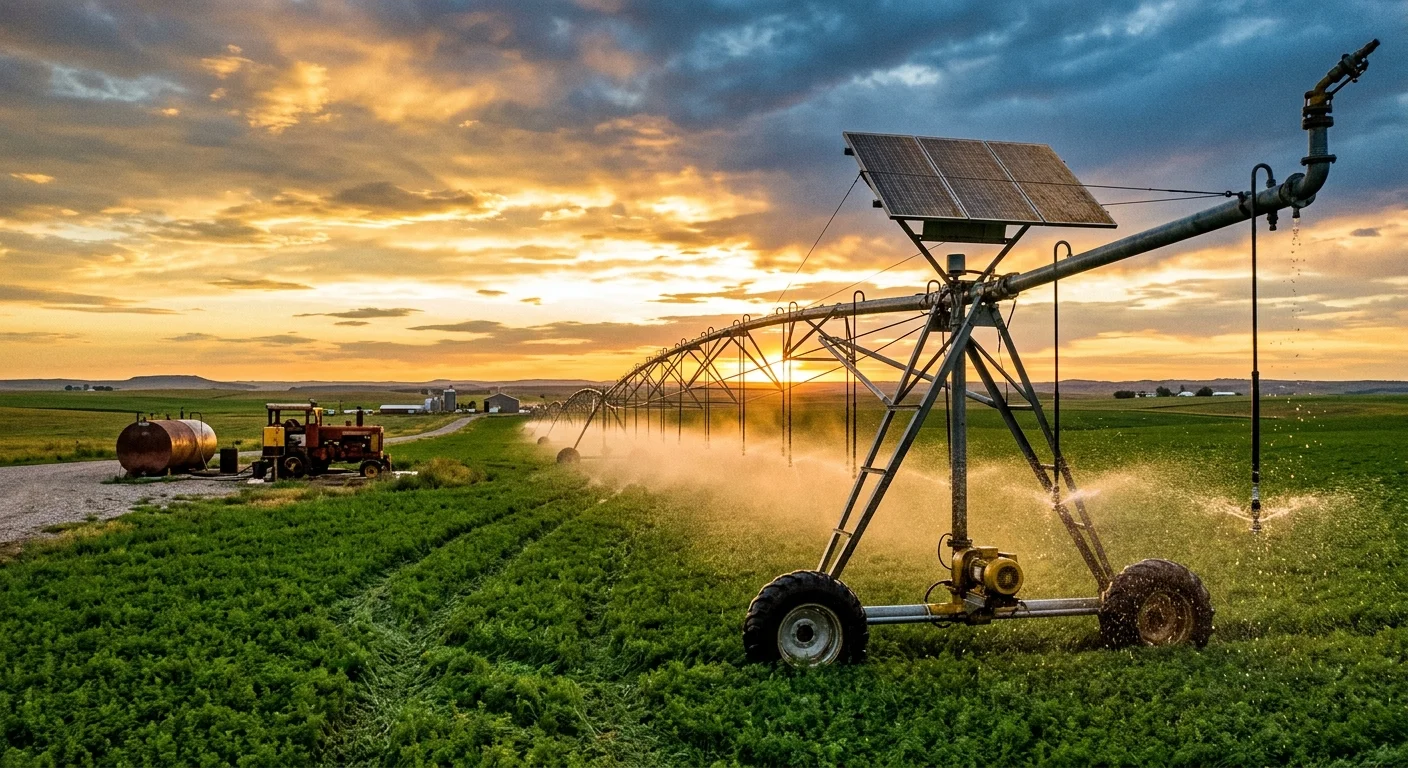
Midday irrigation pivot running under a clear sky, with a farm solar array and time-of-use utility meter visible."

our solar array produces the same electricity regardless of when your pumps run. But under a time-of-use rate, the value of that electricity changes by the hour — sometimes by a factor of three. This is the ROI multiplier most farm solar owners never calculate. Here’s how to read your agricultural tariff, the four load-shifting strategies that require no new equipment, and a worked 250 kW example showing how irrigation scheduling alone can add 15% to 30% to your solar payback.

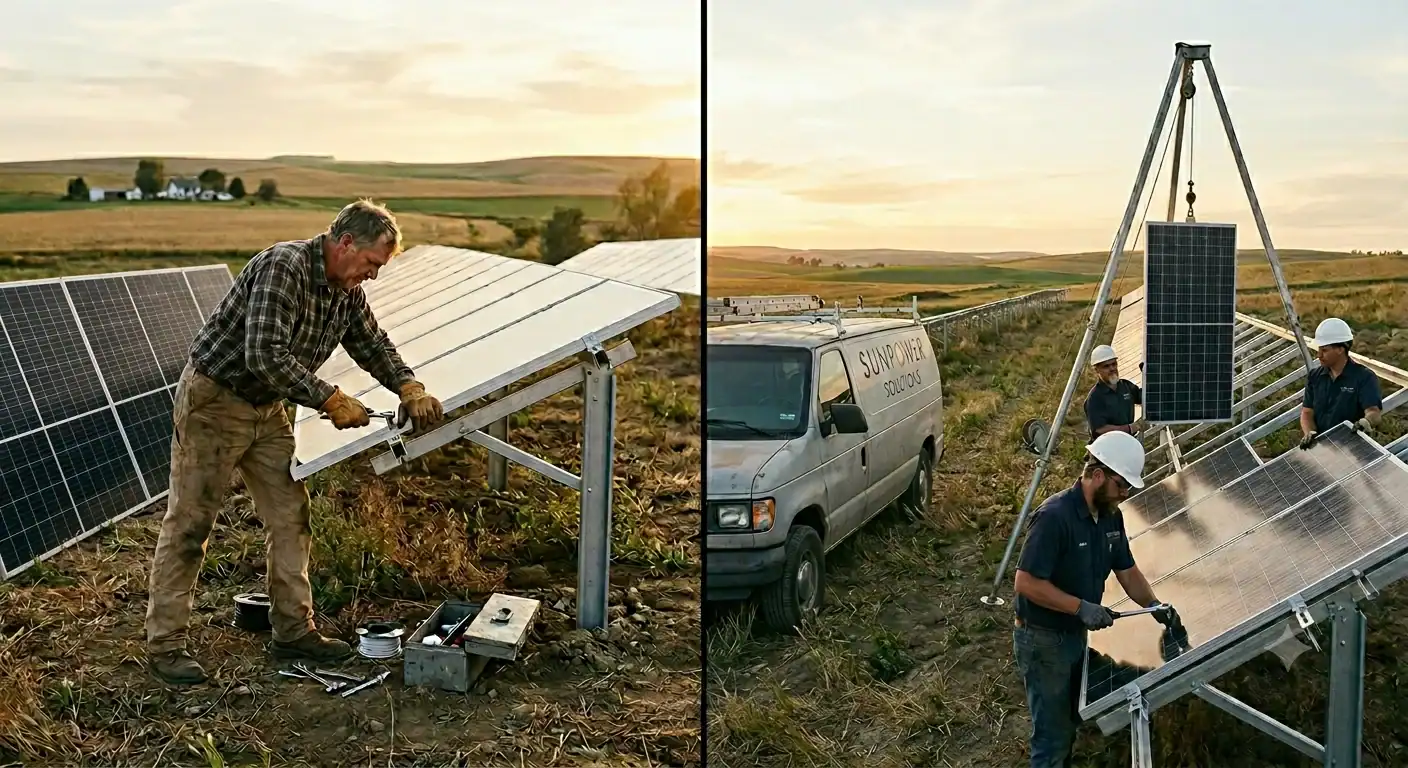
Adding Solar to an Existing Farm System: The 2026 Expansion Guide

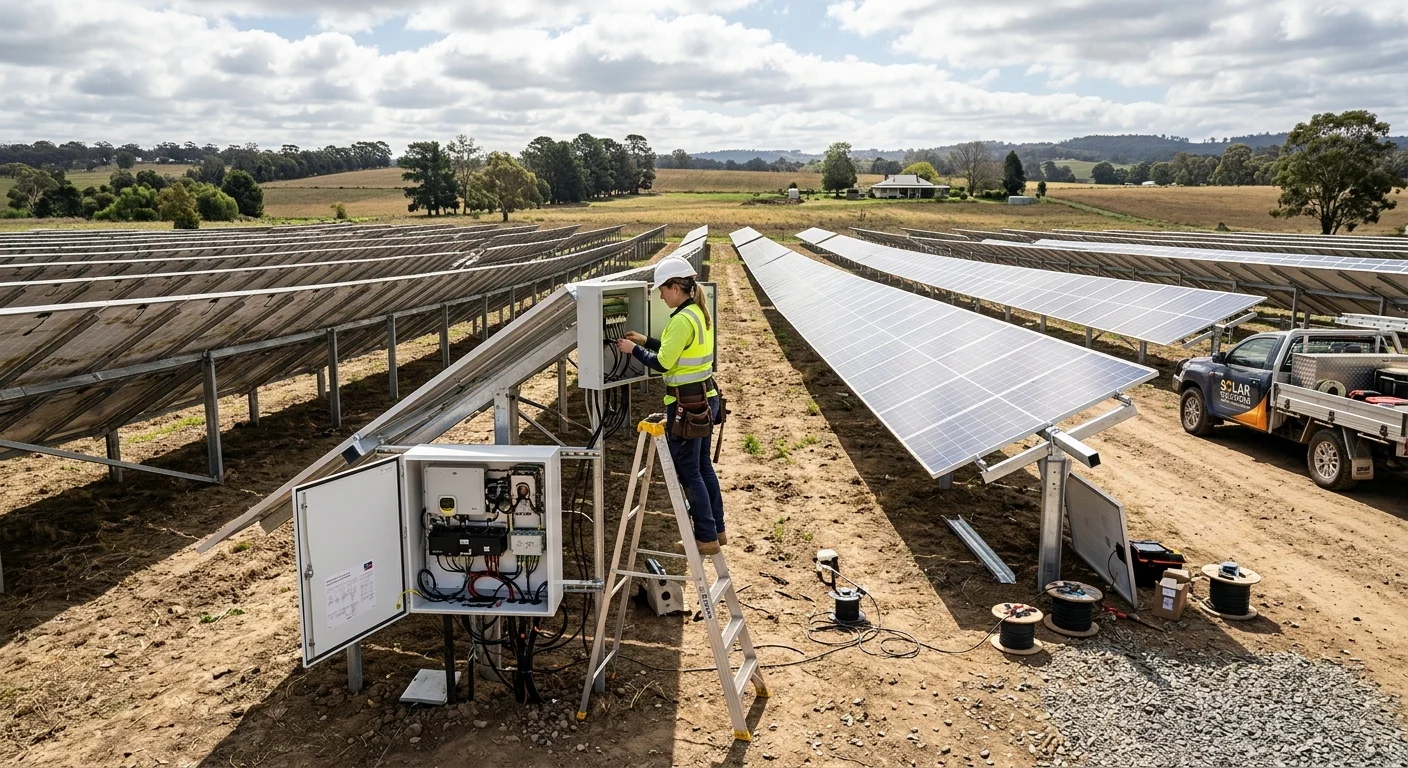
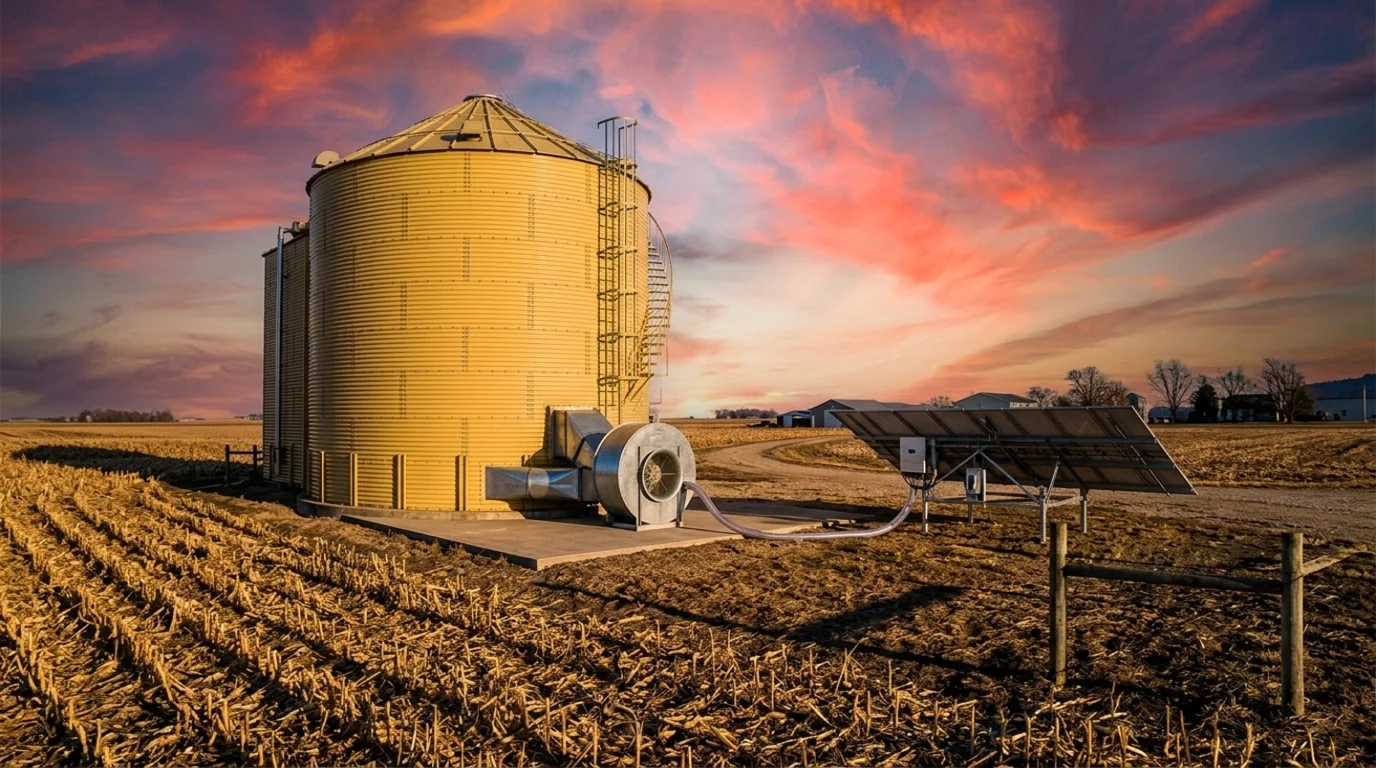
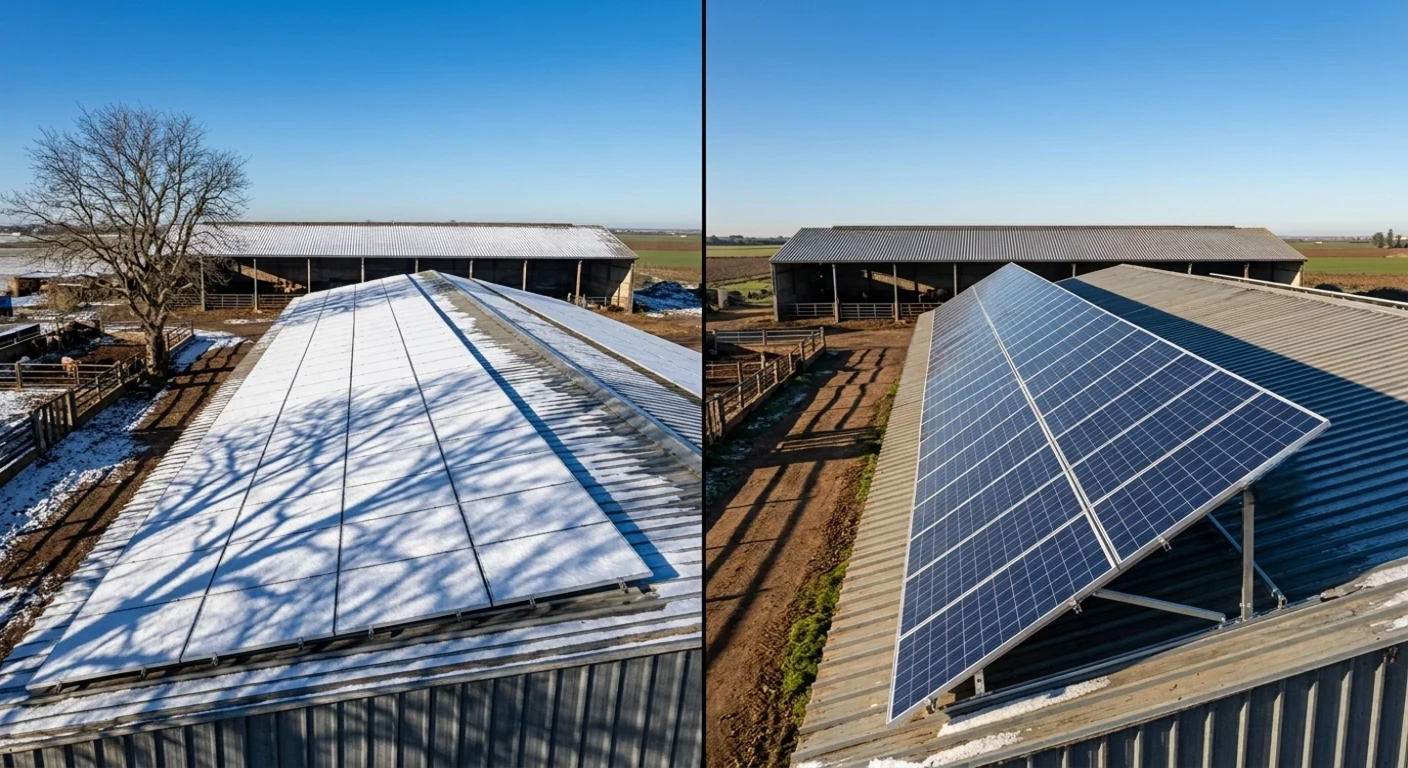
Farm solar array expansion showing older panels next to newly installed panels, with a technician connecting wiring at the transition.

Your 2018 array was sized for your 2018 operation. If you’ve added irrigation capacity, expanded the herd, built cold storage, or installed a grain dryer since then, you’ve outgrown it. But expanding solar isn’t the same as installing new — there are hard inverter limits, a different ITC basis calculation, and interconnection agreements with capacity ceilings that require renegotiation. This guide covers the three expansion paths, the 5% rule for ITC basis, and why your inverter is almost always the limiting factor.

Farm Solar Battery Sizing: The 2026 Complete Guide

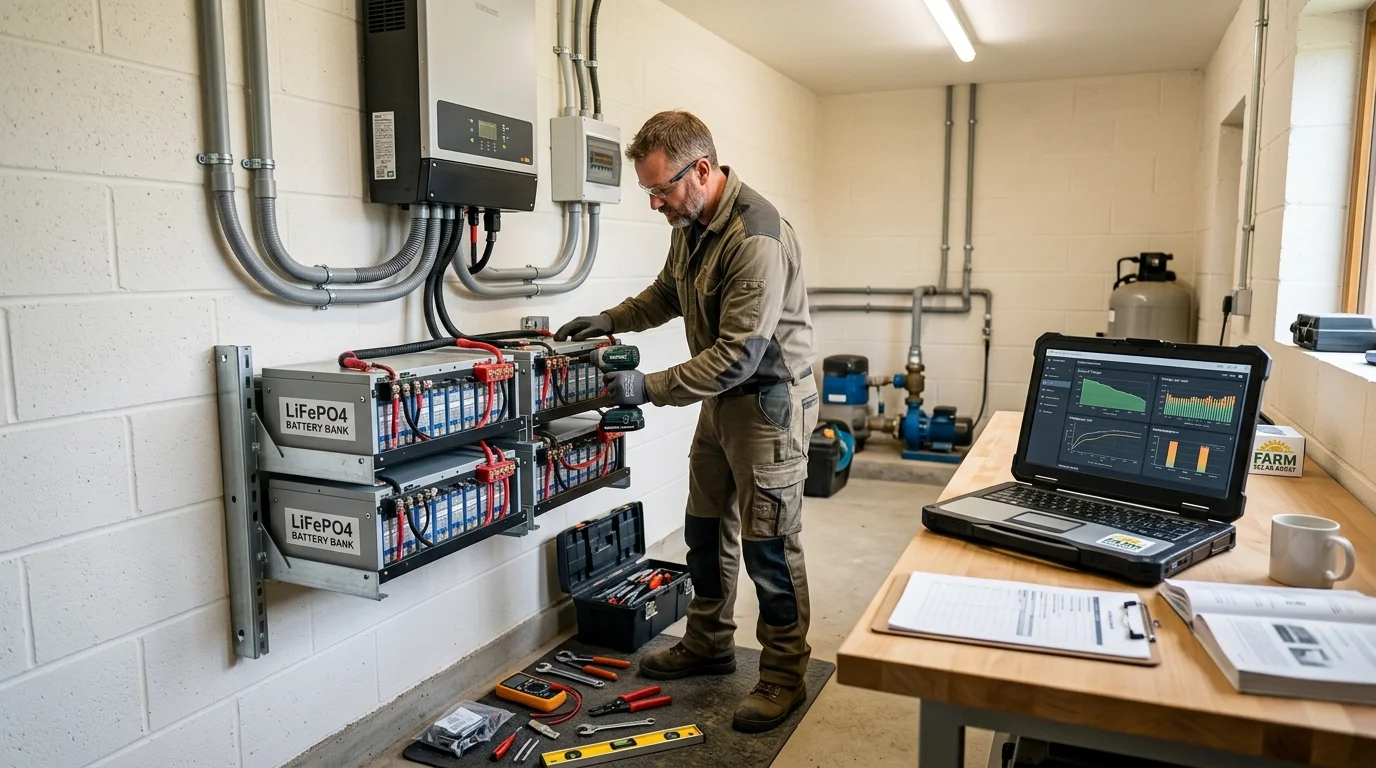
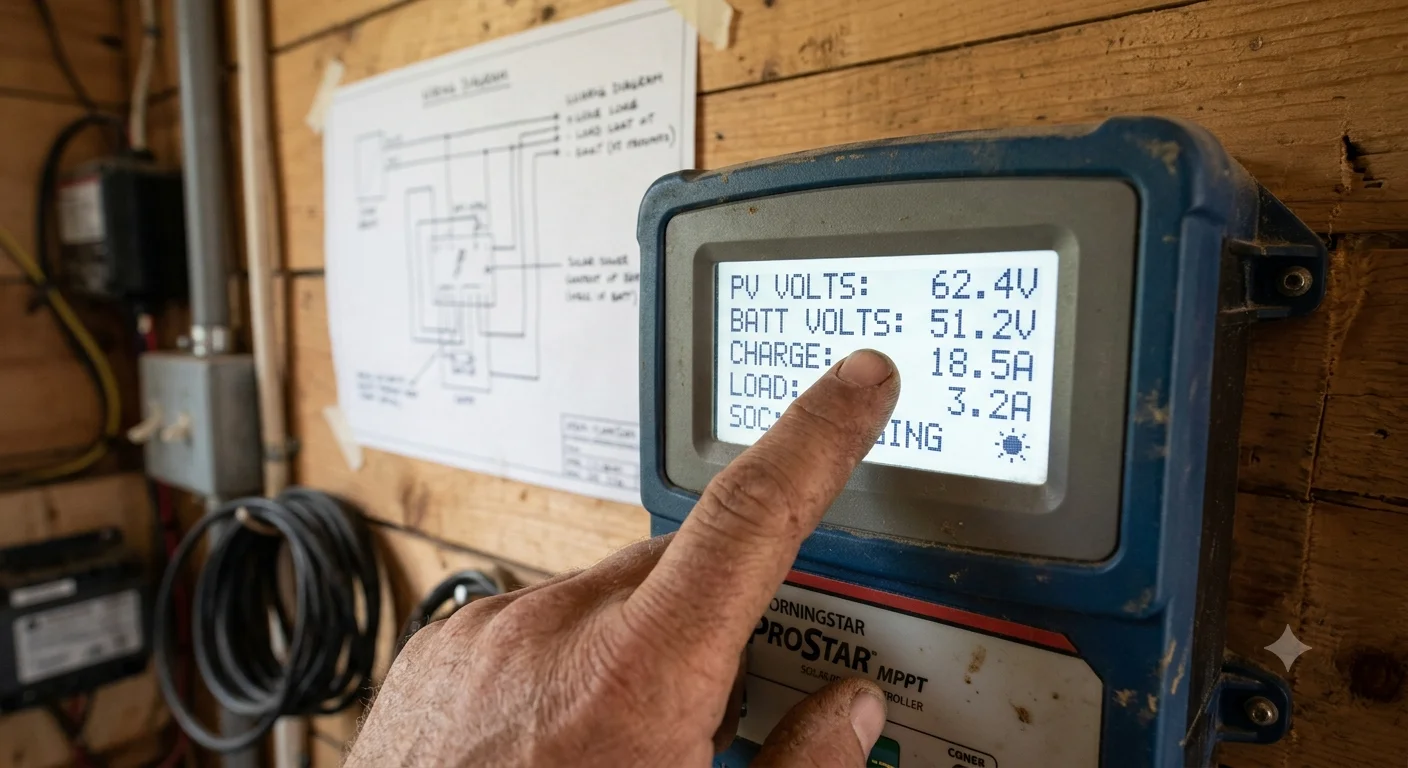
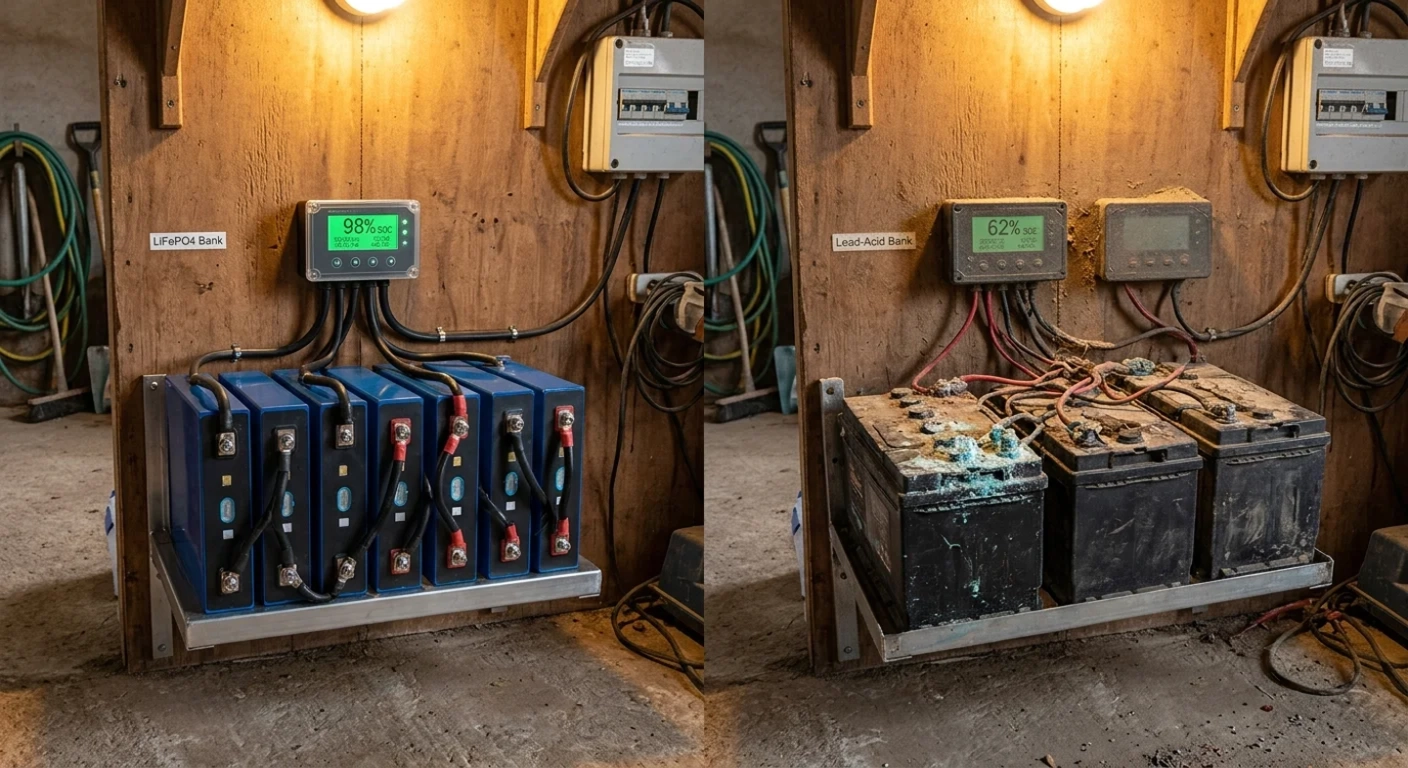
Technician installing a lithium iron phosphate battery bank in a farm utility room, with an inverter and a battery monitoring dashboard visible on a laptop.

Seventy percent of farm battery systems are sized wrong — and the average cost of that mistake is $18,000. Most failures come from three errors: sizing for overnight autonomy when the real need is peak shaving, ignoring C-rate limits, and treating depth of discharge as a fixed number rather than a design variable. This guide gives you the four-step sizing method, with fully worked examples for a pivot irrigation pump, a dairy parlor, and a 20,000-bird poultry house, so you buy the battery you actually need instead of the one a salesman wants to sell

Farm Net Metering 2026: How Export Rate Cuts Change Your Solar ROI

Farm solar array with an infographic overlay showing three net metering scenarios: full net metering, reduced net metering, and avoided-cost-only export compensation.

Every farm solar ROI calculation you have seen assumes exported electricity is worth your retail rate. In 2026, that assumption is wrong in a growing number of states. California moved to avoided-cost export pricing, Indiana and Idaho have restructured compensation, and more states are following. This article breaks down the four export compensation models, shows how each one changes the payback math on a 250 kW farm system, and explains why the right response is not to abandon solar — but to redesign the system around self-consumption.

Agrivoltaics 2026: Which Crops Actually Thrive Under Solar Panels?

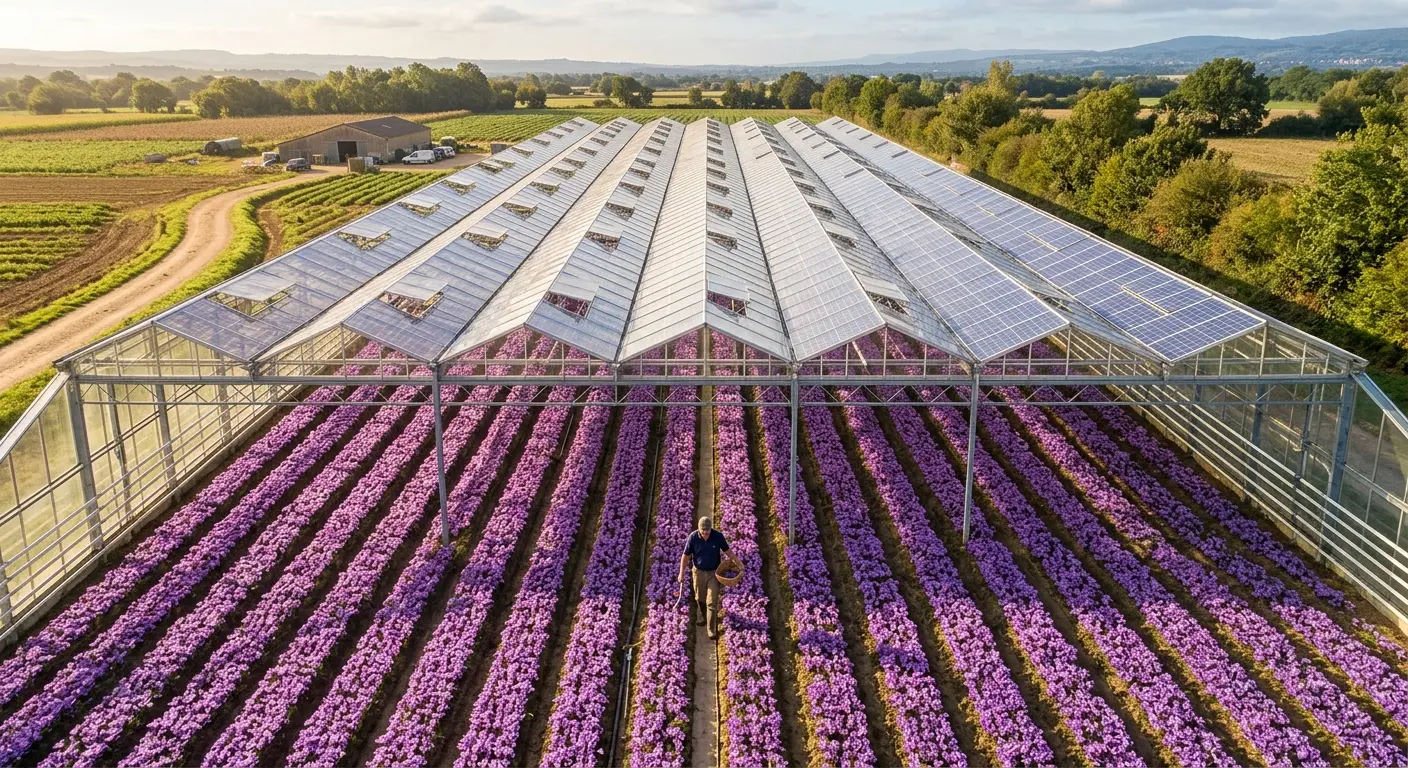
Semi-transparent solar panels above rows of saffron crocus flowers in a commercial greenhouse agrivoltaic system, with a farmer inspecting the crop.

Most farmers believe solar panels kill crop yields. The 2026 data proves the opposite for a specific set of high-value crops. Saffron grown under semi-transparent panels produces double the flowers. Leafy greens gain up to 127% in yield. Greenhouse tomatoes stay flat while electricity consumption drops 35%. This article breaks down which crops actually thrive under panels, the exact panel transparency and mounting height each crop requires, and the five-year ROI math for a commercial saffron agrivoltaic system. If you grow specialty crops, this is the data you need before you dismiss agrivoltaics.

Solar Pump Troubleshooting: 10 Problems and How to Fix Them Fast

Troubleshooting flowchart for solar water pumps showing symptoms (no start, low flow, noise) linked to solutions (check panels, cables, filters, impeller) with a farmer diagnosing the system.

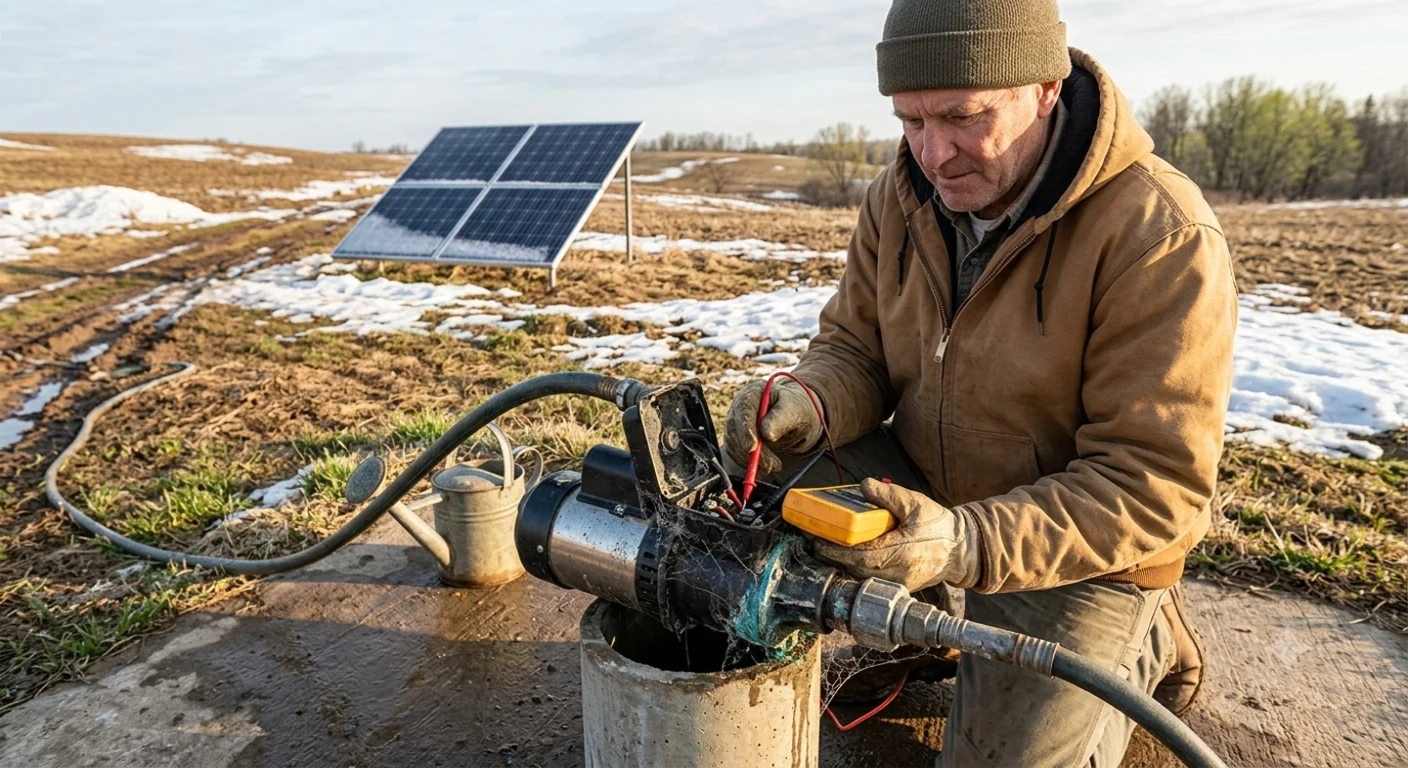
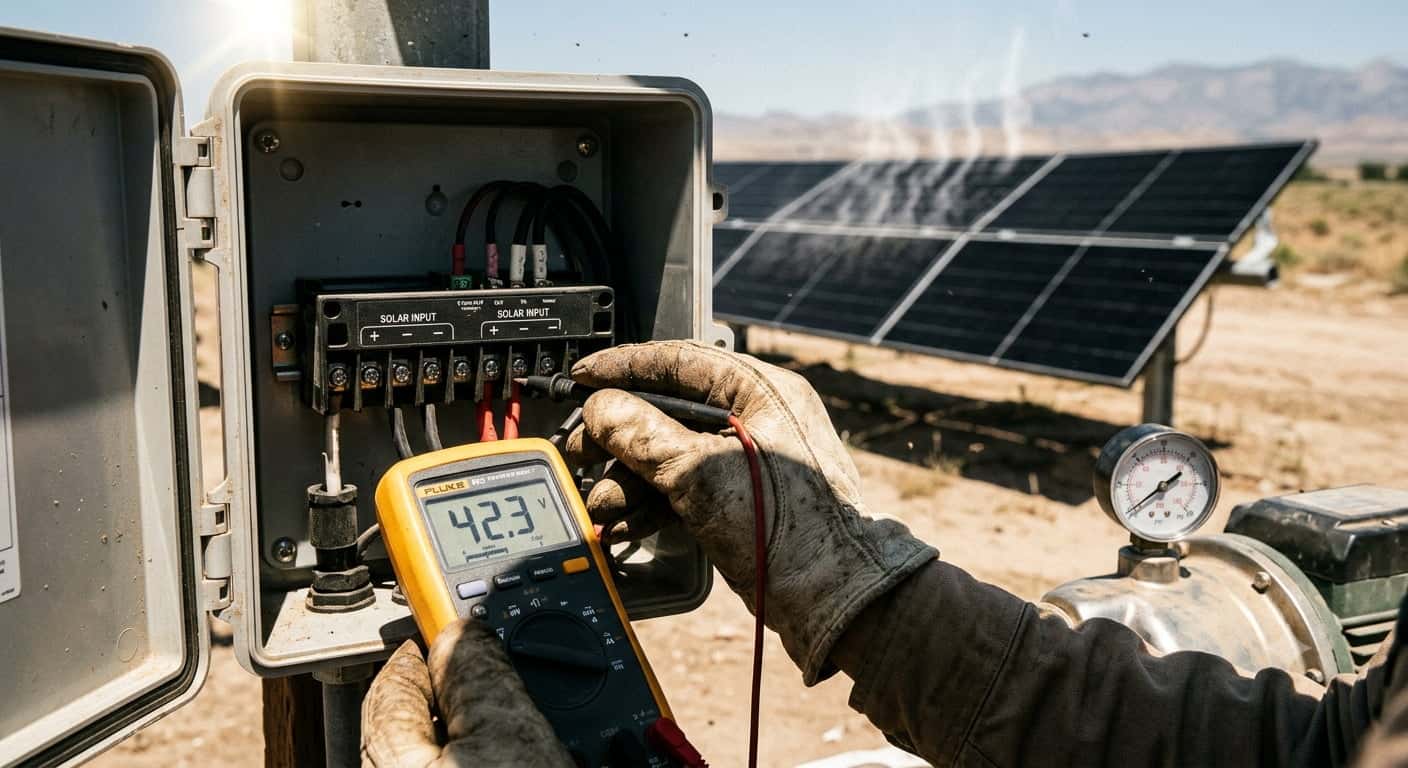
Your solar pump stopped working — or worse, it runs but delivers almost no water. Before you call a technician, check these four common issues that cause over 70% of field failures. This 2026 troubleshooting guide covers pump won’t start, low flow, noisy operation, controller error codes, and a step‑by‑step diagnostic flowchart.

Solar Pump Warranties: What the Fine Print Actually Means (And How to Protect Your Investment)

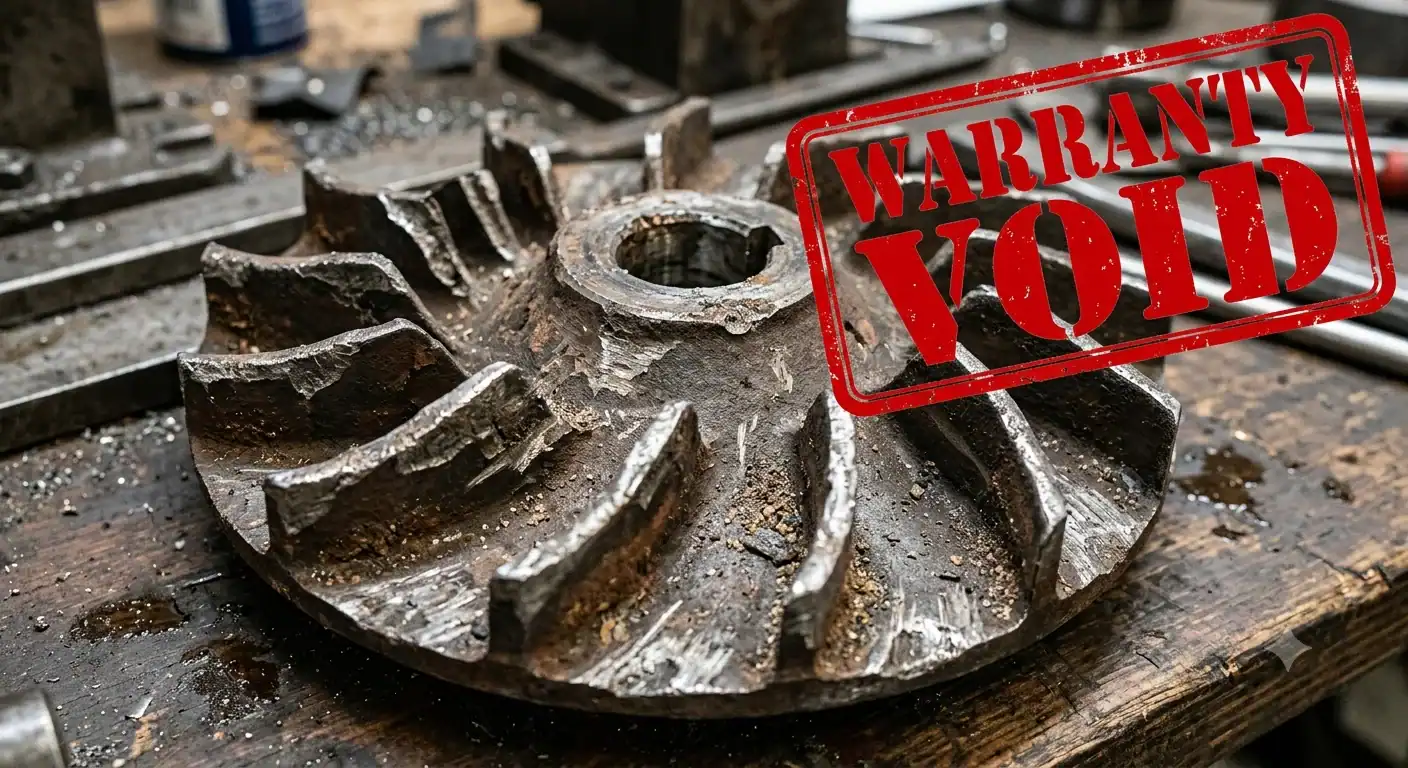
a damaged impeller and a red "WARRANTY VOID" stamp.

You’ve sized your system, chosen your pump, and are ready to invest $5,000‑15,000 in solar irrigation. But do you know what your warranty actually covers? Manufacturers promise 2‑5 years of protection, but the exclusions can leave you with a $2,000 repair bill. This 2026 guide breaks down solar pump warranties: types of coverage, what voids your warranty, how to file a claim, and what the top brands (Grundfos, Lorentz, Franklin Electric, Sun Pumps) actually offer.

Solar Pumping for Greenhouses: Ventilation, Irrigation & Misting

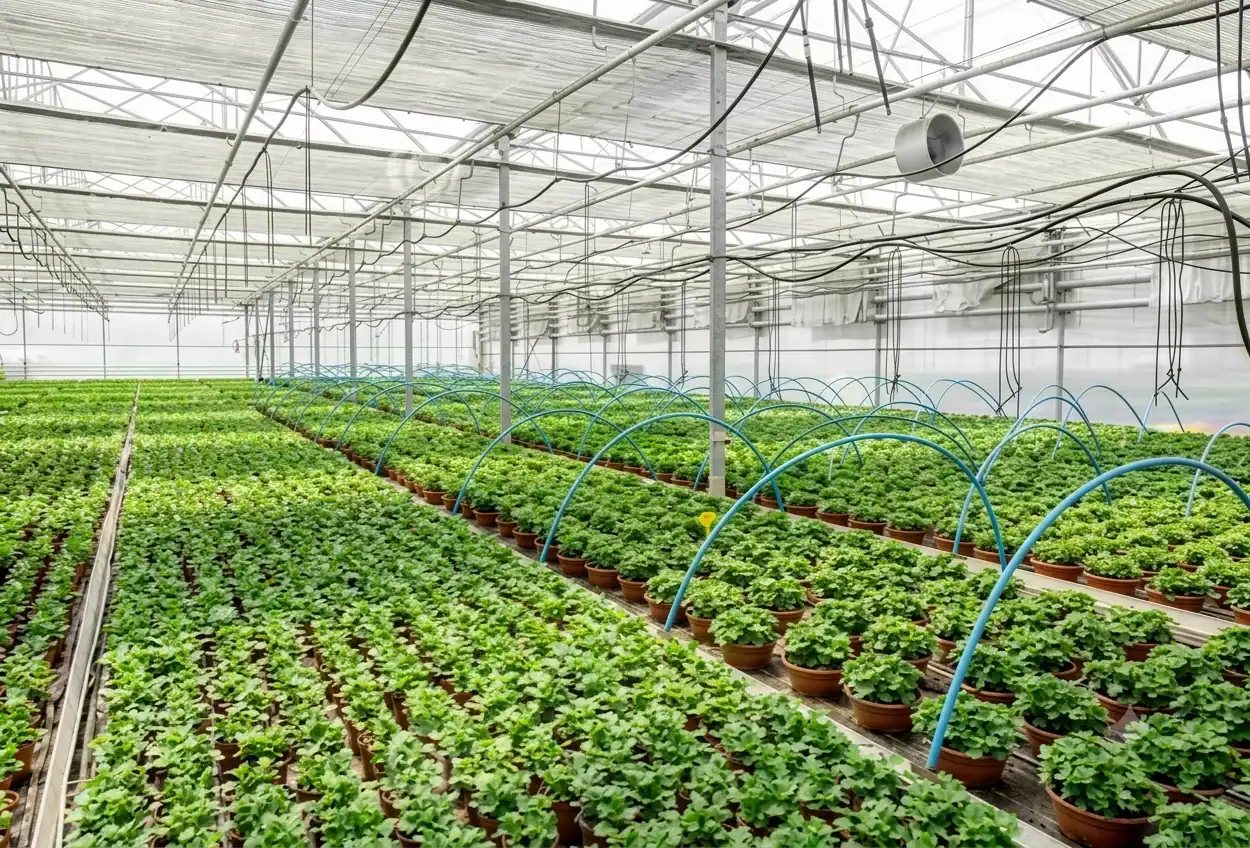
Modern greenhouse interior with solar‑powered drip irrigation, misting nozzles creating fine fog, and exhaust ventilation fans, all powered by an external solar panel array.

Greenhouses need three things to thrive: water, cooling, and fresh air. A single solar pump system can deliver all three — irrigation through drip lines, cooling through misting or fogging, and power for ventilation fans. This 2026 guide covers system design, component sizing, pressure requirements (1‑4 bar), and crop‑specific recommendations for tomatoes, leafy greens, flowers, and more.

How to Read a Solar Pump Performance Curve: A Practical Guide for Farmers

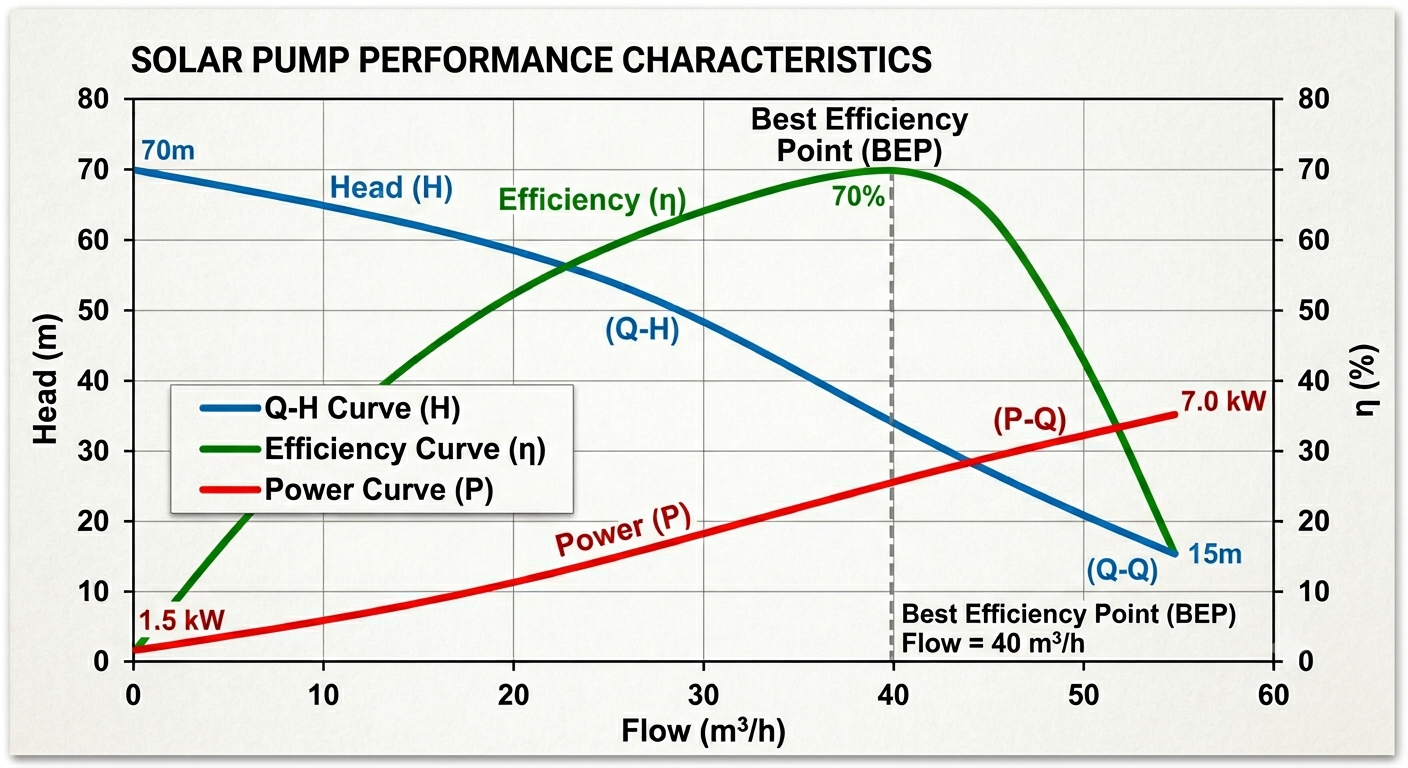
Solar pump performance curve graph showing flow‑head (Q‑H) curve, efficiency curve, and power curve with Best Efficiency Point marked, alongside a farmer reviewing a datasheet.

Solar pump datasheets are filled with curves that look like a foreign language. But behind those lines are critical answers: maximum flow, optimal operating point, efficiency, and signs of wear. This 2026 guide teaches you to read and interpret pump performance curves – so you can size, compare, and diagnose your system like a pro.

Solar Pumping for Specialty Crops: Blueberries, Hops, and Other High‑Value Crops

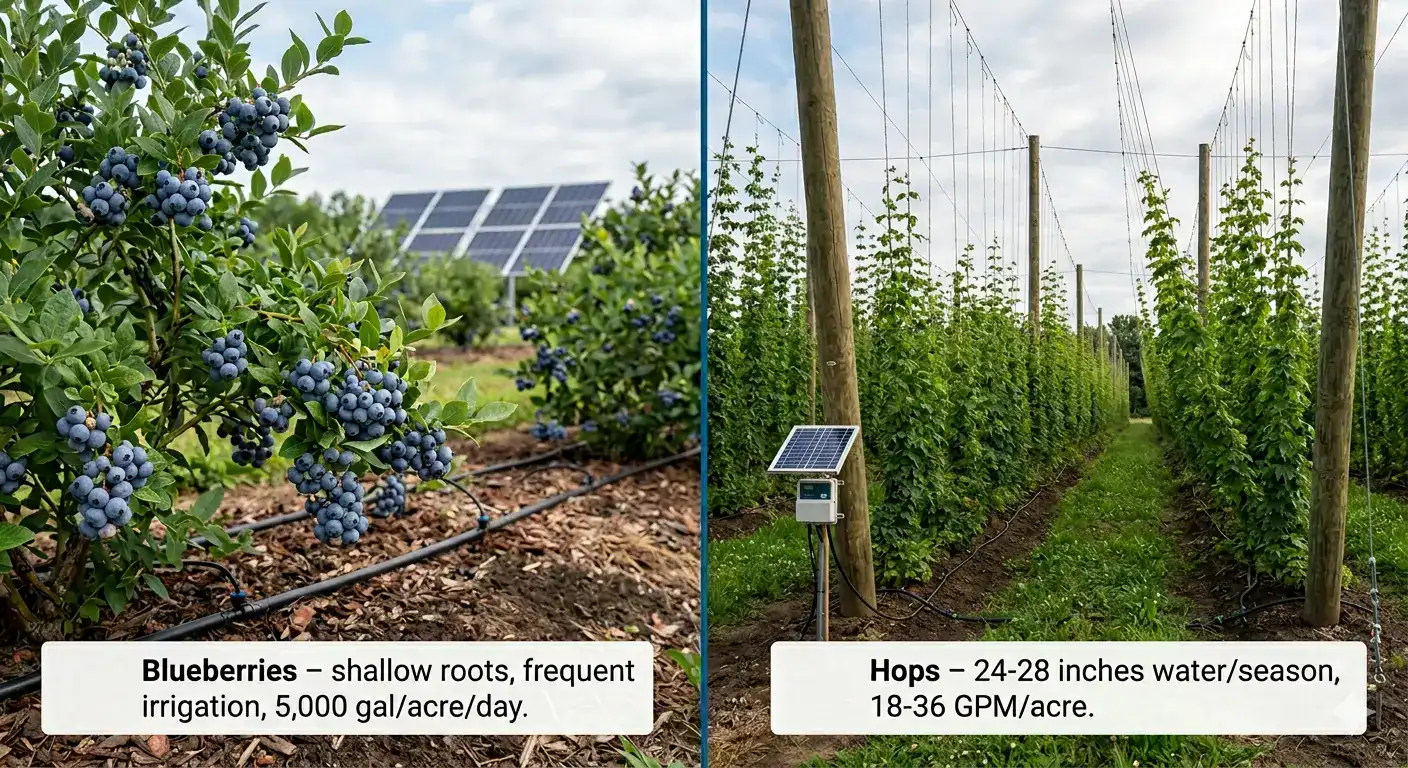
Split infographic showing solar‑powered drip irrigation for blueberries (shallow roots, 5,000 gal/acre/day) and hops (tall trellis, 24‑28 inches water/season), with solar panel array and pump system diagram.

Blueberries, hops, and other high‑value specialty crops demand precise irrigation — too little water and you lose yield and quality; too much and you risk disease and waste. Solar pumping offers the perfect match: variable‑speed operation that adapts to crop needs, zero fuel costs, and long‑term reliability. This 2026 guide covers crop‑specific water requirements, system sizing, emitter selection, fertigation integration, and real‑world case studies for blueberries, hops, raspberries, and other high‑value crops.

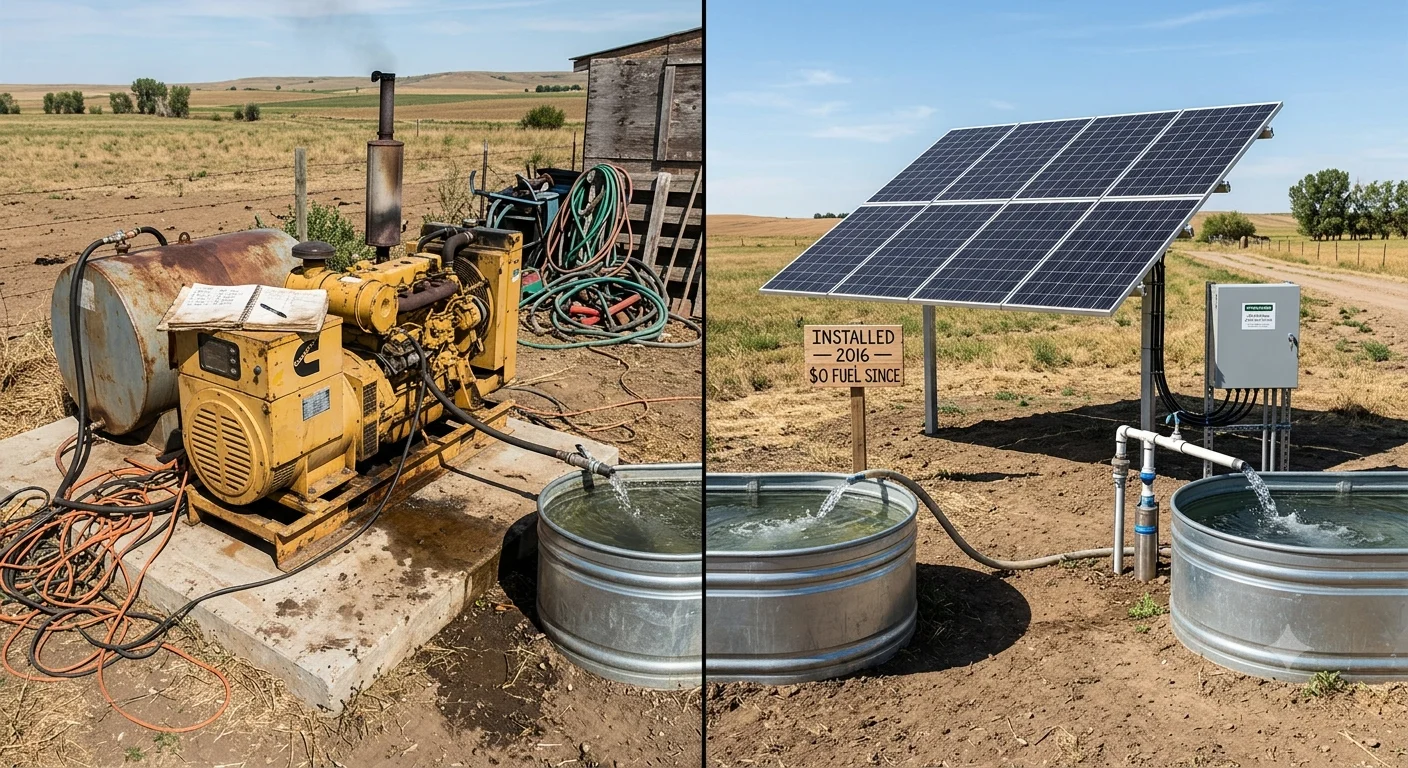
Solar Water Pump for Livestock: Remote Watering Without the Diesel Run

Solar‑powered livestock watering system with solar panels, submersible pump, storage tank, and cattle drinking from a float‑valve trough in a remote pasture.

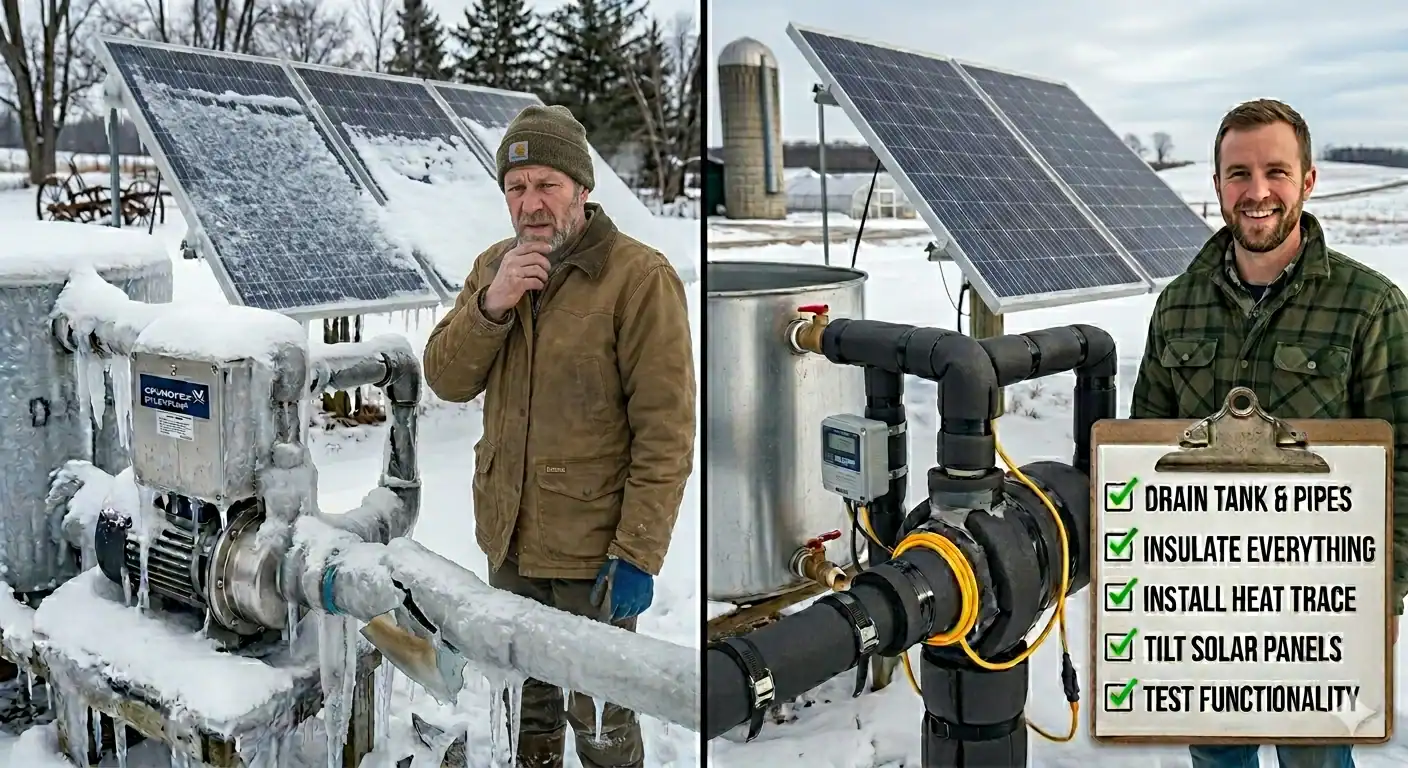
Hauling water to remote pastures is expensive, time‑consuming, and exhausting. A solar water pump can deliver 1,000+ gallons per day with zero fuel costs and minimal maintenance. This 2026 guide covers livestock water requirements, system sizing, component selection, winter operation, cost savings, and real‑world ROI — everything you need to water your herd without the diesel run.

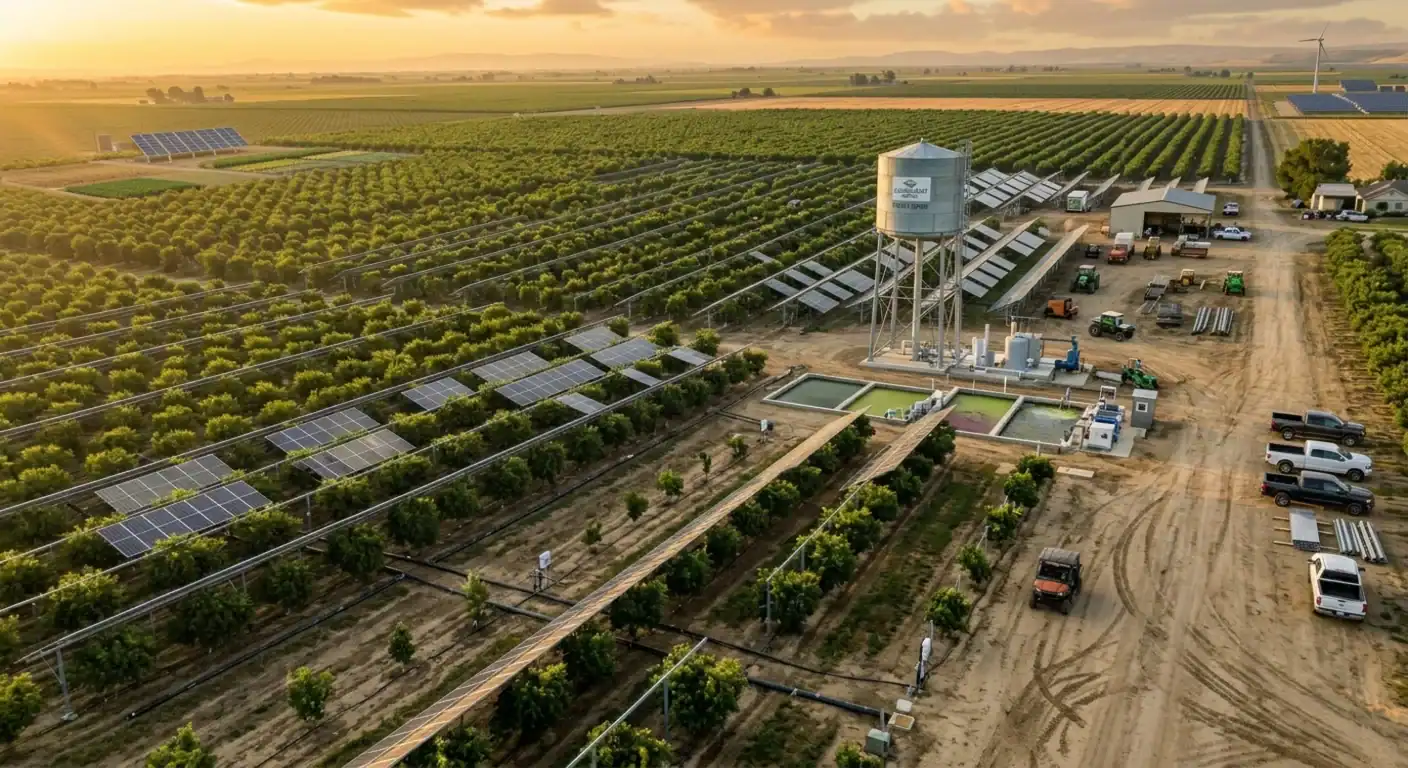
Solar Pumping for Orchards & Vineyards: Precision Irrigation Without the Diesel Bill

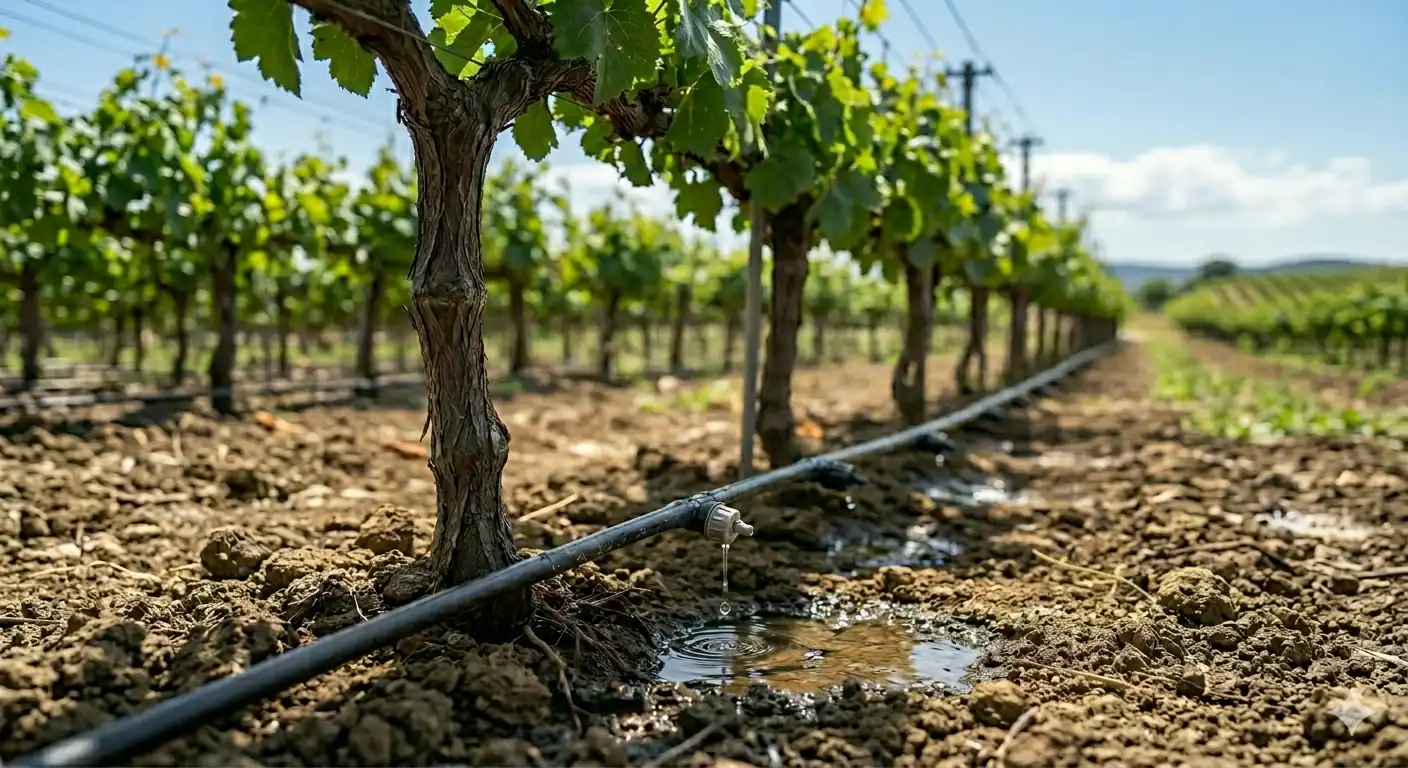
Solar pumping for vineyard (drip irrigation)

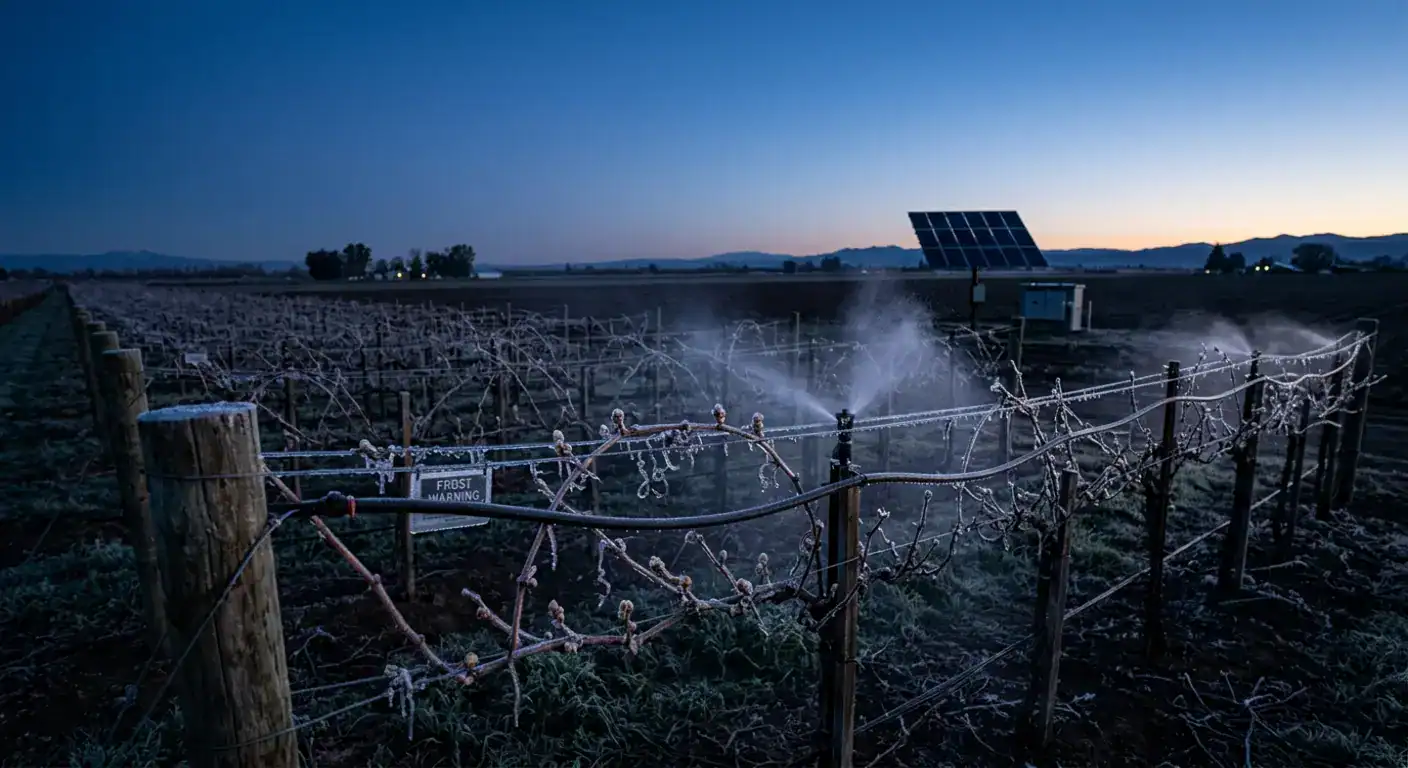
Orchards and vineyards are not row crops. They need higher pressure (3‑4 bar for micro‑sprinklers), frost protection, and precise irrigation to individual trees or vines. This 2026 guide covers solar pump sizing for permanent crops, emitter selection (drip, micro‑sprinklers, fan jets), pressure management, filtration, frost protection strategies, and case studies for almonds, grapes, apples, and citrus.

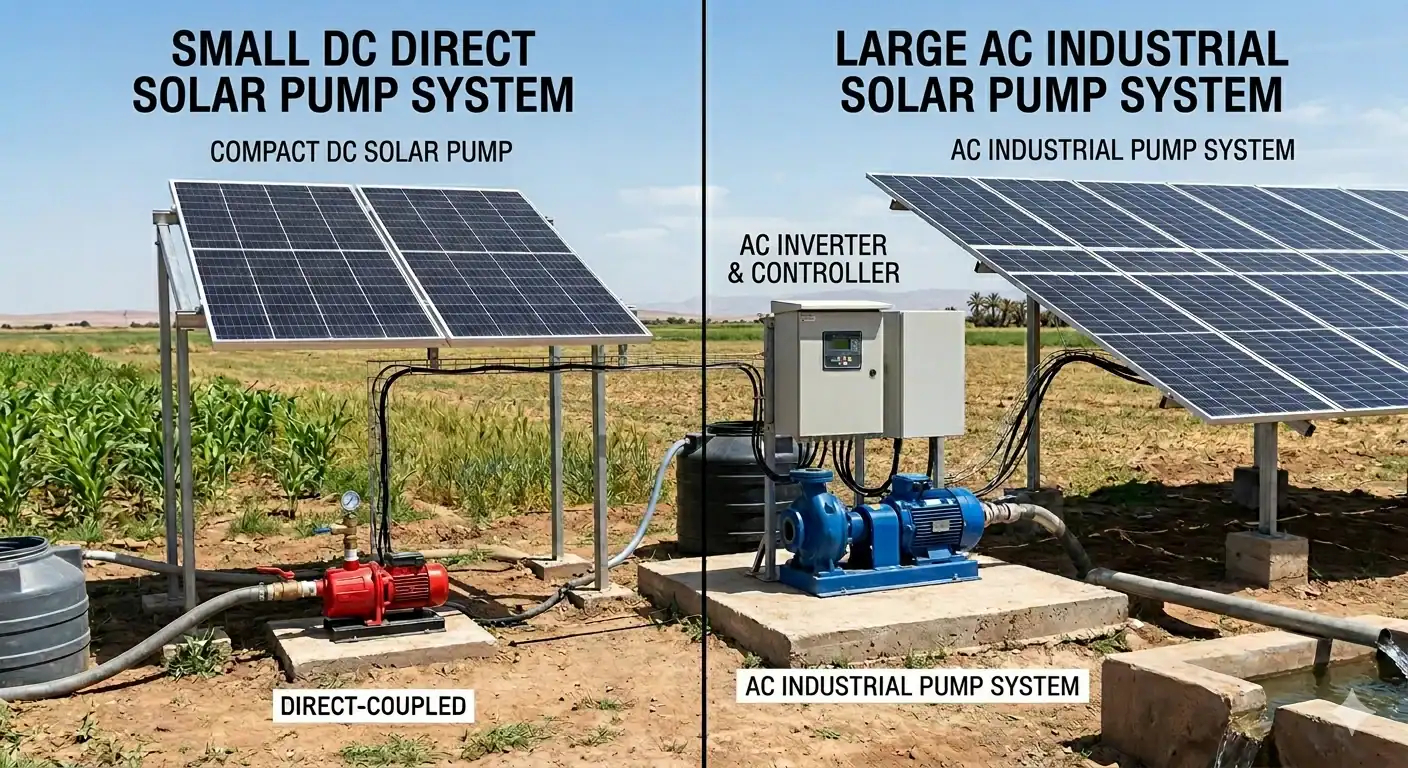
Retrofitting Existing Diesel/Grid Pumps to Solar: A Complete 2026 Guide for Farmers

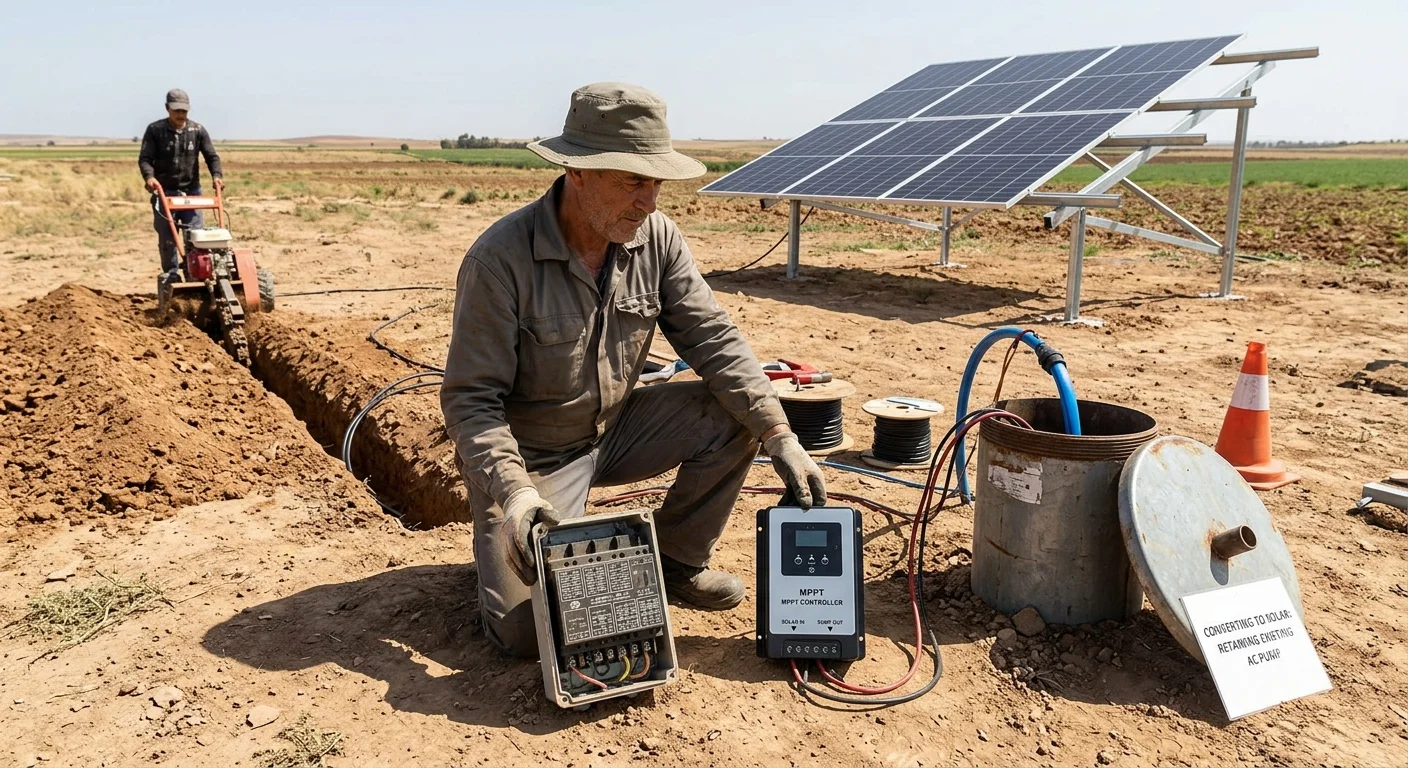
Comparison infographic showing a diesel pump retrofitted to solar: existing pump kept, diesel generator replaced with solar panels and a VFD/inverter, with fuel cost savings highlighted.

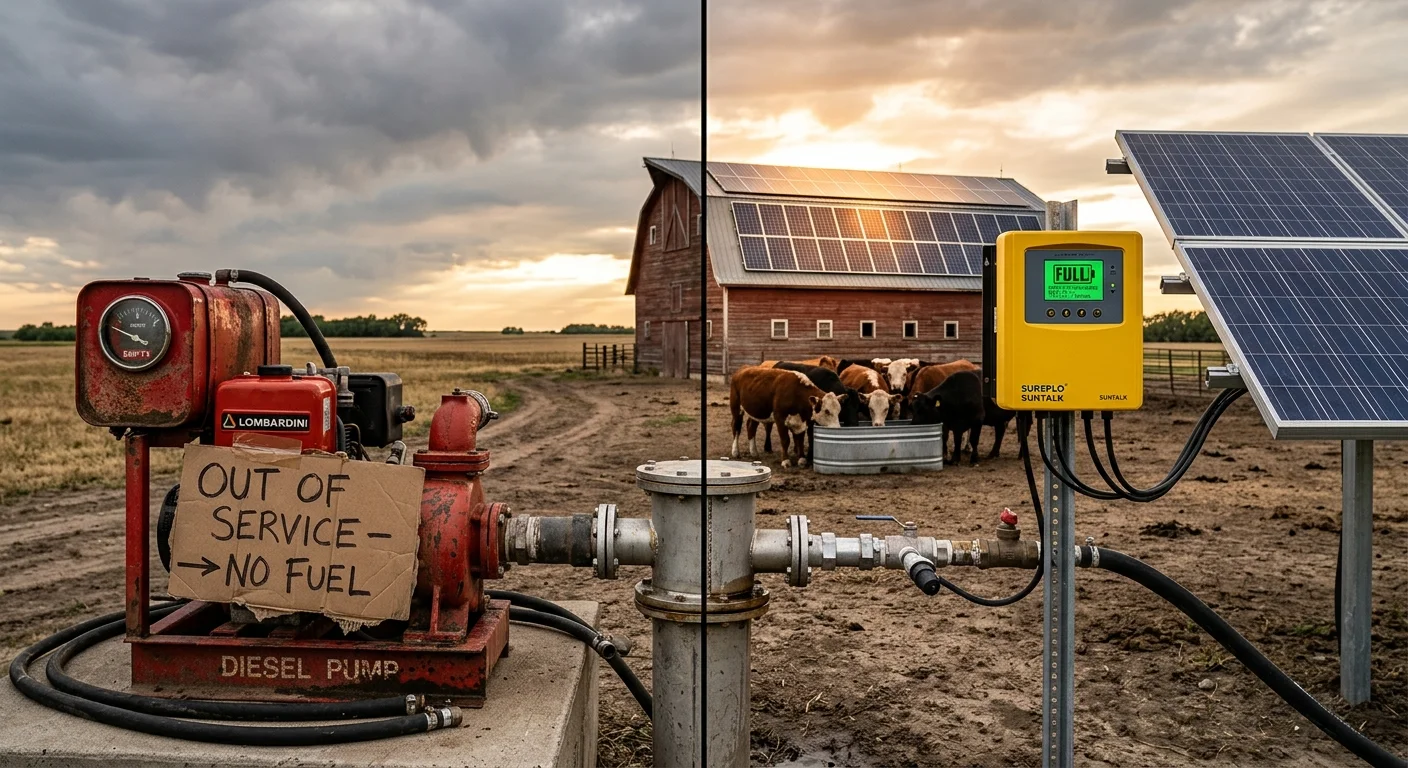
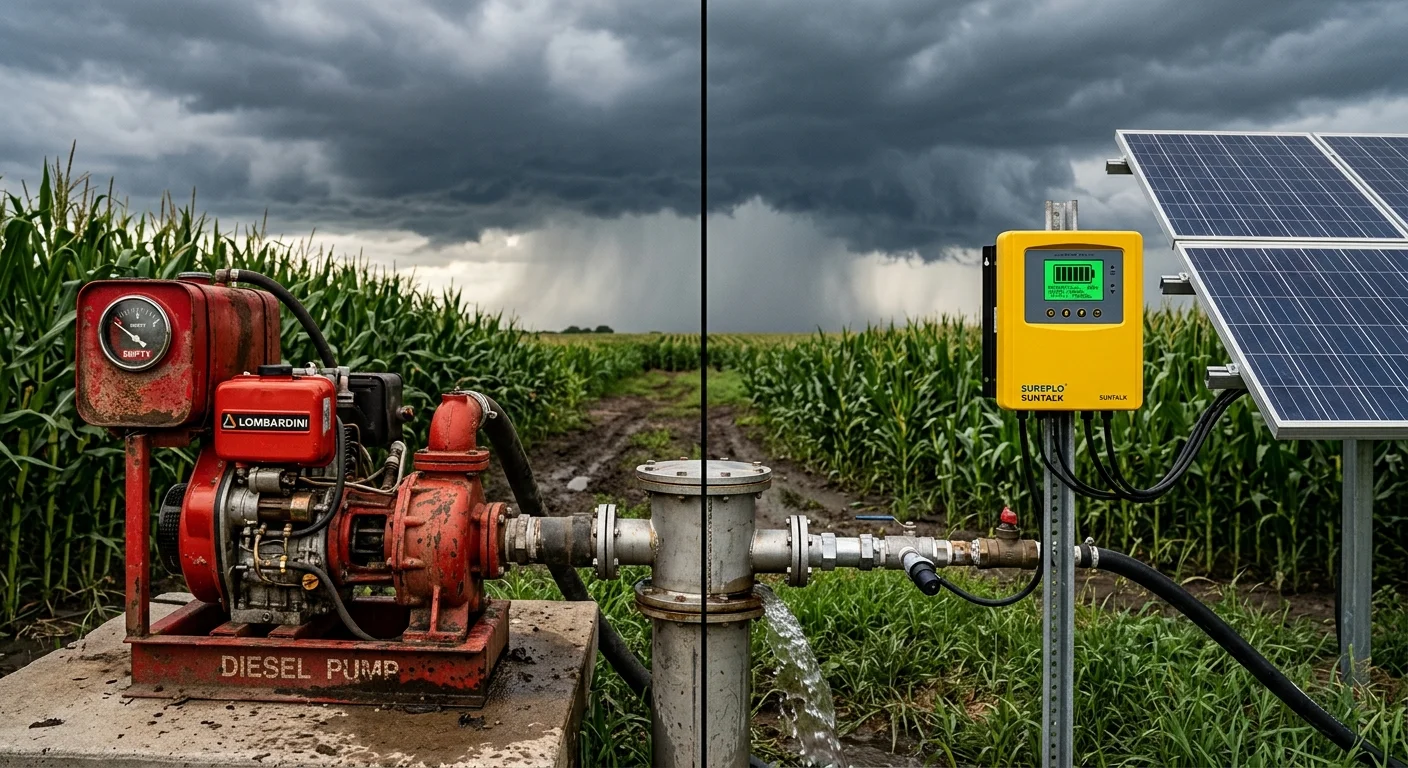
You already have a pump that works. Replacing it with a brand-new solar pump might seem like the only option—but it’s not. This 2026 guide shows you how to retrofit your existing diesel or grid-powered pump to solar, saving 50-70% on conversion costs while keeping your pump, pipes, and infrastructure intact. Includes feasibility checklist, component selection, sizing calculations, real-world case studies, and USDA EQIP funding tips.

Grounding & Lightning Protection for Solar Water Pumps: Don’t Let a Strike Destroy Your System

damaged solar pump controller from lightning surge (burnt circuit board) vs properly grounded system with copper ground rod, Type 2 surge protection device, and equipment bonding wires.

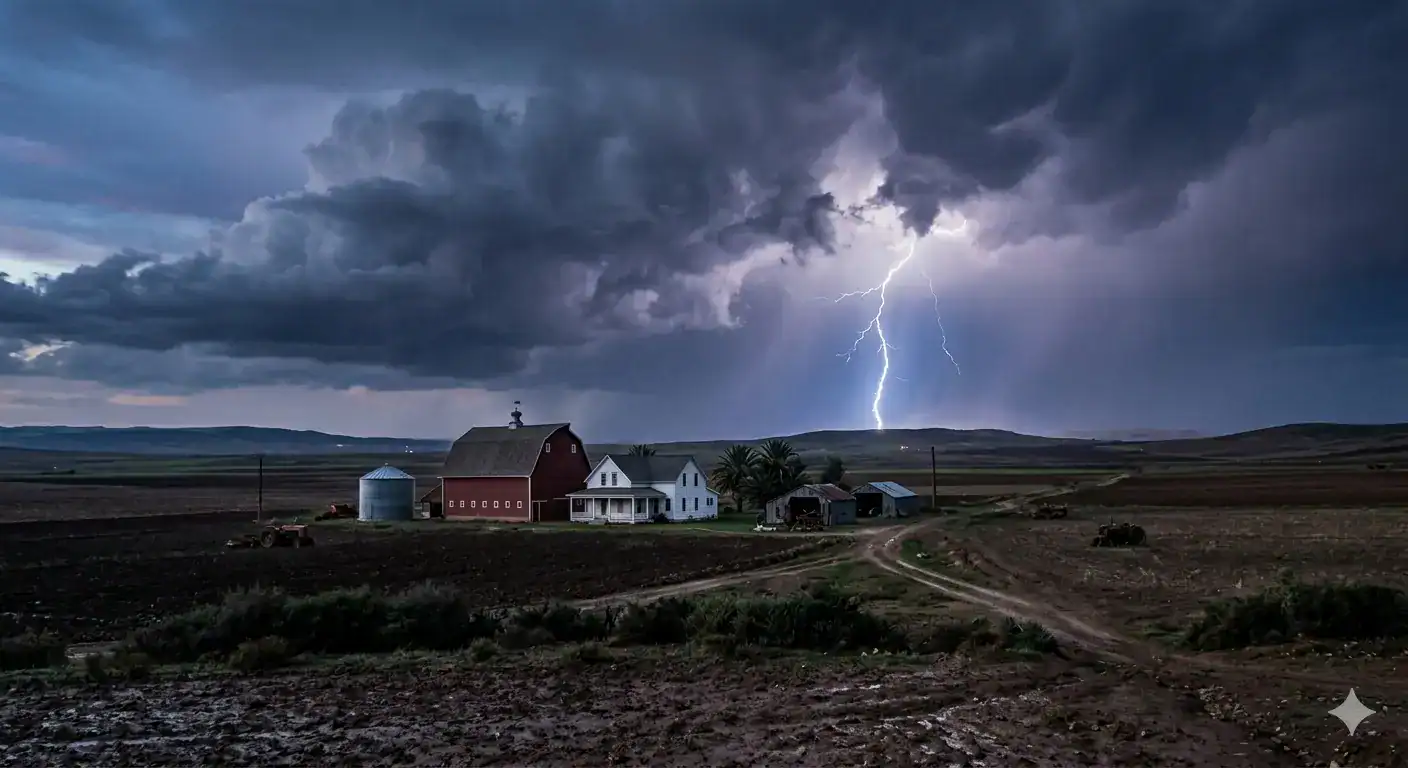
Lightning doesn’t have to strike your solar panels to destroy your pump. A strike 500 meters away can induce 1,000+ volts into your cables, frying your controller and motor. This 2026 guide covers grounding (NEC Article 250), surge protection devices (Type 1 vs Type 2), rod resistance (<25 ohms), and step‑by‑step installation for farm solar pumps. Protect your $10,000+ investment.

Sand & Sediment Management in Solar Pumping Systems

2026 guide to sand and sediment management for solar water pumps.

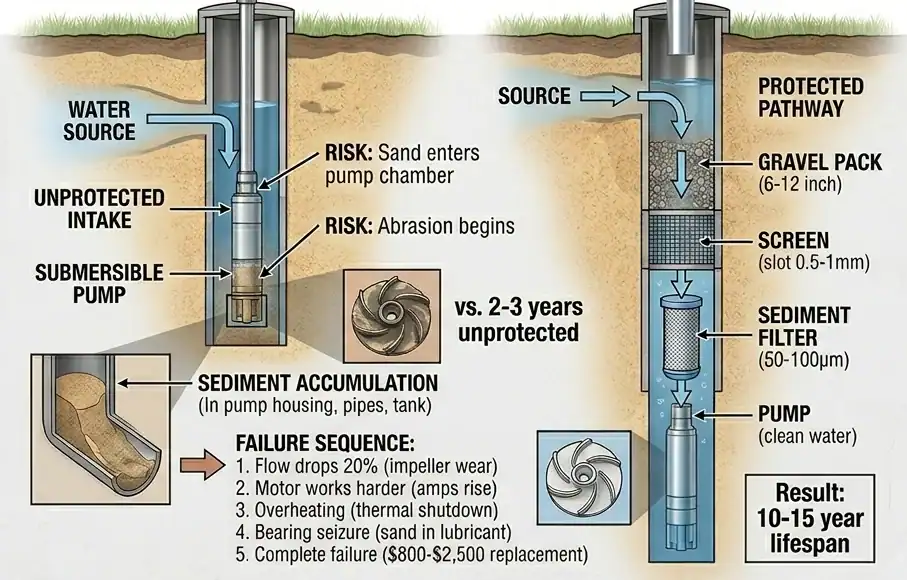
Sand is the silent killer of solar water pumps. A few grams of grit can destroy an impeller, wear out bearings, and cut pump life from 10 years to 2 years. This 2026 guide covers sand management strategies: sand separators (90‑95% efficiency), well development, pump selection (hardened materials), filtration, and monitoring. Protect your $5,000‑15,000 investment.

Water Storage vs. Battery Storage for Solar Water Pumps: Which Makes More Sense for Your Farm?

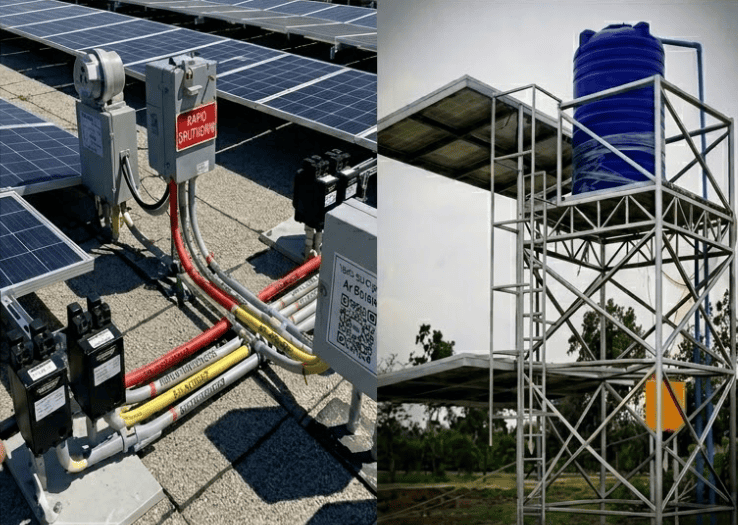
2026 comparison of water storage vs battery storage for solar water pumps. 20‑year cost ($0.05/m³ tank vs $0.30/kWh battery), lifespan (20+ vs 5‑10 years), reliability, and a farm decision matrix.

Every solar pump owner eventually faces this choice: store energy (batteries) or store water (a tank). The wrong decision can cost you thousands and leave you without water on cloudy days. This 2026 guide compares 20‑year costs, reliability, maintenance, and real‑world performance – including a decision matrix for your farm.

Solar Water Pump Case Studies: 5 US Farms Using Solar-Powered Drip Irrigation

Solar water pump case studies: 5 US farms using solar-powered drip irrigation. Real payback data, technology choices, and lessons from field installations

Five US farms, five solar-powered drip irrigation success stories: California almond orchard saves $18,400/year, Iowa corn-soy achieves 85% energy independence, Texas cattle ranch eliminates water hauling, Florida vegetable farm cuts disease by 82%, Oregon hemp farm frees 40% water for expansion. Real payback data, technology choices, and lessons from 200+ field installations.

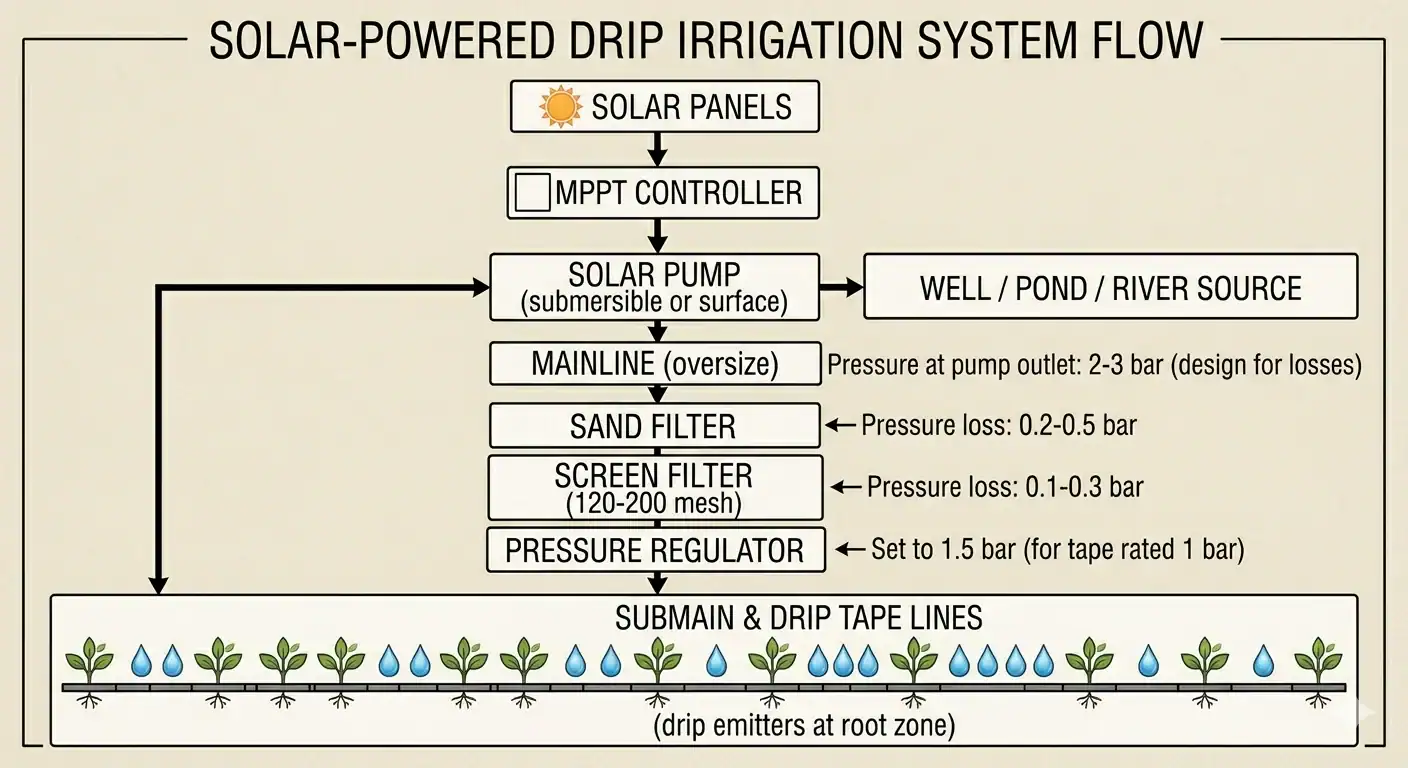
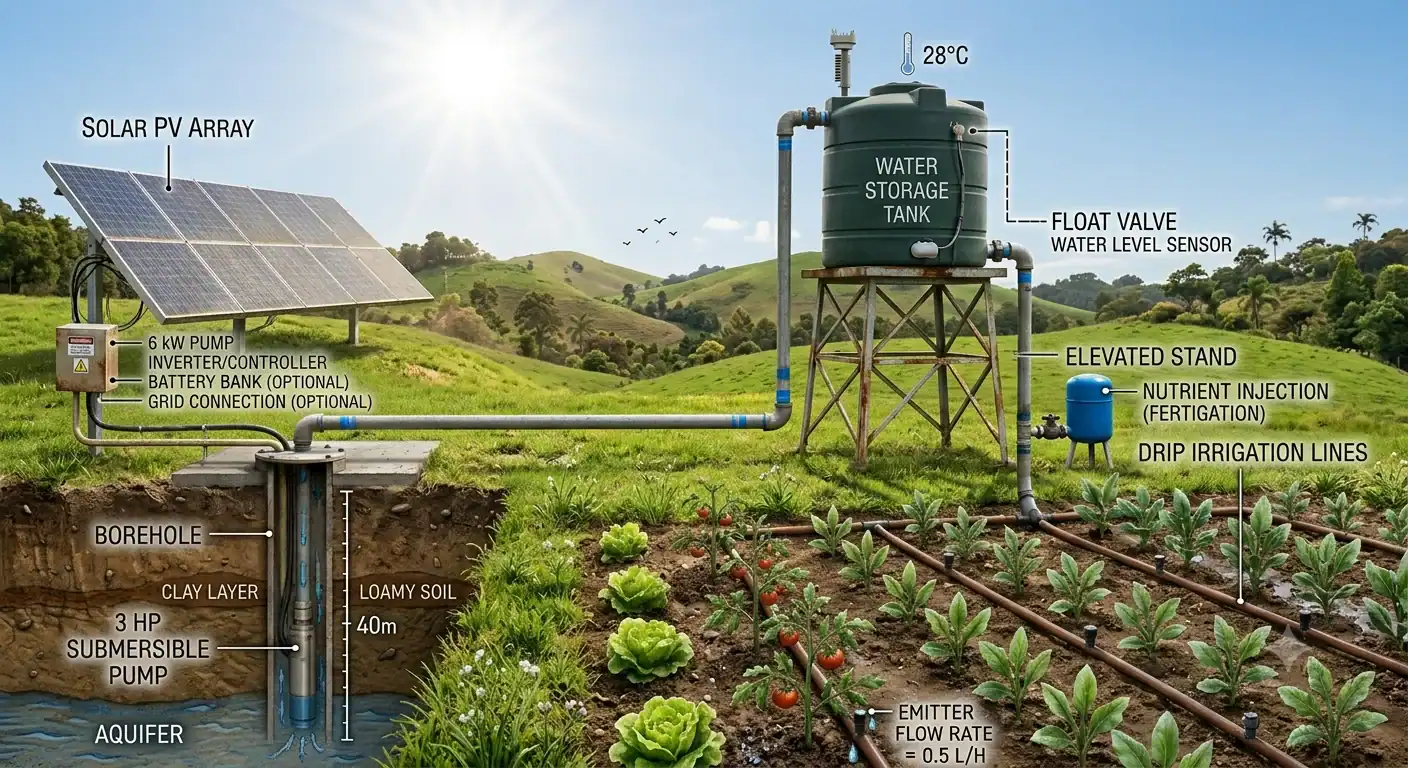
Solar Energy for Drip Irrigation Systems: A Practical Optimization Guide for Farmers

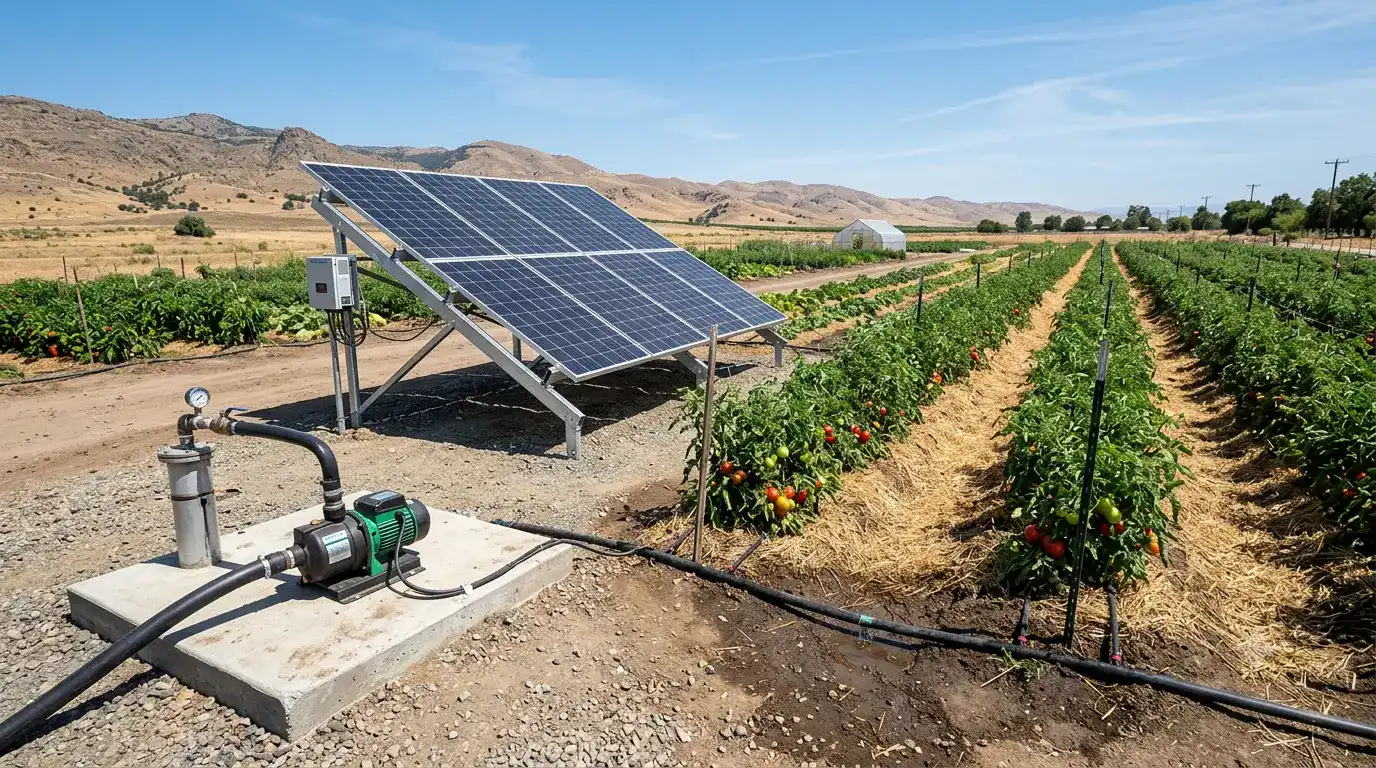
Drip irrigation and solar pumps are a perfect match – but only if you design the system correctly. This 2026 guide covers pressure requirements (1‑2 bar), filtration (120‑200 mesh), flow rate matching, drip tape selection, and pump scheduling. Includes a component sizing table, pressure loss calculations, and a checklist for solar‑compatible drip design.