Winter Solar Production: What to Expect Month by Month (And What’s a Fault)

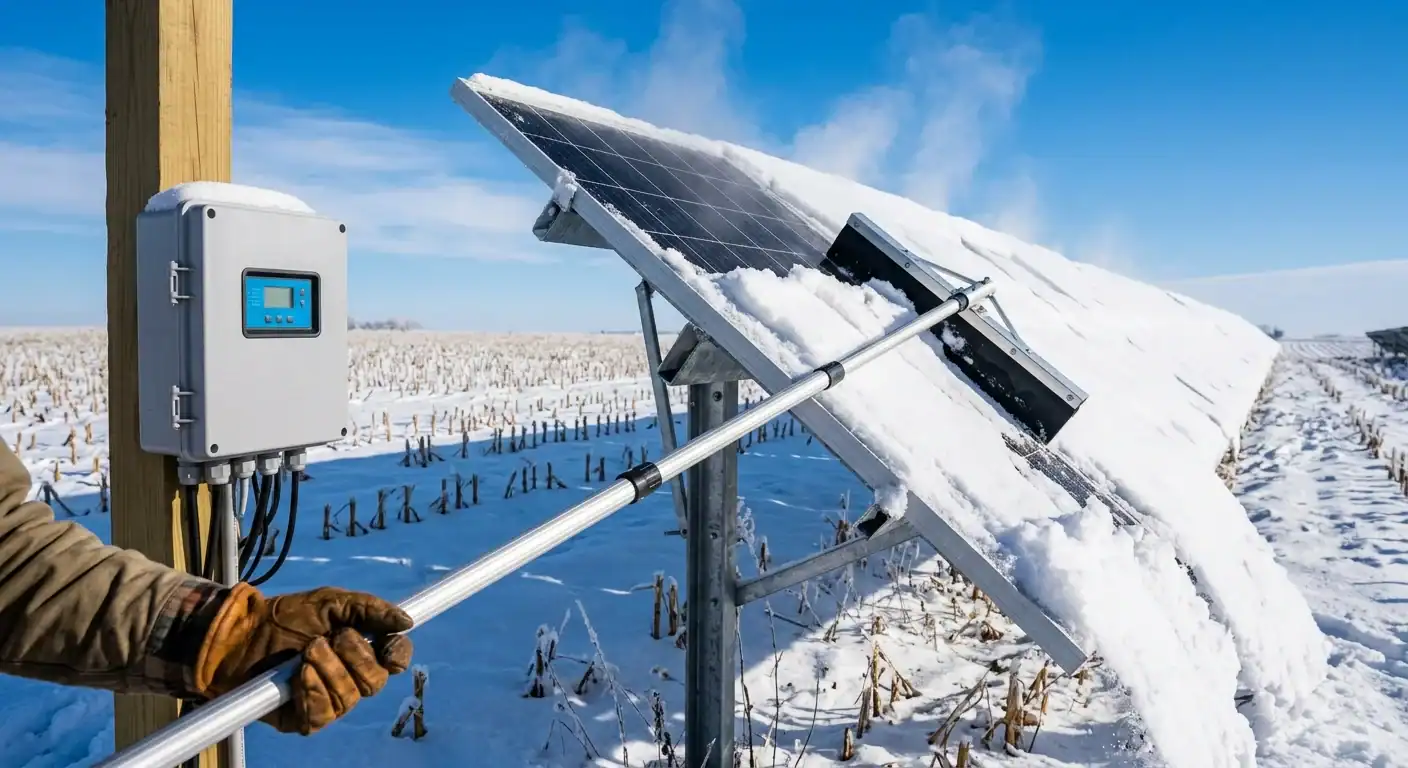
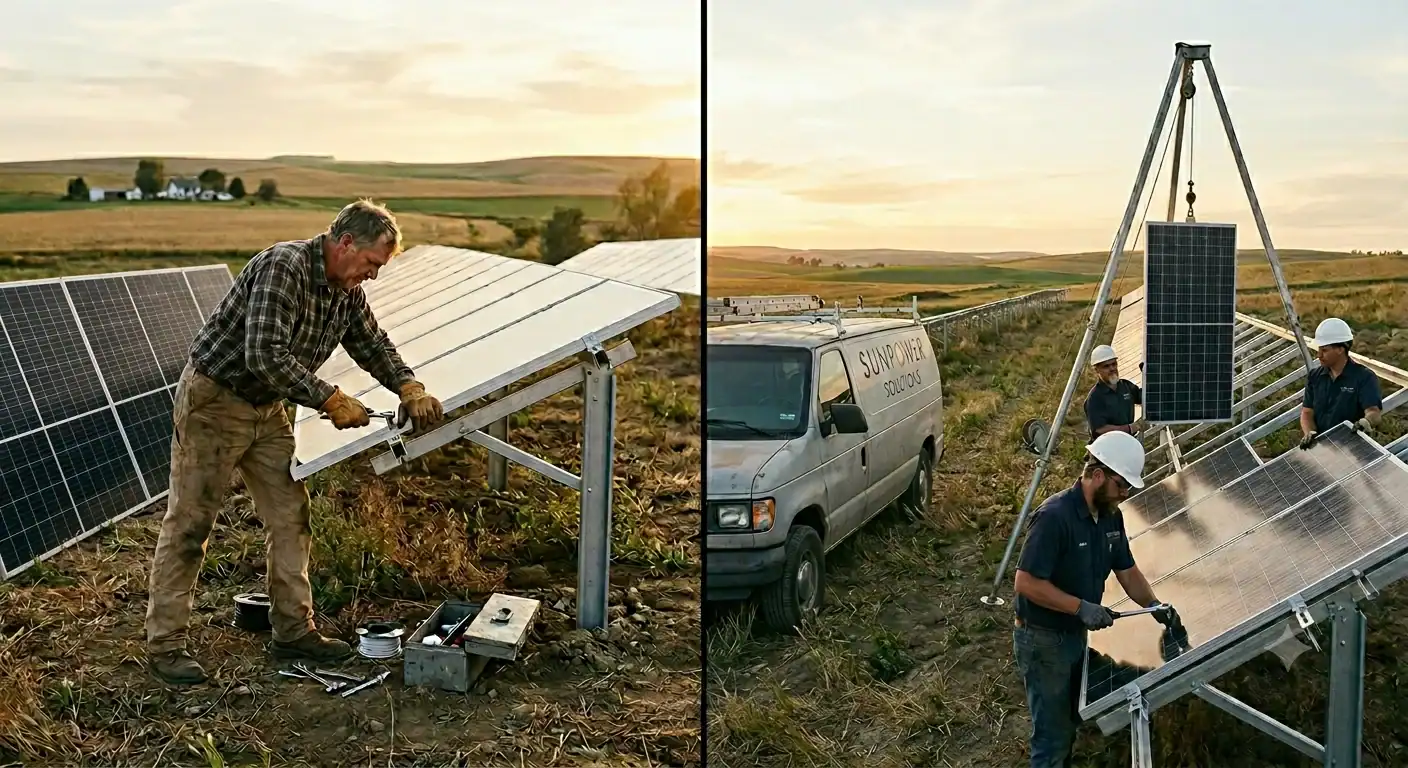
Farm solar array with snow sliding off tilted panels under low winter sun, illustrating winter solar production expectations

Written by Dr. Robert Kowalski — Ph.D. in Agricultural and Biological Engineering from Penn State University, with 18 years of experience in on-farm electrical systems and solar performance analysis. He has benchmarked seasonal production for farm arrays across the Midwest and Northeast. He is a licensed Professional Engineer and a member of the American Society … Read more

Solar Electric Tractor Charging: The 2026 Farm Infrastructure Guide

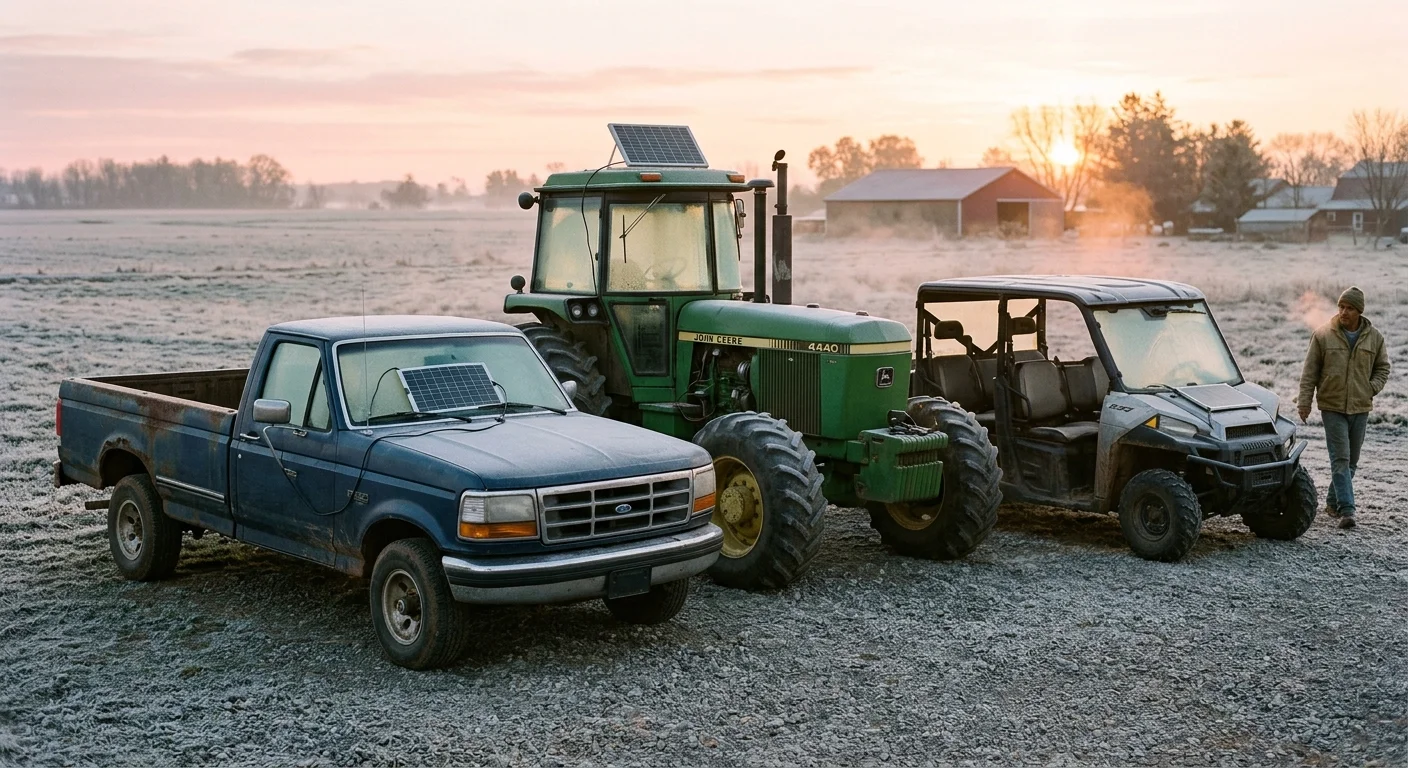
Electric tractor charging from a solar array and battery system on a farm, with charging cable connected

An electric tractor needs 50 to 150 kW to charge. A typical farm service panel cannot deliver that load without a utility upgrade costing $15,000 to $50,000. Solar plus battery avoids the upgrade entirely — and on most farms the math works better than the upgrade itself. This guide covers the three charging architectures, the service capacity problem most farms discover too late, and why you should size the array for the charging window rather than the tractor’s daily energy.

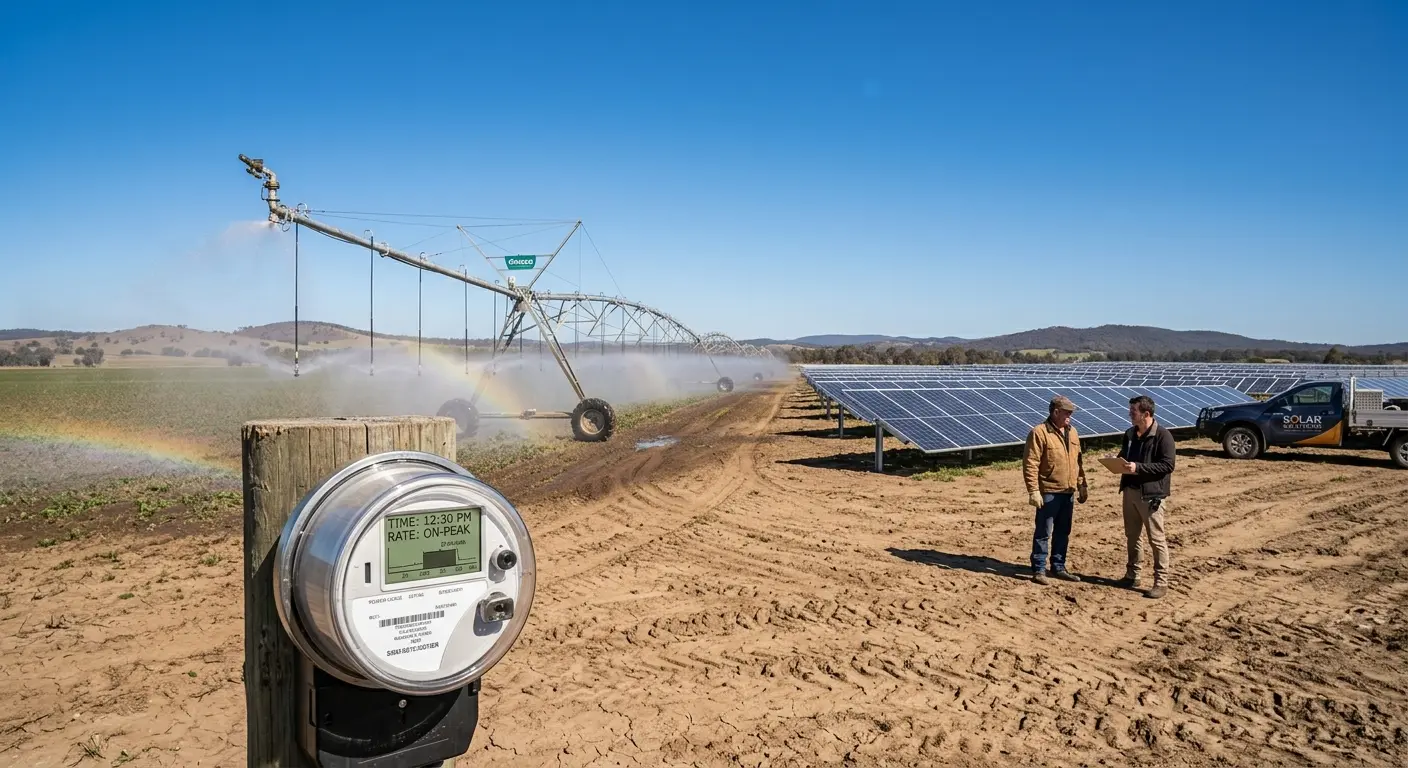
Farm Time-of-Use Rates and Irrigation Scheduling: The Hidden Solar ROI Multiplier

Midday irrigation pivot running under a clear sky, with a farm solar array and time-of-use utility meter visible."

our solar array produces the same electricity regardless of when your pumps run. But under a time-of-use rate, the value of that electricity changes by the hour — sometimes by a factor of three. This is the ROI multiplier most farm solar owners never calculate. Here’s how to read your agricultural tariff, the four load-shifting strategies that require no new equipment, and a worked 250 kW example showing how irrigation scheduling alone can add 15% to 30% to your solar payback.

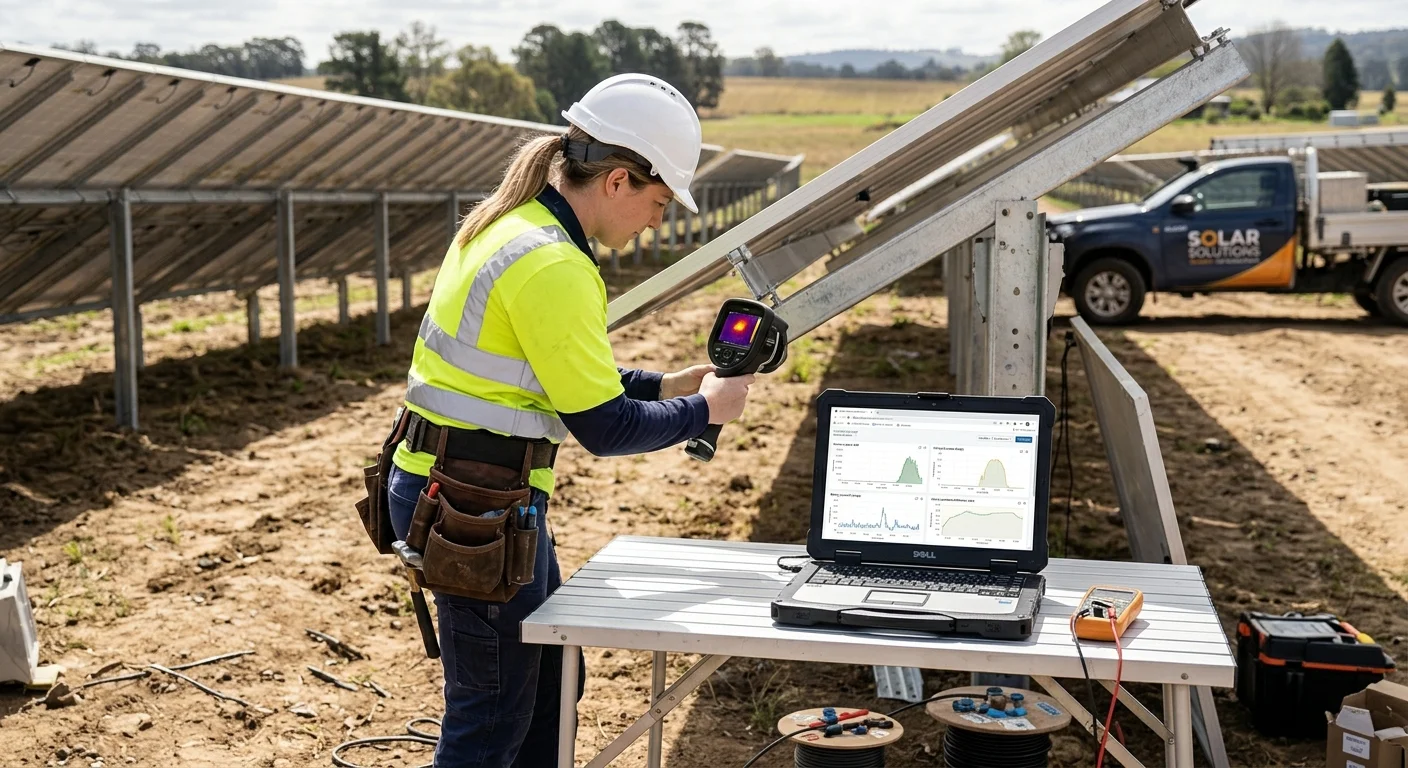
Solar Panel Degradation and Underperformance on Farms: How to Detect, Diagnose, and Recover Lost Production

Technician using a thermal imaging camera to diagnose solar panel underperformance on a farm array, with a monitoring dashboard visible on a laptop

Your array is producing 15% less than the installer projected. Is that normal degradation, dirty panels, a failing inverter, or a legitimate warranty claim? This diagnostic guide walks through the flowchart used in professional performance audits: compare actual vs. expected production, normalize for weather, check string-level data, and identify whether the loss is recoverable or structural. Includes benchmark performance ratios, typical loss percentages by cause, and how to document a warranty claim the manufacturer cannot deny.

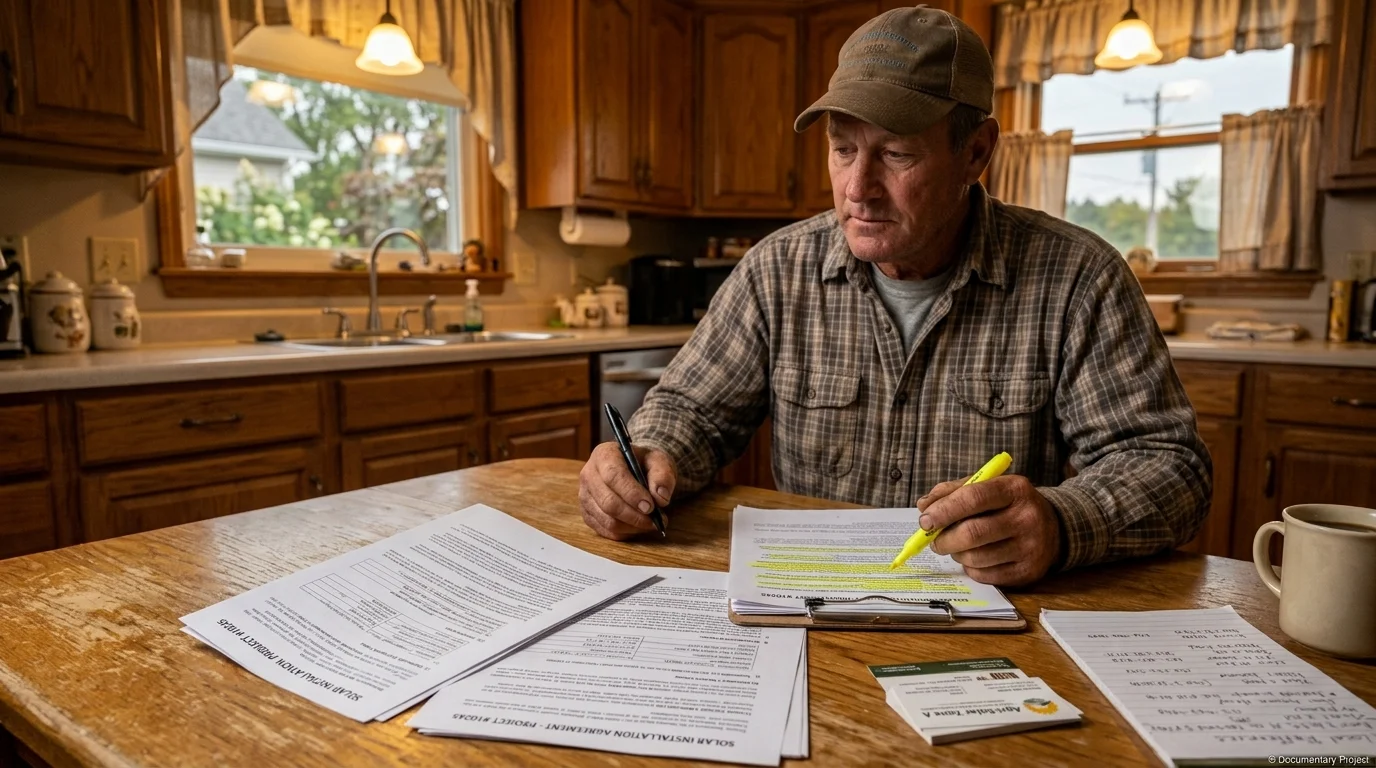
How to Vet a Farm Solar Installer: 12 Red Flags + 8 Credentials

Farmer reviewing a solar installation contract at a kitchen table, with a certification lookup page open on a laptop and a list of reference addresses nearby.

A bad installer costs far more than a bad price. Denied warranty claims, failed inspections, structural damage, and abandoned mid-install projects can turn a $160,000 solar investment into a total loss. This guide covers the 12 red flags that separate a professional farm solar contractor from a sales organization, the 8 credentials that actually matter, and the 5 contract clauses you must negotiate before signing — including the warranty pass-through provision most contracts quietly omit.

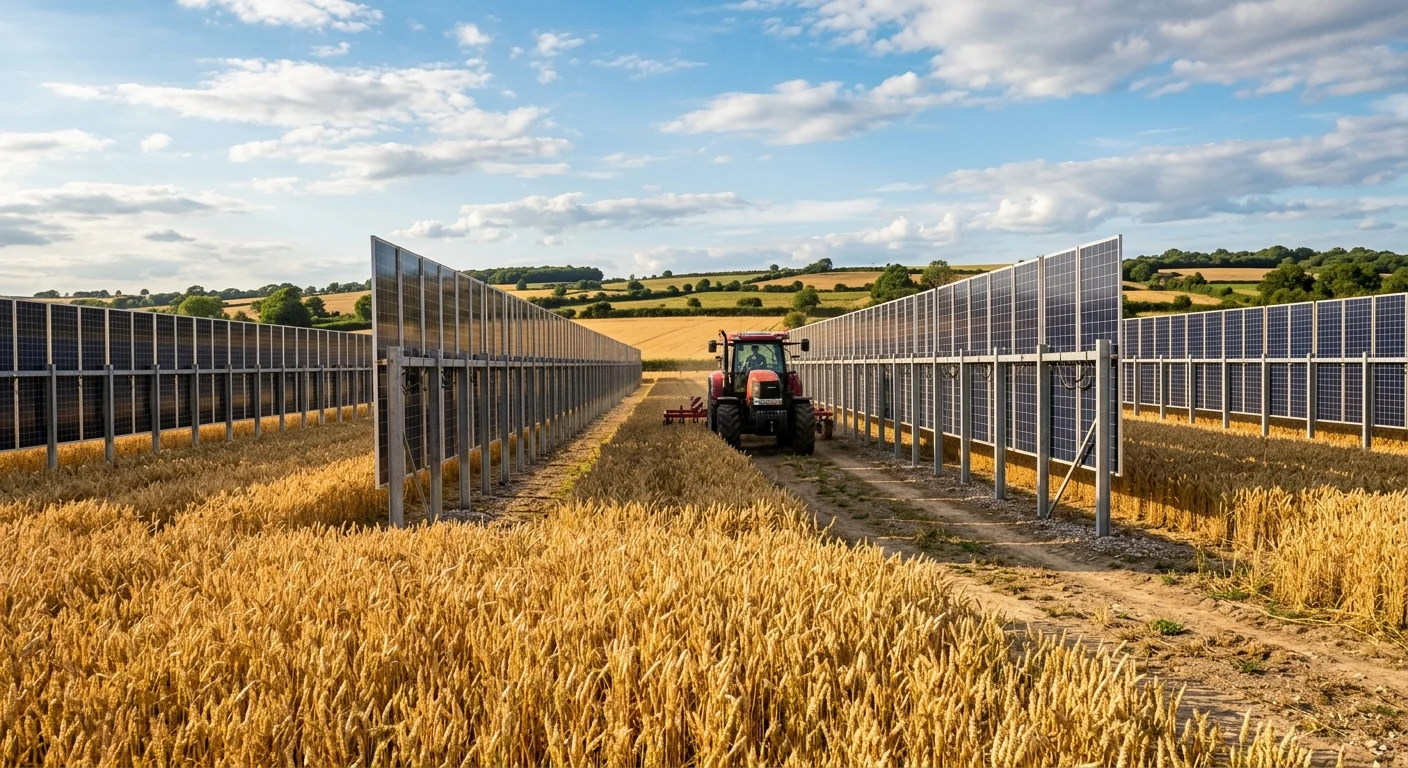
Vertical Bifacial Solar for Farms: The 2026 ROI for Grain & Dairy

Vertical bifacial solar panels installed in rows across a wheat field, with a tractor path visible between the panel rows.

Grain and dairy farmers have rejected agrivoltaics because it takes land out of production. Vertical bifacial solar changes that equation. It costs only 10% to 20% more than conventional ground-mount — not the 25% to 40% premium of overhead systems — and it retains 95% to 99% of your agricultural land. You can drive a tractor between the rows. The panels shed snow naturally. And the dual-peak generation profile matches farm electricity demand better than a south-facing array. This article runs the full 25-year ROI math for a 500-acre grain farm with a 1 MW vertical bifacial system, including the MPPT string-sizing trap that costs most installers 10% to 15% of their generation.

How to Wire a 12V DC Solar Fan in Your Barn or Greenhouse

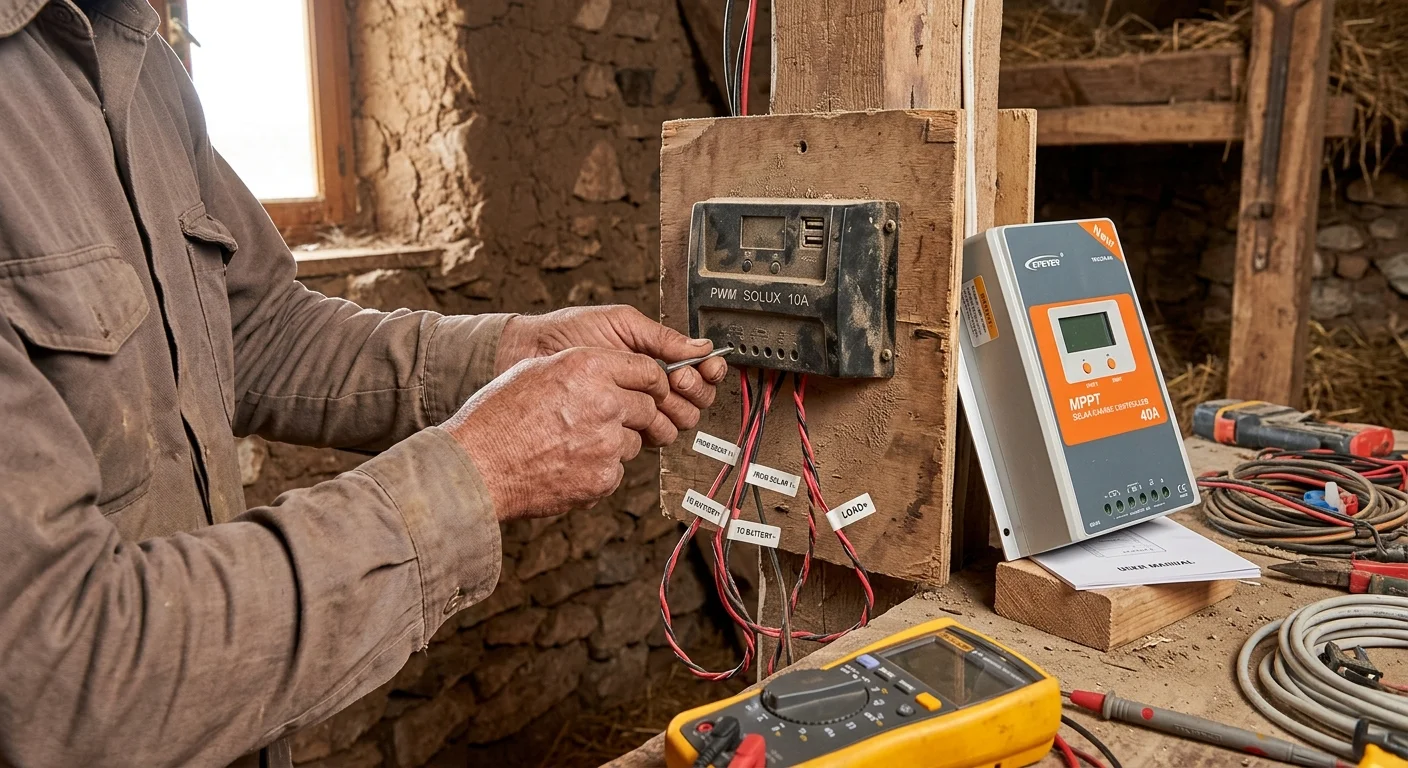
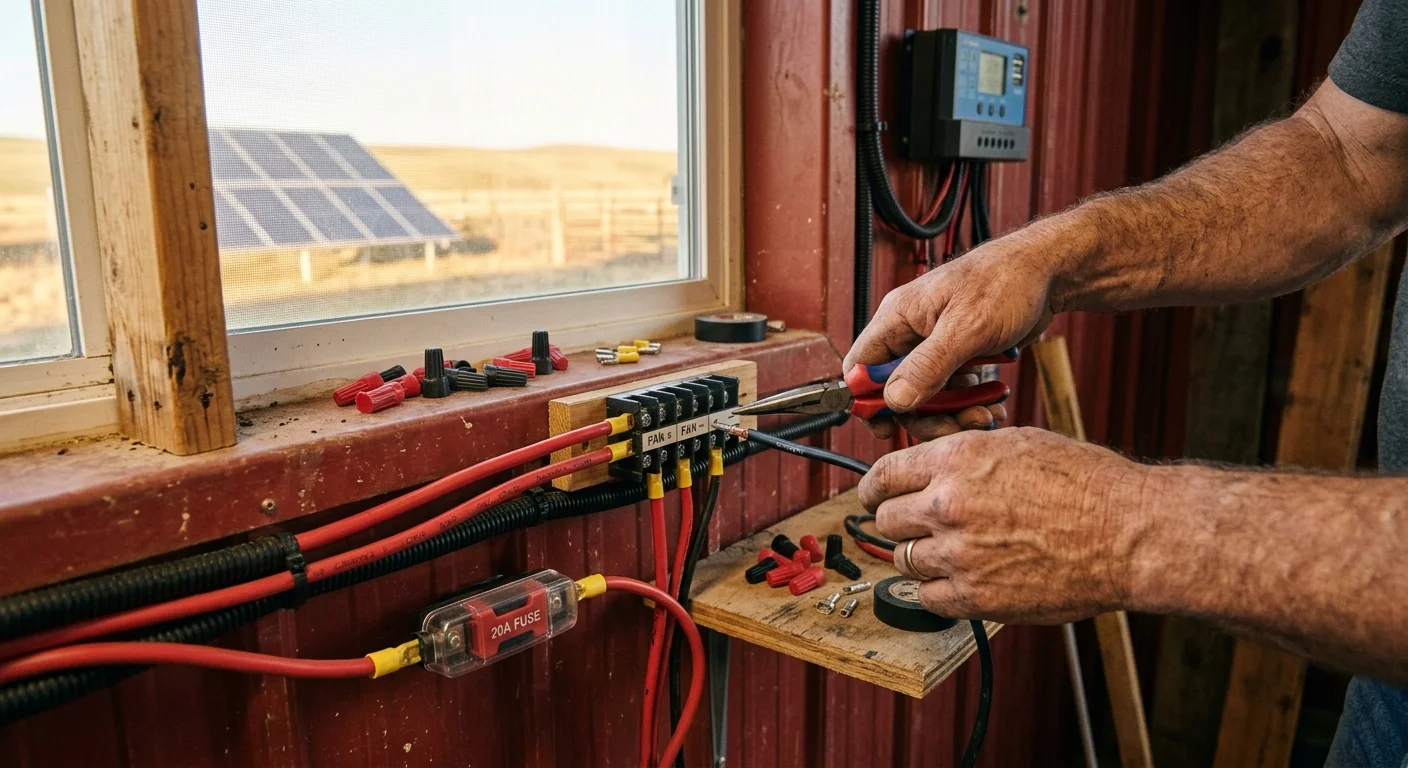
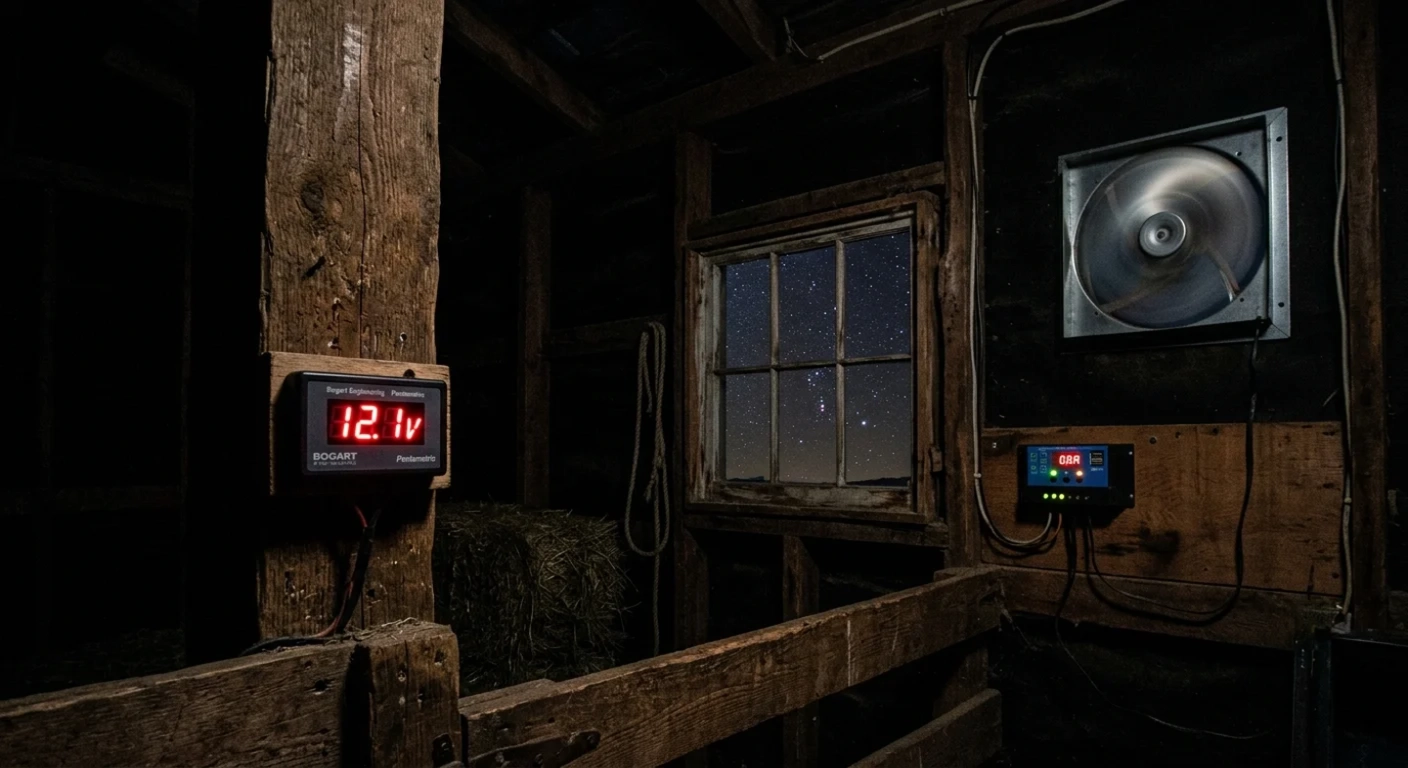
Close-up of hands wiring a 12V DC solar fan with gauge wire and fuse holder in a barn

You bought the fan. Now you need to run wire through a dusty barn without burning it down. Here is the exact gauge, fuse size, switch placement, and code-compliant method for wiring DC ventilation.

Solar Pump Troubleshooting: 10 Problems and How to Fix Them Fast

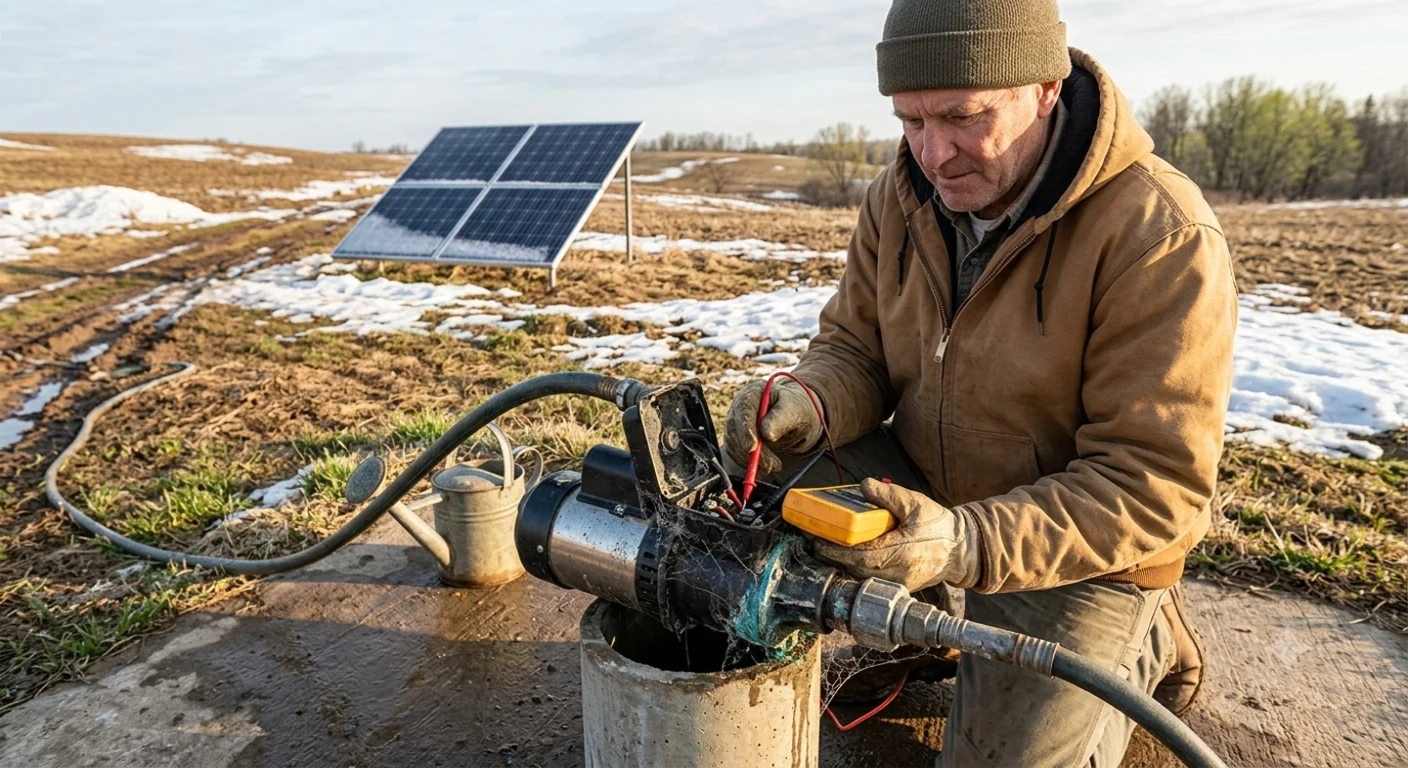
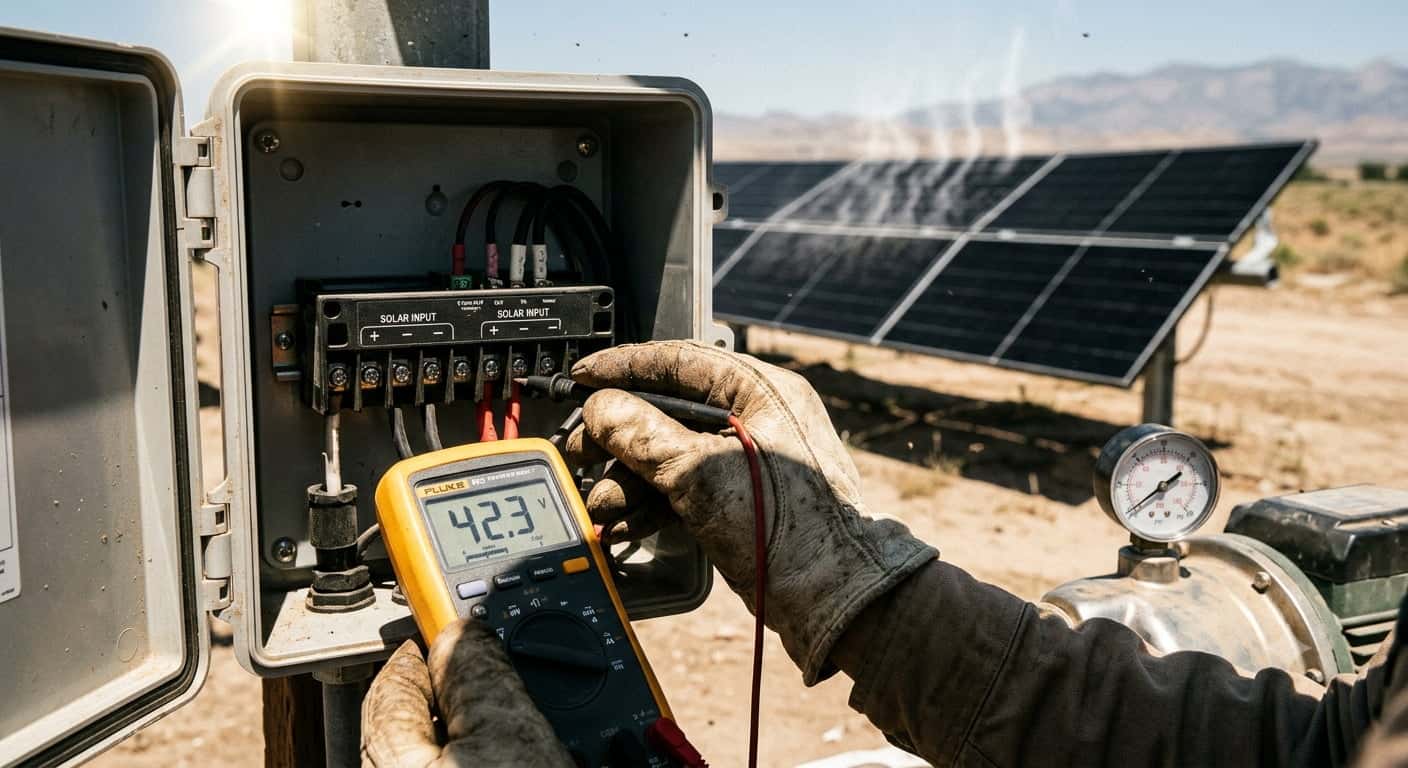
Troubleshooting flowchart for solar water pumps showing symptoms (no start, low flow, noise) linked to solutions (check panels, cables, filters, impeller) with a farmer diagnosing the system.

Your solar pump stopped working — or worse, it runs but delivers almost no water. Before you call a technician, check these four common issues that cause over 70% of field failures. This 2026 troubleshooting guide covers pump won’t start, low flow, noisy operation, controller error codes, and a step‑by‑step diagnostic flowchart.

Retrofitting Existing Diesel/Grid Pumps to Solar: A Complete 2026 Guide for Farmers

Comparison infographic showing a diesel pump retrofitted to solar: existing pump kept, diesel generator replaced with solar panels and a VFD/inverter, with fuel cost savings highlighted.

You already have a pump that works. Replacing it with a brand-new solar pump might seem like the only option—but it’s not. This 2026 guide shows you how to retrofit your existing diesel or grid-powered pump to solar, saving 50-70% on conversion costs while keeping your pump, pipes, and infrastructure intact. Includes feasibility checklist, component selection, sizing calculations, real-world case studies, and USDA EQIP funding tips.

Grounding & Lightning Protection for Solar Water Pumps: Don’t Let a Strike Destroy Your System

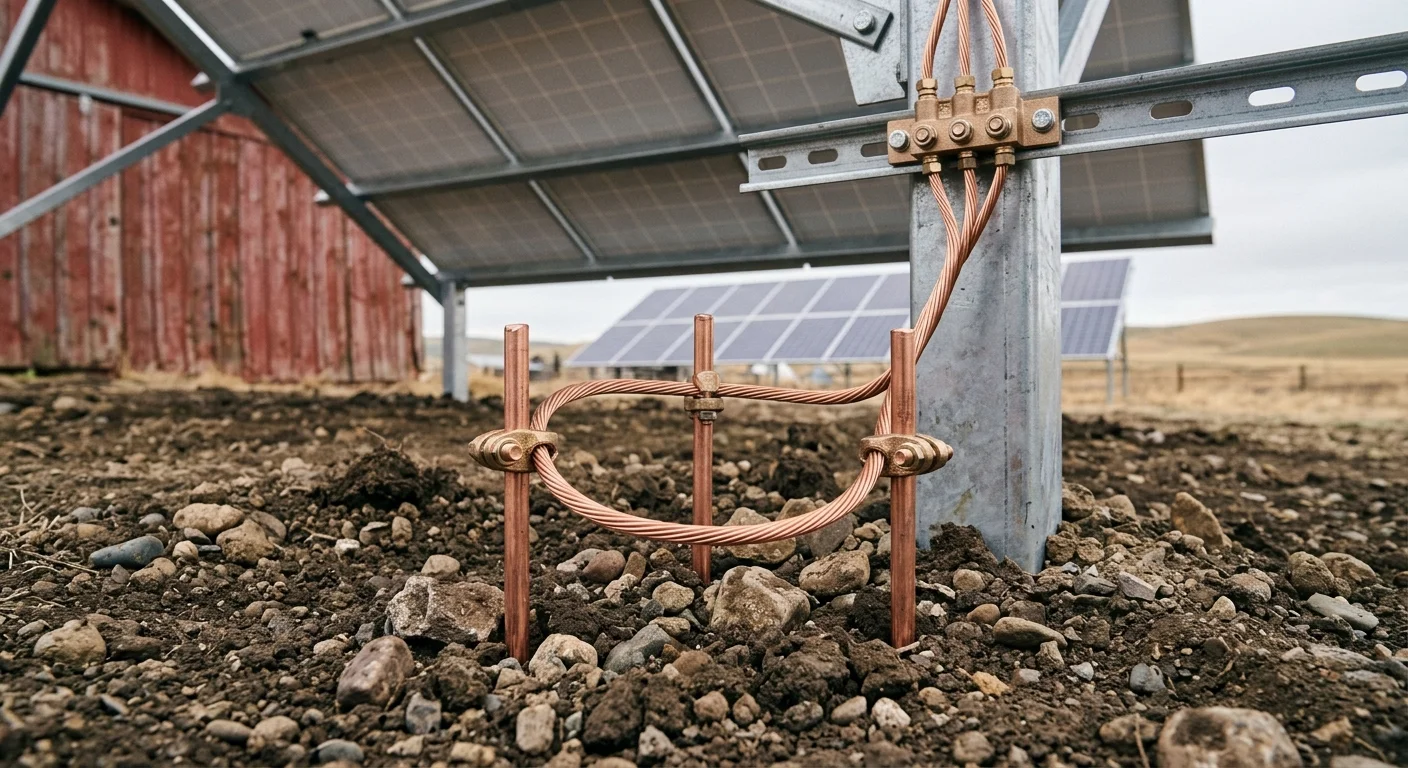
damaged solar pump controller from lightning surge (burnt circuit board) vs properly grounded system with copper ground rod, Type 2 surge protection device, and equipment bonding wires.

Lightning doesn’t have to strike your solar panels to destroy your pump. A strike 500 meters away can induce 1,000+ volts into your cables, frying your controller and motor. This 2026 guide covers grounding (NEC Article 250), surge protection devices (Type 1 vs Type 2), rod resistance (<25 ohms), and step‑by‑step installation for farm solar pumps. Protect your $10,000+ investment.