Solar for Swine and Hog Operations: Ventilation, Heating, and Manure Management

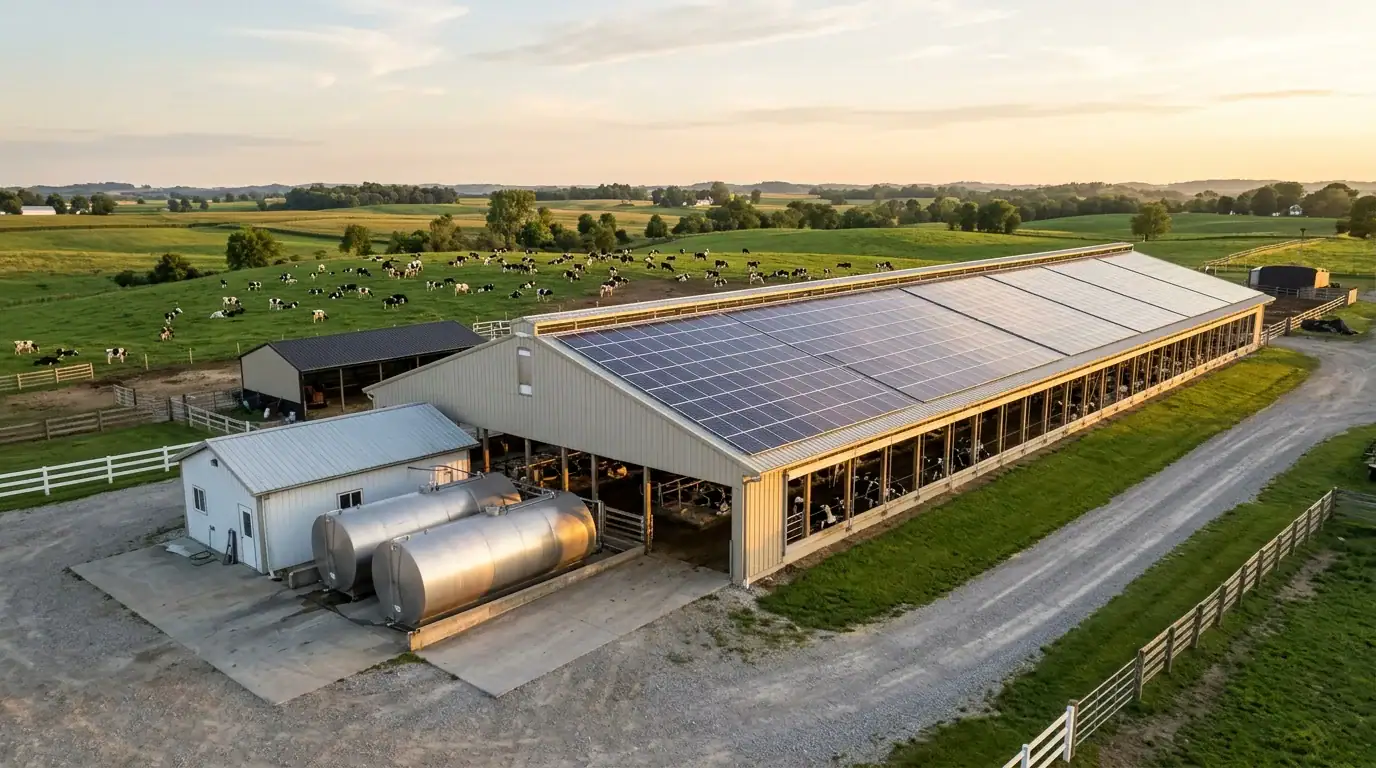
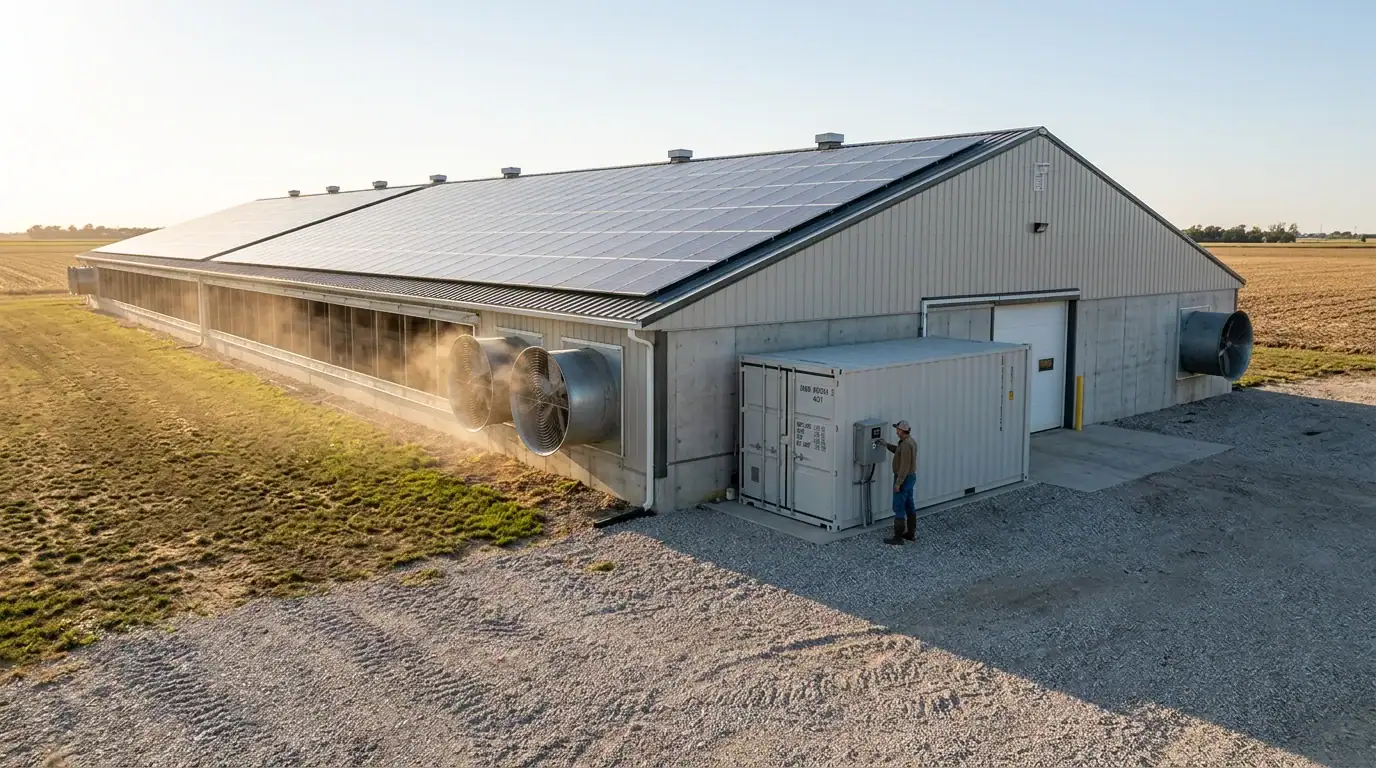
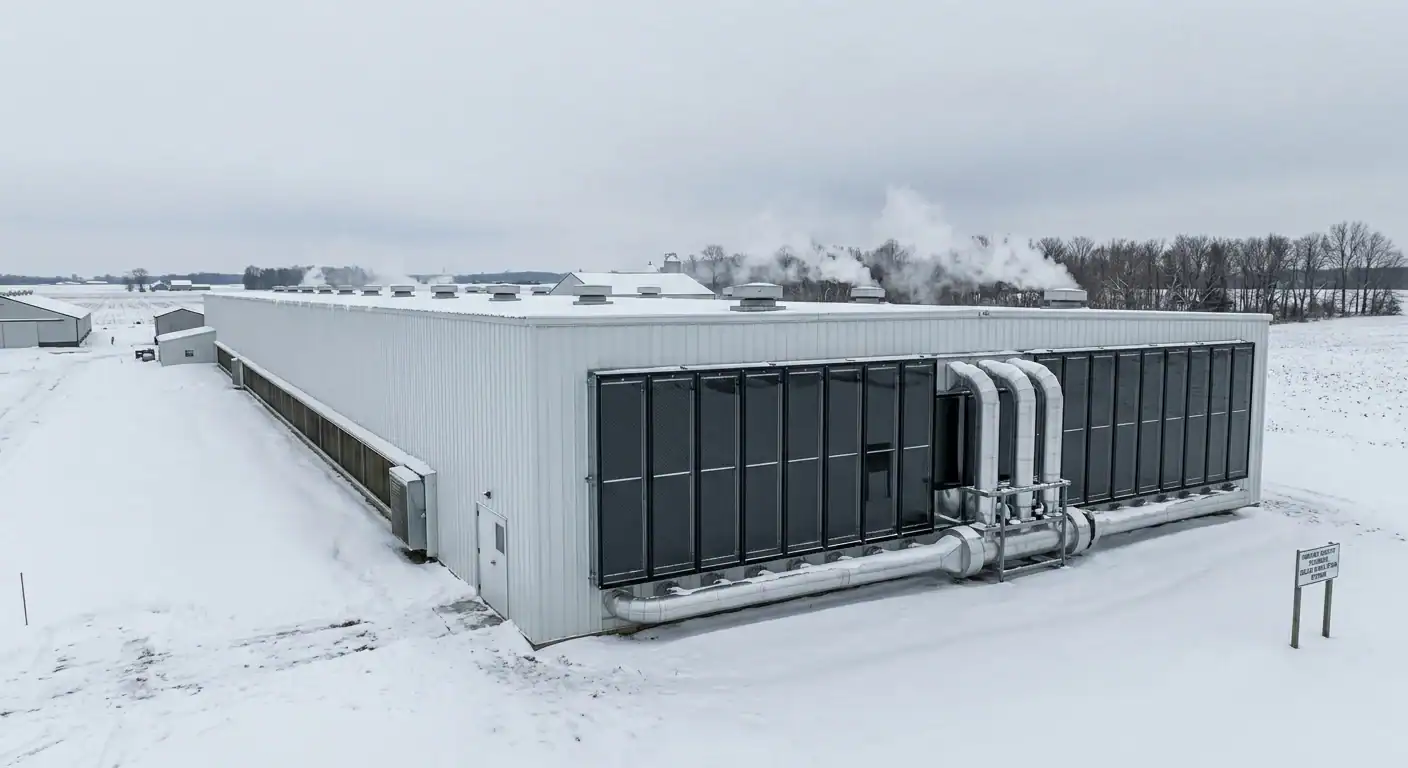
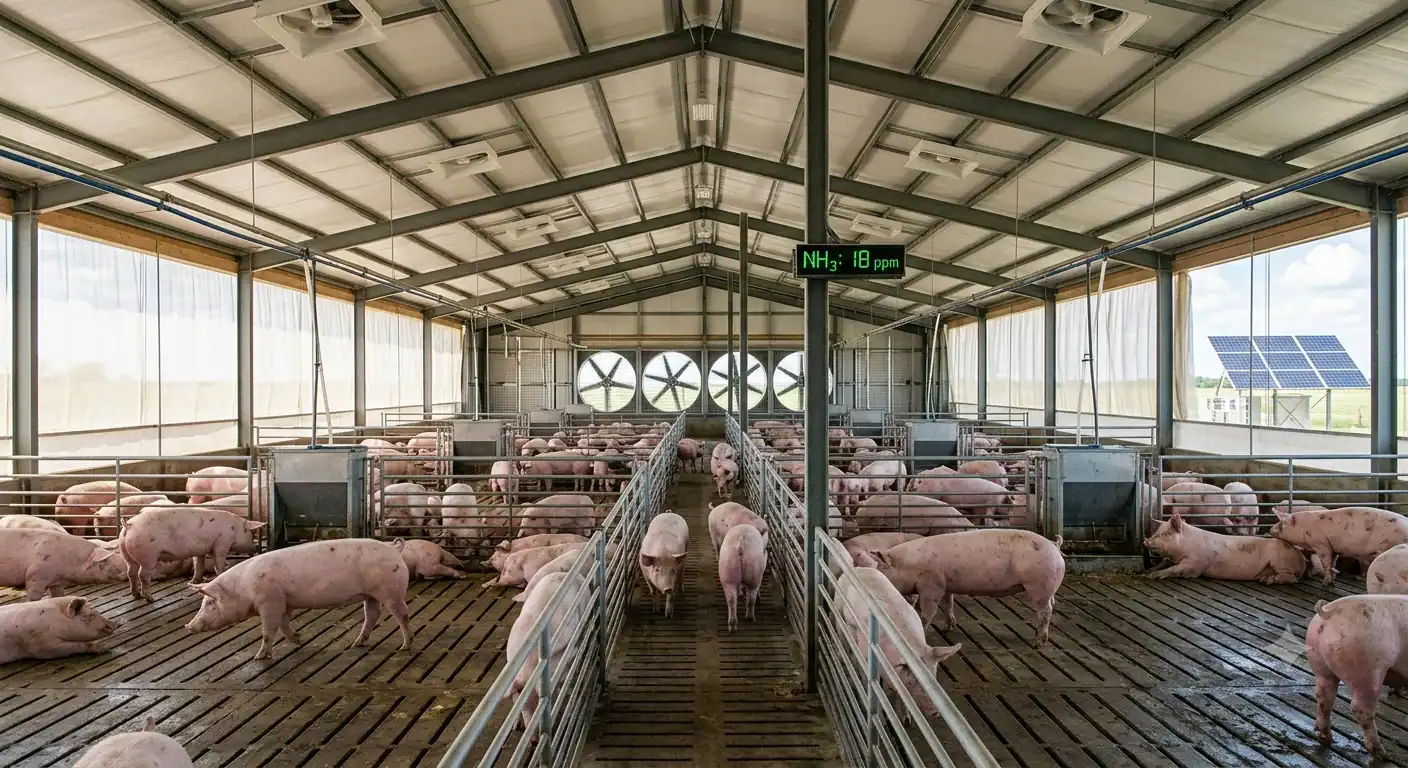
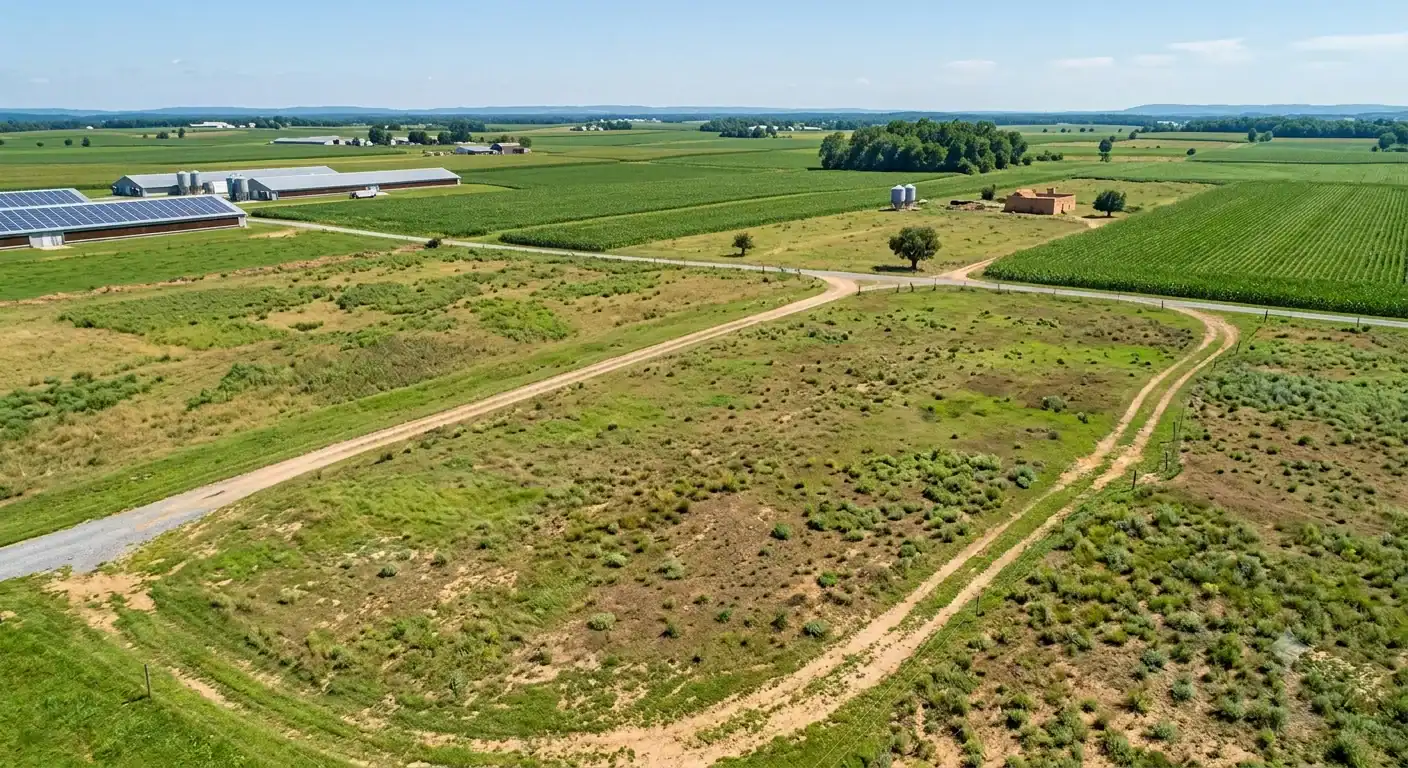
Swine finishing barn with rooftop solar array and battery backup enclosure, with ventilation fans running and a farmer checking a control panel.

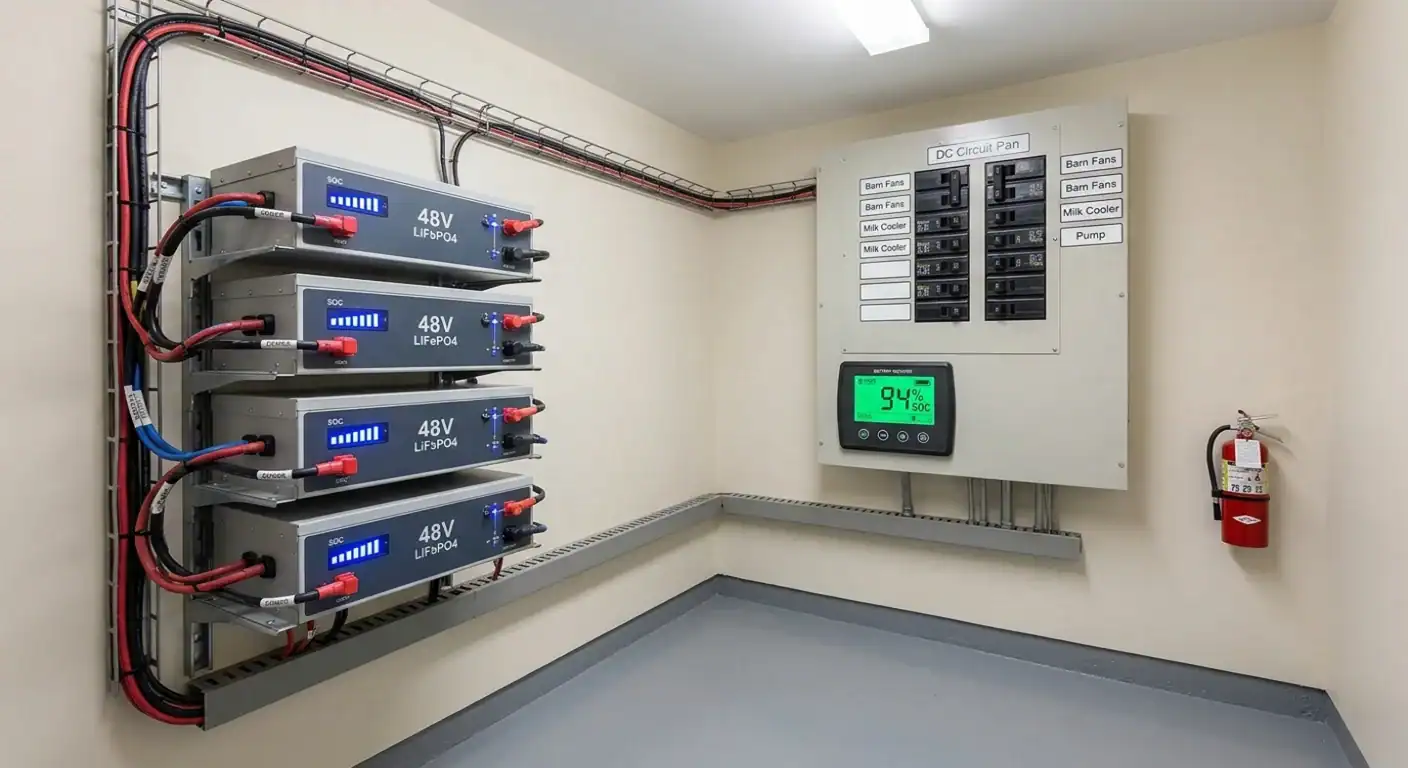
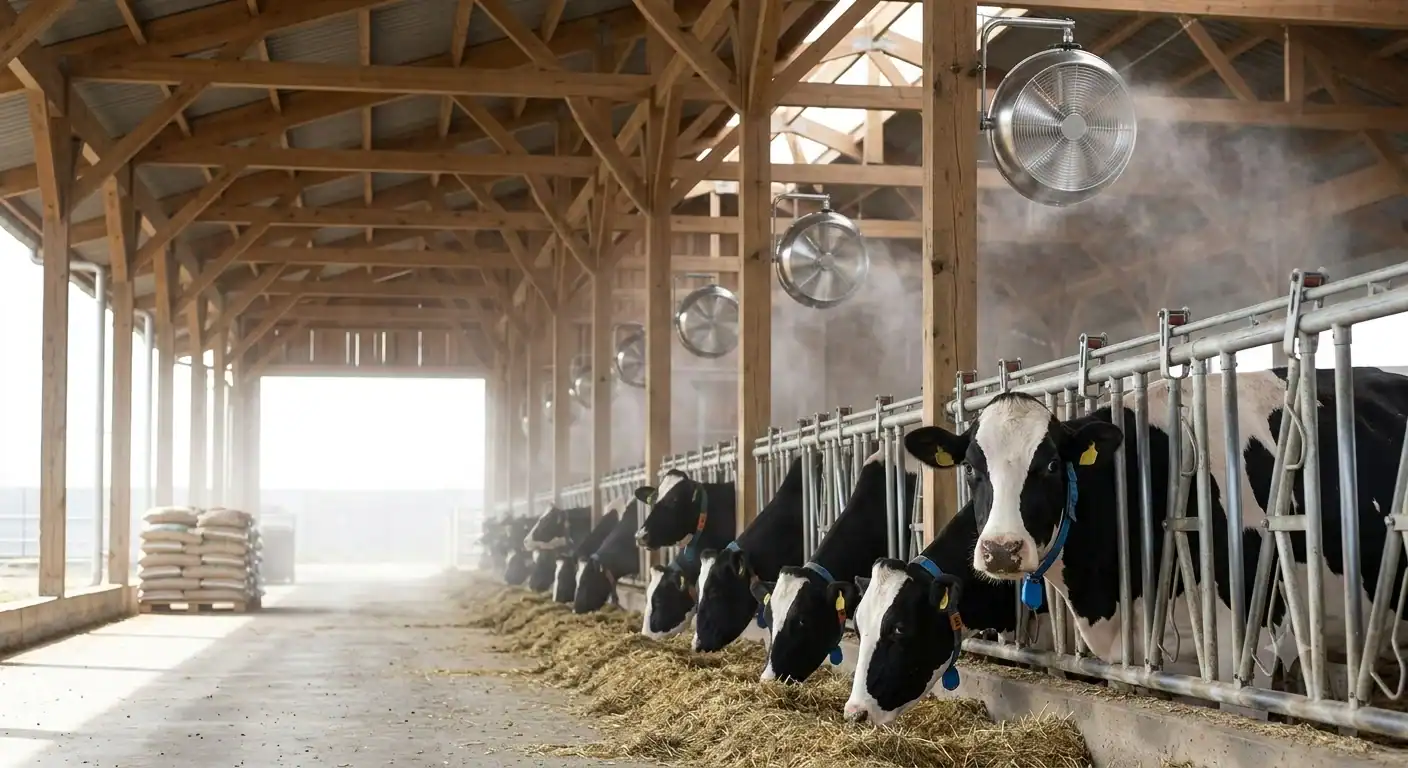
A 2,400-head finishing barn runs ventilation 24 hours a day, year-round, and the ventilation load is safety-critical — a failure during summer heat can kill an entire barn in hours. That single fact changes the solar design: battery backup for ventilation is not a luxury, it is an operational requirement. This guide covers the swine barn load profile, the three system configurations, and why ventilation battery sizing needs 8 hours at full load — not the 2 hours most installers propose.

How to Wire a 12V DC Solar Fan in Your Barn or Greenhouse

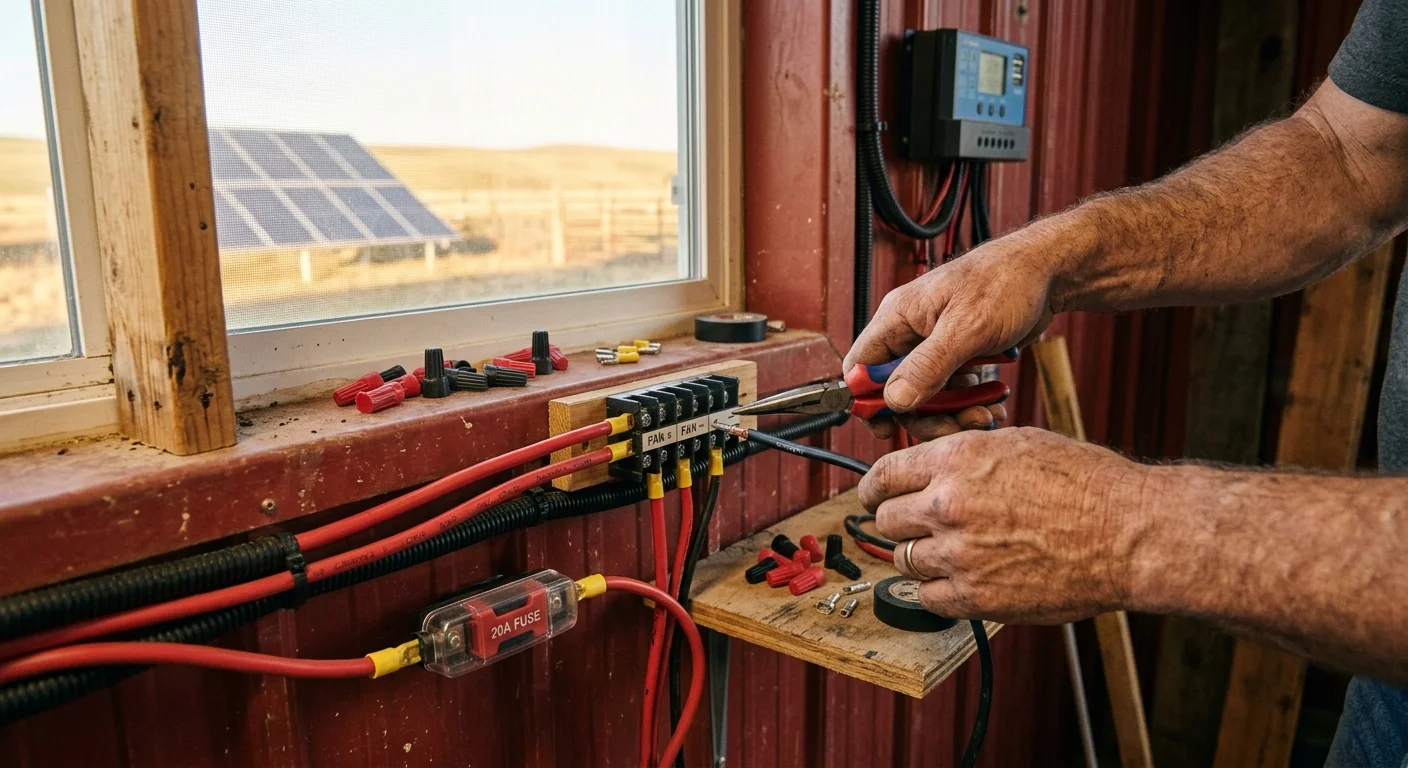
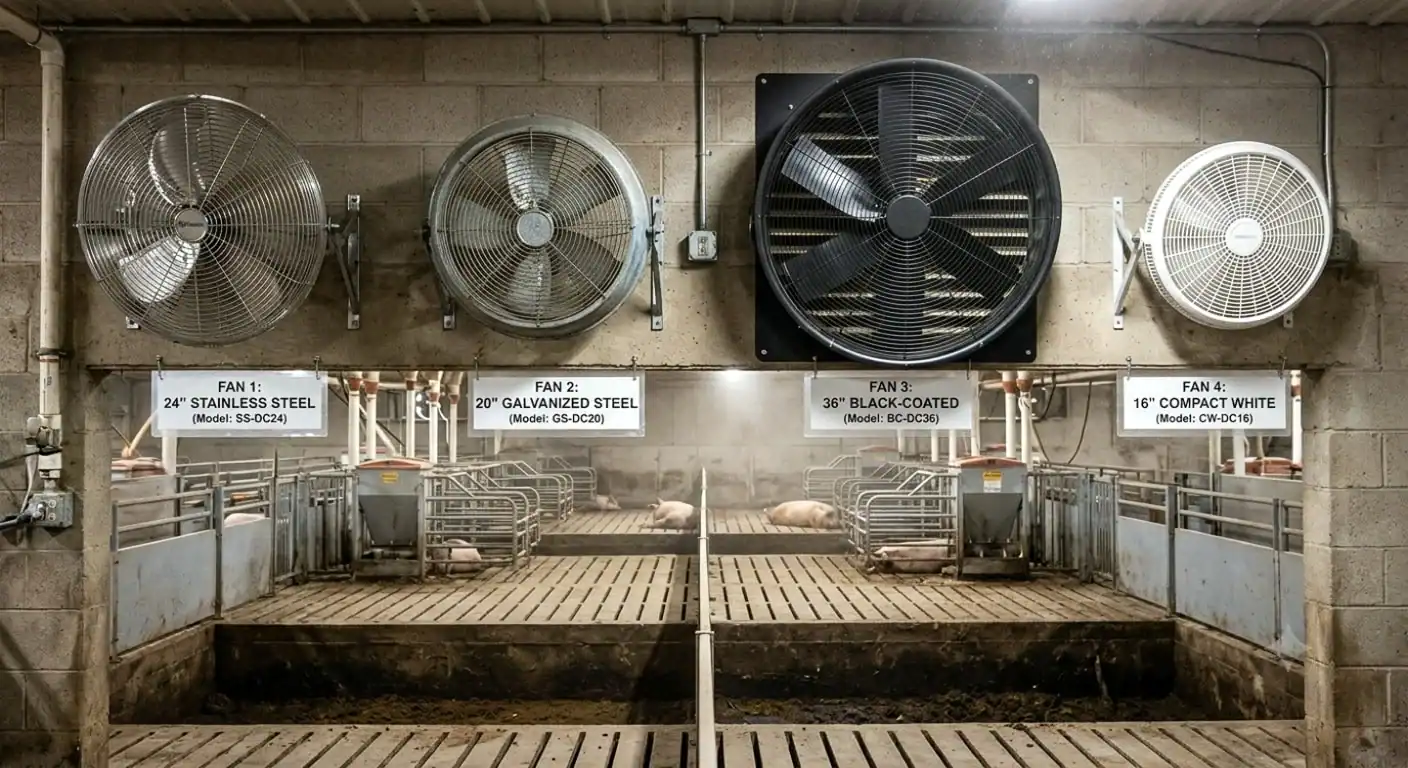
Close-up of hands wiring a 12V DC solar fan with gauge wire and fuse holder in a barn

You bought the fan. Now you need to run wire through a dusty barn without burning it down. Here is the exact gauge, fuse size, switch placement, and code-compliant method for wiring DC ventilation.

Solar Heating and Cooling for Farms: A Beginner’s Guide to Cutting Energy Costs Year-Round

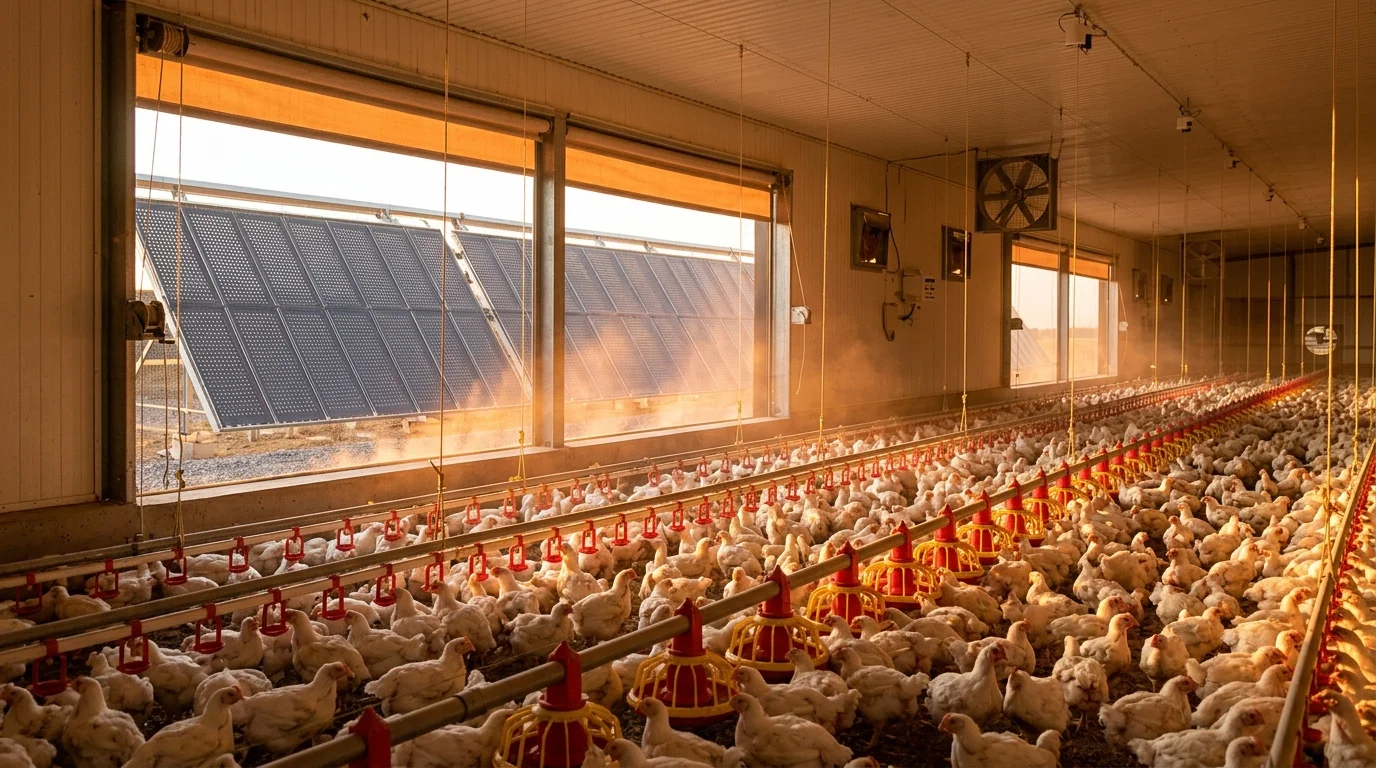
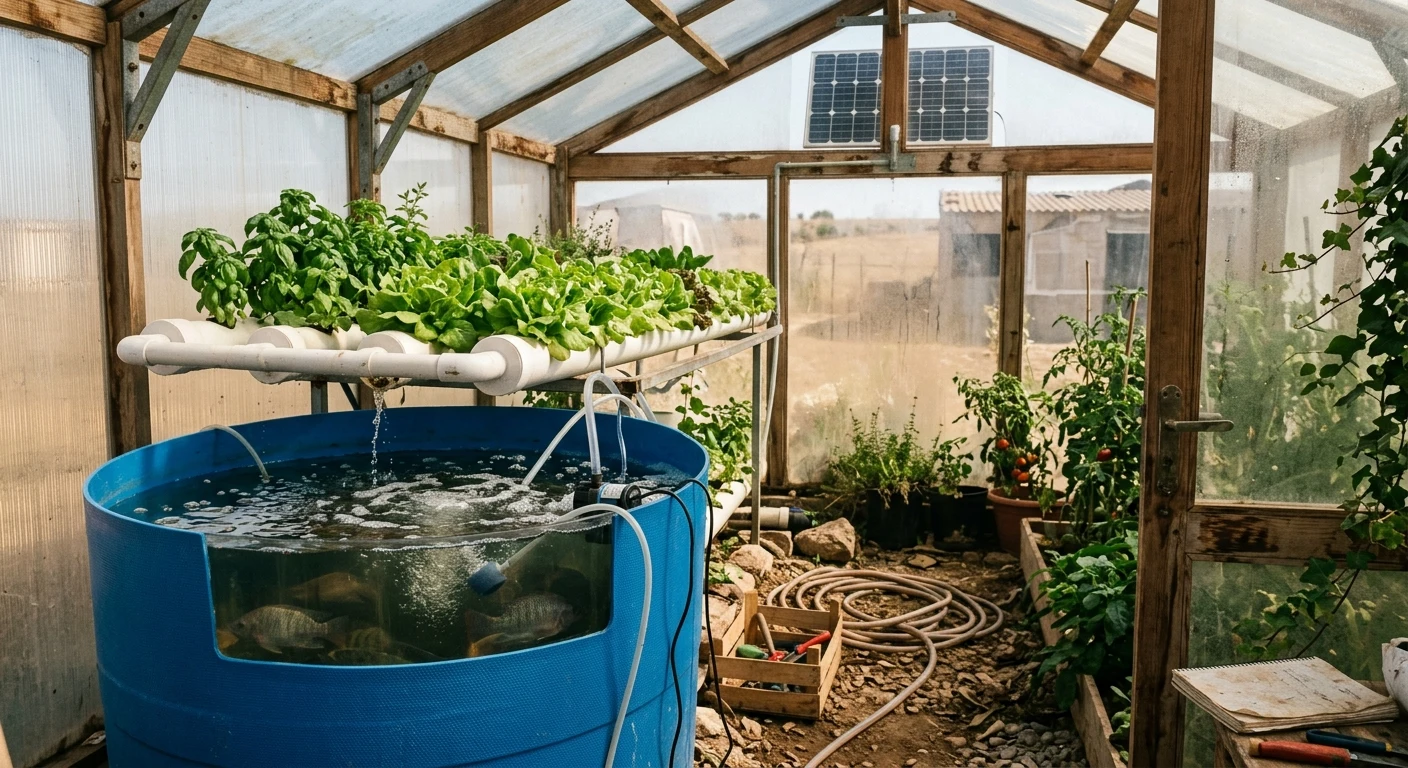
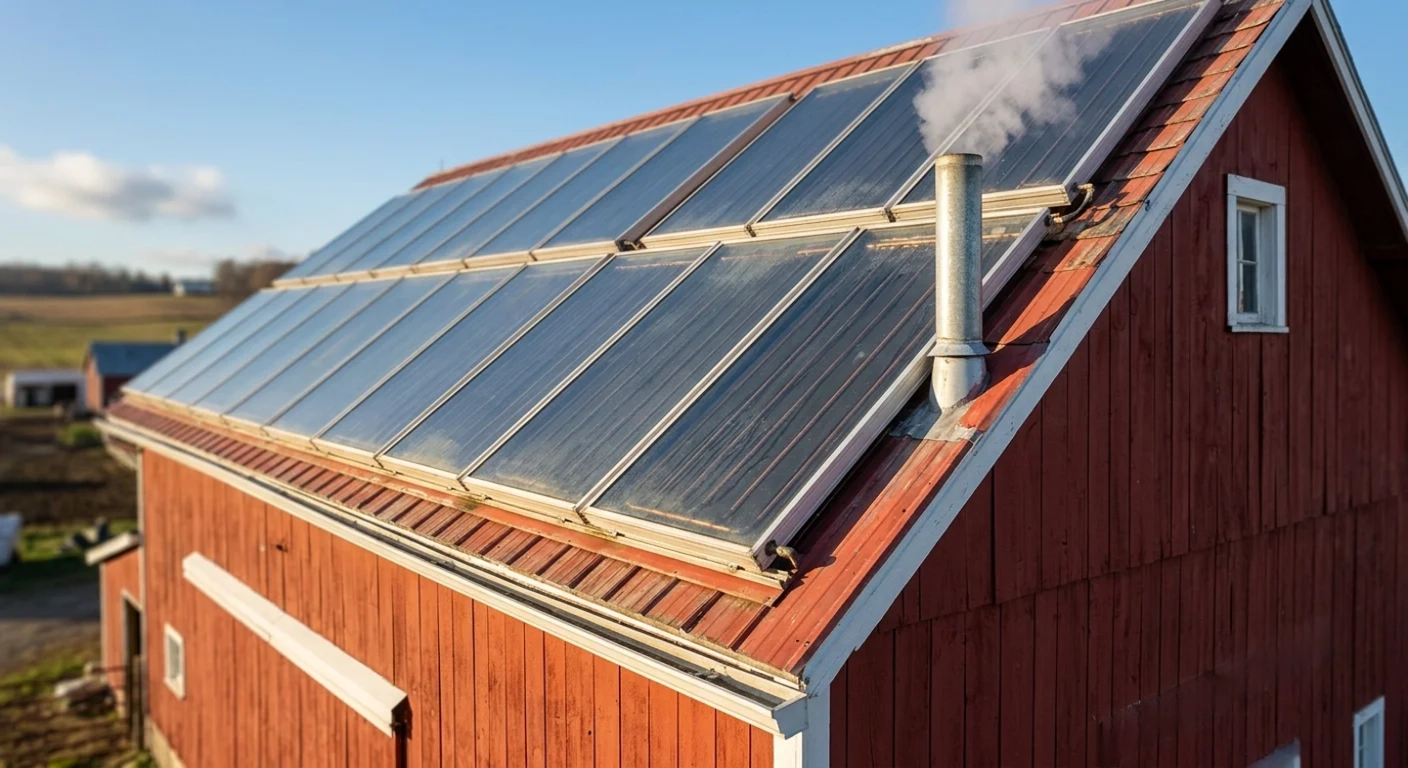
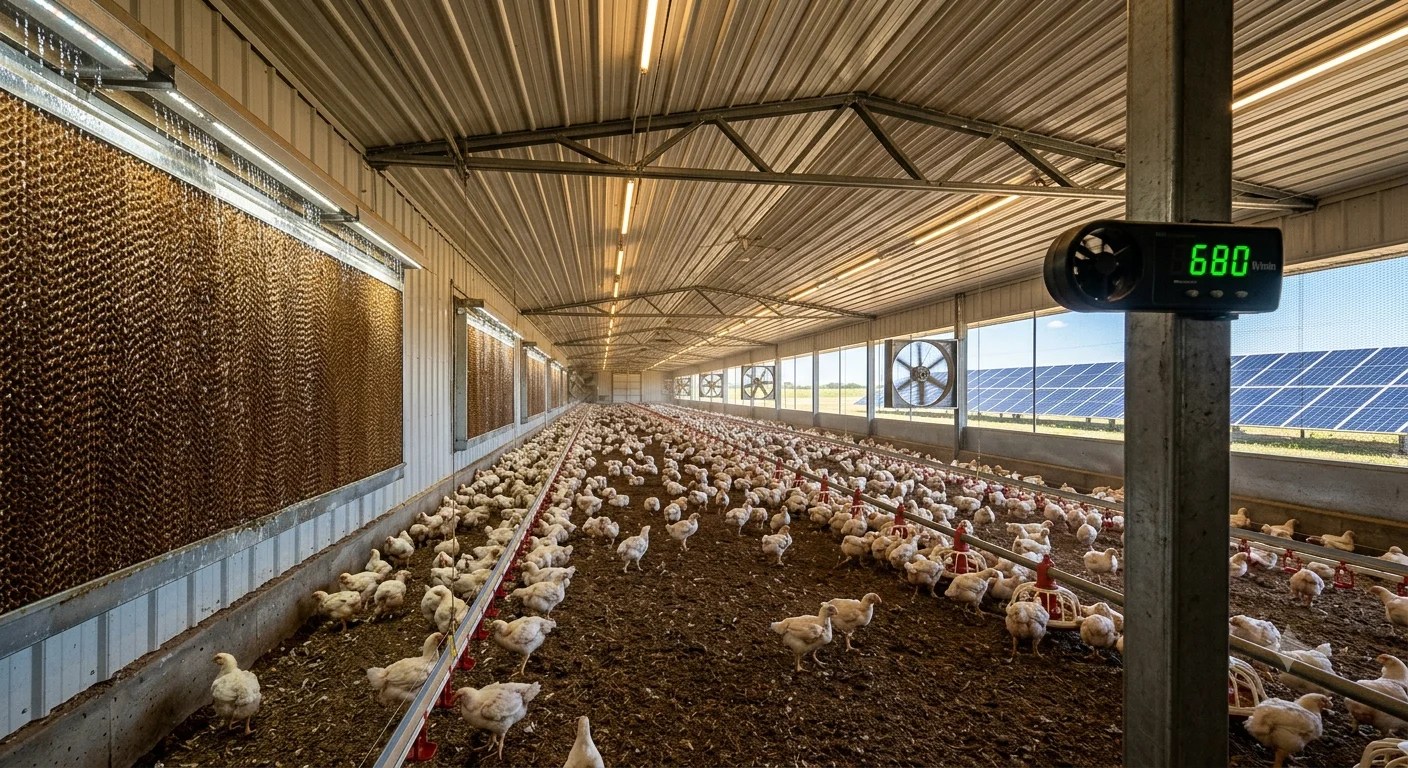
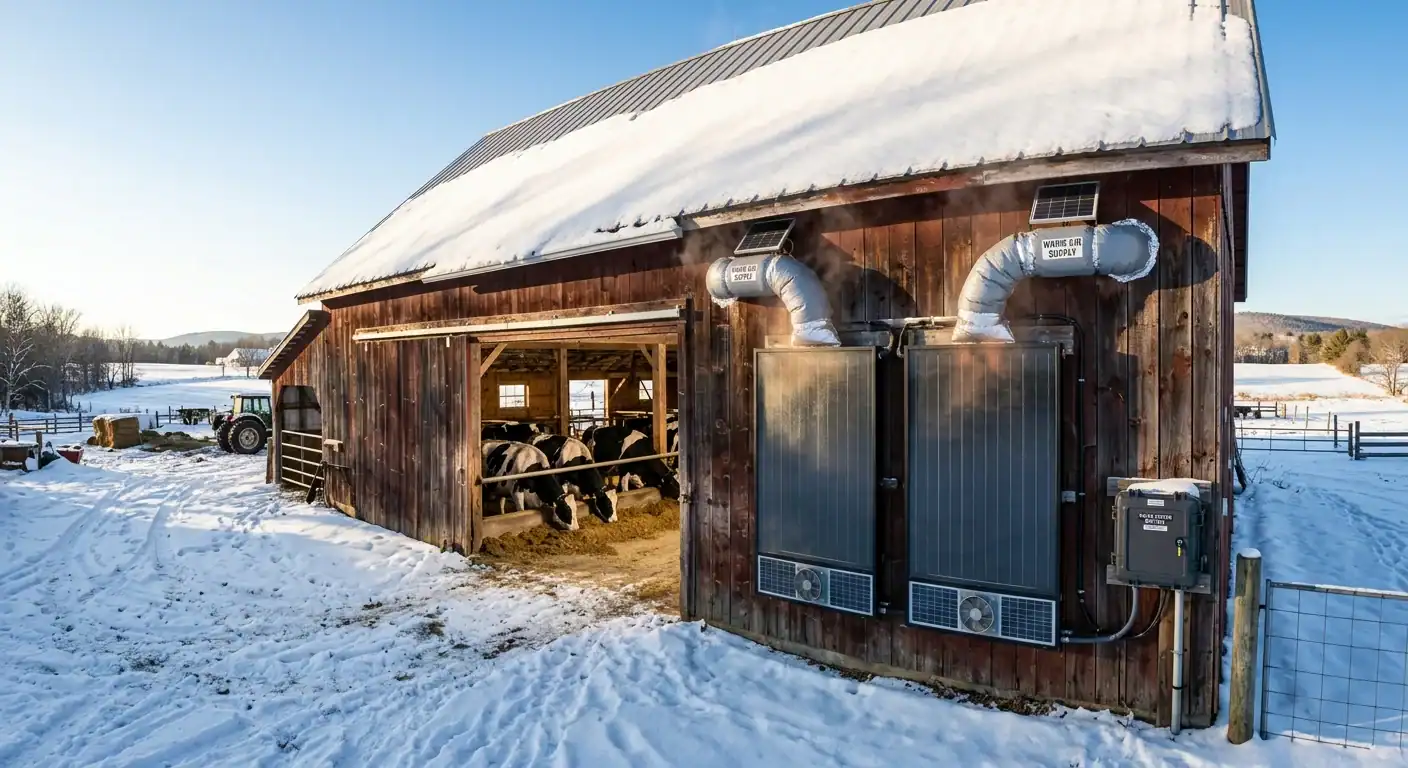
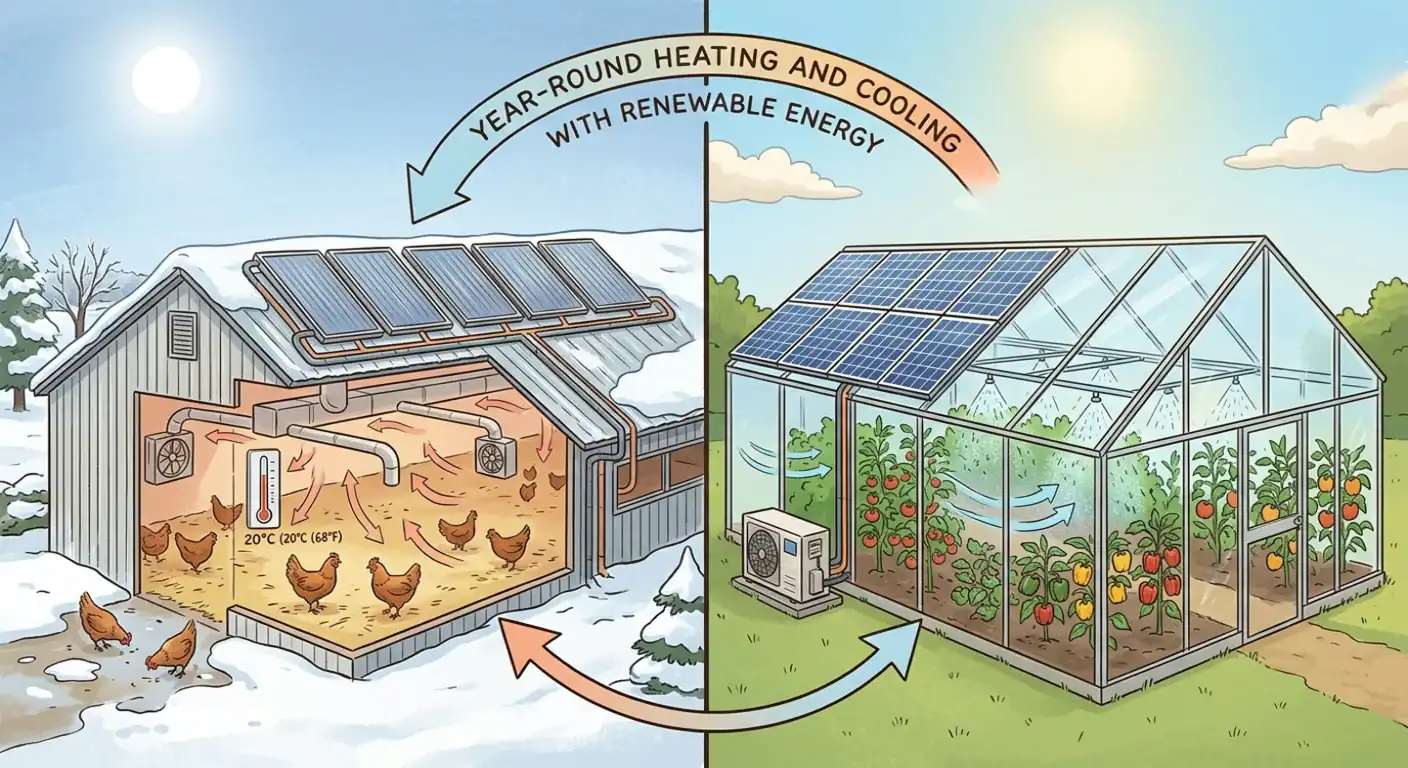
Split illustration showing solar heating (winter) for a poultry barn with thermal collectors and solar cooling (summer) for a greenhouse with PV panels and misting system, highlighting year‑round solar energy use.

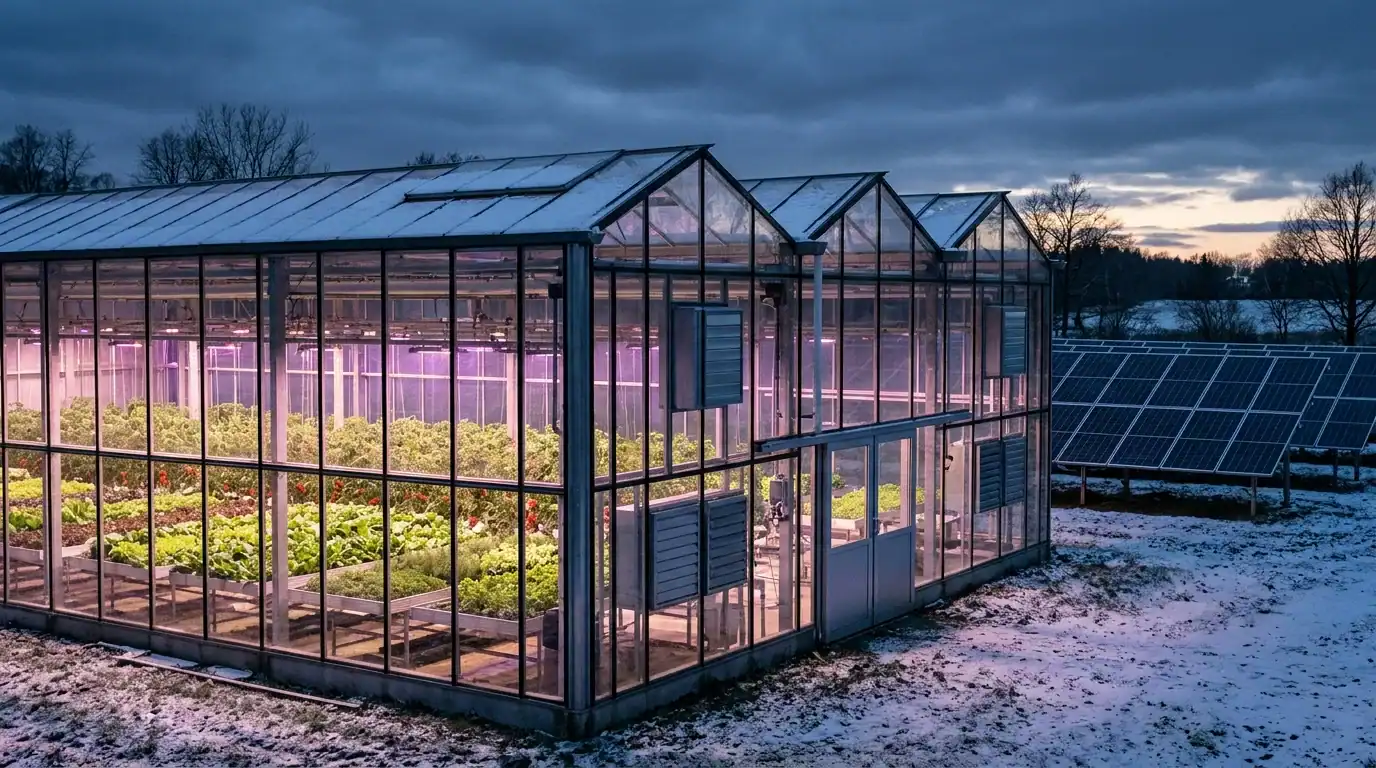
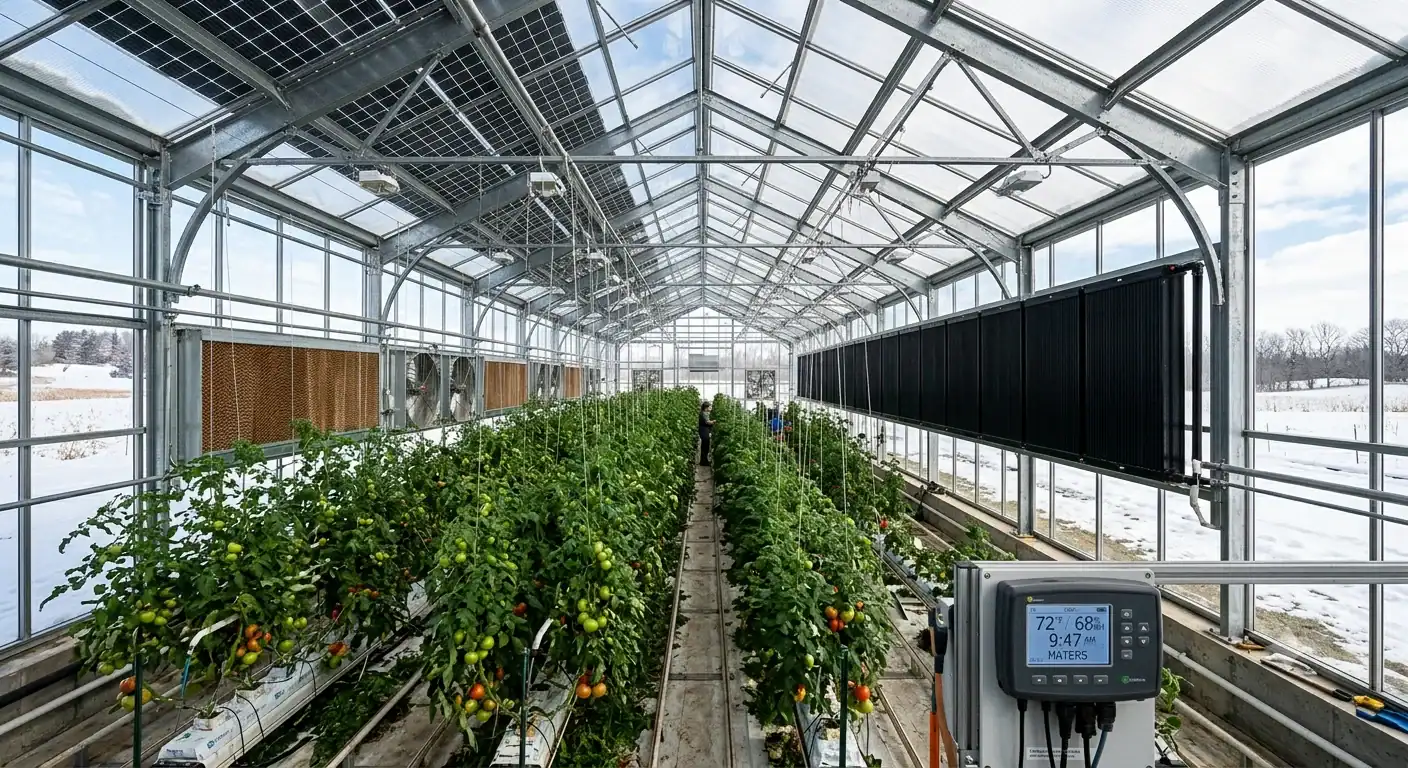
Your farm’s energy bills don’t stop when the growing season ends. Heating livestock barns in winter and cooling greenhouses in summer can cost thousands of dollars annually. This beginner’s guide explores how solar thermal and photovoltaic technologies can provide year-round heating and cooling for agricultural operations — reducing energy costs, improving animal welfare, and extending growing seasons.